 Skipper
Navigate
•All boatersHow to Anchor a Boat
Learn how to choose an anchorage, deploy an anchor, calculate anchor scope, check holding, and monitor your boat safely.
How to Anchor a Boat
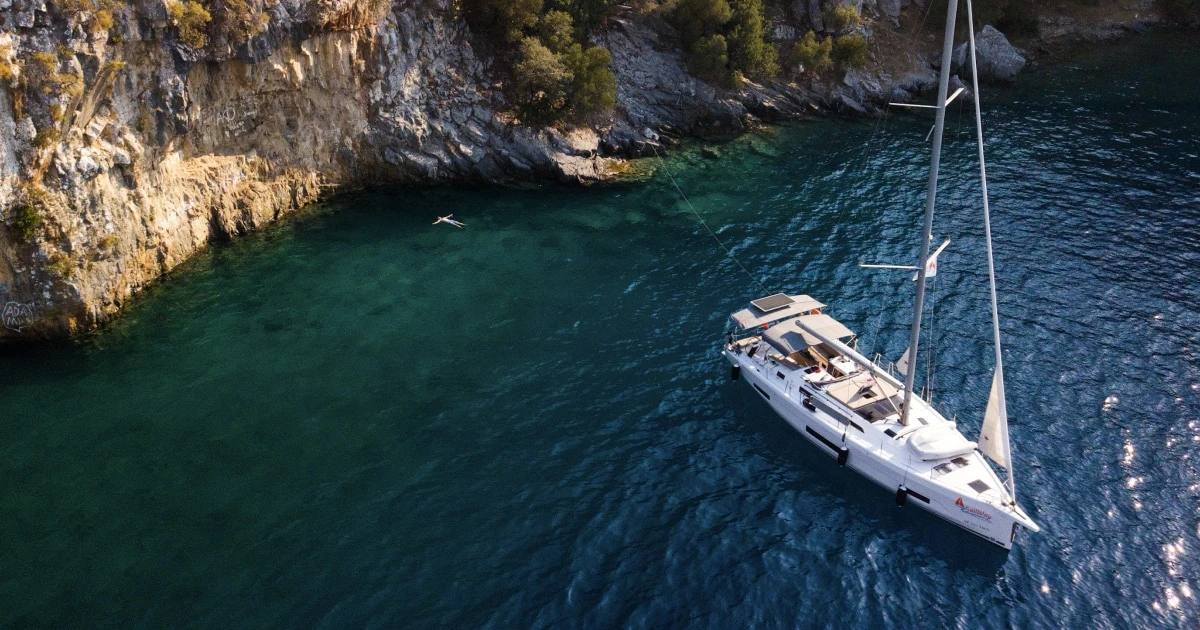
Anchoring lets you stop in a sheltered bay, take a swim, enjoy lunch, or spend the night away from a marina. But dropping an anchor is only one part of the process.
You also need to choose a suitable location, understand the seabed, allow enough anchor chain or rope to hold the boat, and verify that the anchor is actually secure.
The most important rule is simple: never assume the anchor is holding just because the boat has stopped moving.
This guide covers the fundamentals of anchoring a recreational boat, whether you sail a yacht or operate a motorboat. Your boat’s equipment, the conditions, and local regulations will determine the exact procedure.
1. Choose a Suitable Anchorage
Before preparing the anchor, decide where you want the boat to stop.
A good anchorage should offer suitable protection, sufficient depth, appropriate holding ground, and enough space for your boat to swing as the wind or current changes.
Check the weather and sea conditions
Look beyond the conditions at the moment you arrive. Check the forecast for the entire period you intend to remain at anchor.
Consider:
- Wind direction and expected changes.
- Gusts and forecast wind strength.
- Waves and swell entering the anchorage.
- Tidal currents and changes in water level.
- Thunderstorms or other rapidly developing weather.
- Whether the anchorage remains sheltered if the wind shifts.
A bay that feels calm in one wind direction may become uncomfortable or unsafe after a change in conditions.
If the forecast suggests that the anchorage could become untenable, choose another location before committing to it.
Check the depth
Use your chart, depth sounder, and local information to confirm that the water is deep enough for your boat.
Remember that the depth may change with the tide. Account for the lowest expected water level when checking whether the boat will have enough clearance, and the highest expected water level when calculating the amount of anchor rode required.
Also consider the draft of your boat and the possibility of swell or waves causing it to move vertically.
Understand the seabed
The seabed strongly influences how well an anchor can hold.
Common bottom types include:
- Sand: Often provides good holding when the anchor is suited to the bottom and properly set.
- Mud: Can provide good holding, but performance depends on the consistency of the mud and the anchor design.
- Gravel: Holding varies with the size and composition of the material.
- Rock: An anchor may struggle to engage securely, depending on the terrain and anchor type.
- Seagrass: Avoid sensitive seagrass beds where possible and obey any local restrictions.
Charts, cruising guides, local knowledge, and anchorage information can help you assess the bottom before arrival. No anchor type performs equally well in every seabed.
Check local restrictions
Not every apparently suitable location is a permitted anchorage.
Look for no-anchoring zones, protected habitats, restricted areas, navigation channels, and other local requirements. In some locations, anchoring may be restricted to designated areas or prohibited over specific seabed habitats.
Leave enough distance from shore, rocks, other vessels, and navigation routes to avoid creating a hazard.
2. Prepare the Anchor and Rode
The anchor rode is the complete connection between the anchor and the boat. It may consist of chain, rope, or a combination of both.
Before deploying the anchor, make sure the system is appropriate for your boat and the conditions.
Choose suitable anchoring equipment
The anchor and rode should be appropriate for the boat’s size, displacement, windage, and intended use.
Check that:
- The anchor is suitable for the expected seabed.
- The chain or rope is in good condition.
- Shackles and connecting hardware are secure and serviceable.
- The anchor is correctly attached to the rode.
- The bitter end of the rode is secured to the boat.
- The rode can run out without snagging.
- The windlass, if fitted, is operating correctly.
Do not rely on an anchor simply because it is large or heavy. Its design, the seabed, the scope, and the loads placed on the system all matter.
Chain, rope, or a combination?
An all-chain rode adds weight near the anchor and is commonly used on cruising yachts and larger boats. A rope-and-chain combination can reduce weight while retaining a chain section near the anchor.
The right arrangement depends on the boat, the anchor, the equipment, and the conditions in which you intend to anchor.
Inspect the rode regularly. Corrosion, chafe, damaged rope, worn shackles, and poor connections can compromise the entire system.
Prepare the crew
Before the anchor is deployed, explain the plan to everyone involved.
Agree on:
- Who controls the boat.
- Who operates the anchor or windlass.
- How the crew will communicate.
- Which signals will be used to indicate the amount of rode deployed.
- Where everyone should stand to remain clear of moving chain, rope, and machinery.
Keep hands, feet, and clothing clear of the rode and moving equipment. Use appropriate personal flotation equipment and follow the boat’s operating instructions.
3. Understand Anchor Scope
One of the most important anchoring concepts is scope: the ratio between the length of anchor rode deployed and the vertical distance from the seabed to the point where the rode leaves the boat, usually the bow roller or bow chock.
The vertical distance matters. Using water depth alone underestimates the distance that must be covered because the bow is above the waterline.
How to calculate anchor scope
Use this formula:
Anchor scope = deployed rode length ÷ vertical distance from the seabed to the bow roller
The vertical distance includes the water depth plus the height of the bow roller or chock above the waterline. Use the expected depth relevant to the anchoring period, accounting for tidal changes.
For example, suppose:
- Water depth is 5 metres (16.4 ft).
- The bow roller is 1 metre (3.3 ft) above the waterline.
- The total vertical distance is therefore 6 metres (19.7 ft).
At a scope ratio of 5:1, you would deploy approximately 30 metres (98 ft) of rode.
At a ratio of 7:1, you would deploy approximately 42 metres (138 ft).
These are illustrative calculations, not universal recommendations. The appropriate scope depends on the anchoring system, anchor type, seabed, weather, sea state, and available room.
What scope should you use?
A ratio of 5:1 is a common starting point for suitable conditions, with more scope often required in stronger winds, rougher conditions, or overnight anchoring.
However, recommendations differ between anchoring systems and circumstances. Follow the guidance for your equipment and the requirements of your boat.
Remember:
- More scope generally reduces the upward angle of pull on the anchor, helping it remain engaged with the seabed.
- Less scope requires less swinging room, but can increase the load angle and reduce holding reliability.
- Tidal changes affect the calculation, because the vertical distance from the bow to the seabed changes with water level.
- Rough conditions increase loads, especially when waves cause the boat to surge against the rode.
You must also have enough sea room to accommodate the resulting swing circle. A long rode is not appropriate if it causes your boat to overlap the safe swinging area of another vessel or enter a hazardous area.
4. How to Anchor a Boat Step by Step
The following describes a conventional single-anchor procedure. Use your boat’s specific instructions, particularly if it has an electric windlass, an unusual anchoring arrangement, or other equipment requiring a particular sequence.
Step 1: Approach the chosen position
Approach at low speed with the boat under control.
Where practical, approach into the stronger of the wind or current, taking account of both. This helps you maintain control and allows the boat to move back naturally as the rode is deployed.
Choose a drop point that allows for the boat’s movement while the anchor is lowered and the rode is paid out.
Do not focus only on the point where the anchor will touch the seabed. You also need to account for the final position of the boat and its swinging room.
Step 2: Stop the boat and lower the anchor
Bring the boat to a controlled stop, or allow only the slight movement appropriate to your boat and conditions.
Lower the anchor under control until it reaches the seabed. Do not throw it overboard or release the rode in an uncontrolled heap.
Keep the rode running freely and avoid allowing the chain or rope to pile up directly on top of the anchor.
Step 3: Pay out the rode
As the boat moves back, release the chain or rope progressively.
Monitor the amount deployed using marked chain, a rode counter, or another reliable method. Keep the crew informed about the progress.
Pay out enough rode for the intended scope and conditions, making sure the chain or rope can run without fouling.
Avoid applying excessive reverse thrust while the anchor is still being deployed. The objective is to lay out the rode and allow the anchor to engage the seabed.
Step 4: Secure the rode
Once you have deployed the intended length, secure the rode using the boat’s designed cleat, stopper, windlass arrangement, or other approved fitting.
Do not leave the full anchoring load on a windlass unless the equipment is designed for that purpose. Follow the manufacturer’s instructions for transferring the load to the appropriate securing arrangement.
On systems using a chain stopper or snubber, use the arrangement recommended for the boat.
Step 5: Set the anchor
Setting the anchor means confirming that it has engaged the seabed and can hold the boat.
Once the rode is deployed and secured appropriately, apply a controlled load using the method recommended for your anchor and boat. On many boats, this involves gently applying reverse thrust after the anchor has had an opportunity to engage.
Avoid assuming that a brief pull proves the anchor is secure. The appropriate setting procedure depends on the anchor, the bottom, and the equipment.
If the anchor does not appear to hold, stop the test, reassess the situation, and prepare to reset it or choose another location.
Step 6: Check that the anchor is holding
After setting the anchor, verify that the boat is remaining in position.
Use more than one method when possible:
- Take bearings on fixed landmarks.
- Compare the boat’s position with charted features.
- Observe whether the distance to nearby fixed objects is changing.
- Use reliable GPS position information as an additional check.
A boat may swing around its anchor as the wind or current changes. That movement alone does not necessarily indicate dragging.
What matters is whether the anchor remains in the same general position on the seabed while the boat swings around it.
If the boat continues moving away from the expected anchoring position, the anchor may be dragging. Take action promptly rather than waiting for the situation to worsen.
5. How to Know If Your Anchor Is Dragging
An anchor is dragging when it moves along the seabed instead of holding the boat in its intended position.
This can happen if the anchor has not set properly, the bottom is unsuitable, the scope is insufficient, or the forces acting on the boat exceed the anchor’s holding ability.
Signs of a dragging anchor
Watch for:
- Bearings that continue to change in a way that cannot be explained by the boat’s normal swing.
- A sustained change in GPS position away from the anchoring point.
- The boat moving towards a shoreline, hazard, or another vessel.
- Repeated movement despite attempts to reset the anchor.
- A change in wind or current that causes the boat to move unexpectedly.
GPS accuracy varies, and a boat can move around its anchor without dragging. Interpret position changes alongside bearings, conditions, and the expected swing circle.
What should you do if the anchor drags?
The correct response depends on the available sea room, weather, equipment, and proximity to hazards.
In general:
- Alert the crew and assess the boat’s immediate position.
- Check whether there is enough room to recover safely.
- Prepare to re-anchor in a more suitable location or leave the anchorage.
- If conditions or proximity to hazards create an immediate danger, prioritise the safety of everyone on board.
- If the situation cannot be managed safely, seek appropriate assistance.
Do not assume that simply releasing more chain will solve every anchoring problem. If the bottom is unsuitable, the anchor is fouled, or conditions exceed the system’s capability, a different anchorage or approach may be necessary.
6. How to Anchor in Wind, Current, and Changing Tides
Anchoring is more demanding when the wind, current, or water level changes.
Anchoring in stronger winds
As wind increases, the load on the anchor system can rise significantly. Gusts and waves may also cause the boat to surge, increasing the loads on the rode and its connections.
Consider whether the anchorage remains appropriate, whether the anchor and rode are suitable, and whether additional scope is possible without compromising swinging room.
If conditions are forecast to deteriorate beyond what the anchorage and equipment can safely handle, move before the situation becomes difficult.
Anchoring in current
Current affects how the boat lies to its anchor and how the rode is loaded.
In some locations, wind and current may act in different directions. The boat may swing unpredictably as one or both change.
Allow enough room for this movement and consider the conditions expected throughout the anchoring period, not just at slack water or on arrival.
Anchoring with a changing tide
Tidal changes affect both water depth and the boat’s orientation.
A rising tide increases the vertical distance from the seabed to the bow roller, which may reduce the effective scope ratio if no additional rode is deployed. A falling tide can create a risk of grounding if the water becomes too shallow.
Check the expected tidal range and adjust your calculations and plans accordingly.
Anchoring in a crowded bay
A crowded anchorage requires careful consideration of every boat’s swinging circle.
Different boats may use different amounts of rode and respond differently to wind and current. Allow sufficient separation and avoid dropping the anchor so close to another vessel that the two boats could collide after a wind shift.
If there is not enough space to anchor safely, choose another location.
7. Anchoring Safely Overnight
Spending the night at anchor requires more planning than stopping for a short lunch break.
Before settling in, reassess the forecast, the anchor’s holding, the available room, and the boat’s equipment.
Consider the following:
- Is the anchorage suitable for the full night?
- Is the anchor holding reliably?
- Is there enough rode for the expected conditions and tide?
- Could a wind shift make the location unsafe?
- Is the boat clear of other vessels and hazards throughout its swing?
- Are the crew aware of the plan if conditions change?
- Can the boat leave safely if necessary?
Keep an anchor watch
Anchoring overnight does not mean you can ignore the boat’s position.
Maintain an appropriate anchor watch for the boat, location, conditions, and applicable requirements. Check the boat’s position and surrounding traffic regularly, and remain alert to changes in wind, current, and weather.
An anchor alarm or position-monitoring tool can be a useful additional safeguard, but it should not replace situational awareness and regular checks.
For more detail, read How to Keep Anchor Watch.
Use the correct anchor lights and signals
The lights and shapes required for a boat at anchor depend on its circumstances and the applicable navigation rules.
Understand the requirements that apply to your vessel and location, and display the required signals. Do not assume that every boat has identical obligations.
8. Protect the Seabed When Anchoring
Anchoring can damage sensitive seabed habitats, particularly when chains repeatedly sweep across the bottom as the boat swings.
Whenever possible:
- Choose a permitted anchoring area over suitable bare sand or another appropriate bottom.
- Avoid sensitive seagrass beds and protected habitats.
- Follow local anchoring restrictions and environmental guidance.
- Avoid dragging the anchor unnecessarily while positioning the boat.
- Consider a designated mooring buoy where one is available and appropriate.
Good anchoring practice protects both your boat and the environment you have come to enjoy.
9. Common Anchoring Mistakes
Choosing a spot based only on how calm it looks
A sheltered bay can become exposed if the wind shifts.
Better approach: Check the forecast for the entire stay and consider alternative locations before anchoring.
Using too little scope
Insufficient rode can increase the upward pull on the anchor and make it more likely to break out.
Better approach: Calculate scope using the correct vertical distance, account for tides, and adapt it to the conditions and equipment.
Throwing the anchor overboard
Uncontrolled deployment can cause the rode to pile up and foul the anchor.
Better approach: Lower the anchor under control and pay out the rode progressively as the boat moves back.
Assuming the anchor is secure without testing it
The boat may stop moving even if the anchor has not engaged properly.
Better approach: Set the anchor using the boat’s recommended procedure, then verify that the boat is holding its position.
Ignoring changes in wind and tide
The boat may swing into hazards or experience increased loads as conditions change.
Better approach: Monitor the forecast, water level, and boat position throughout the stay.
Anchoring too close to another boat
Boats can swing through different arcs because of their size, rode length, windage, and the way they respond to changing conditions.
Better approach: Allow enough room for the expected swing of every vessel, including your own.
10. A Simple Anchoring Checklist
Before leaving the helm or relaxing at anchor, run through this checklist.
- The anchorage is permitted and suitable for the forecast.
- Water depth and tidal changes have been considered.
- The seabed is appropriate for the anchor.
- The anchor and rode are suitable and in good condition.
- The crew knows the anchoring procedure.
- The anchor has been lowered and the rode deployed under control.
- The rode is secured correctly.
- The anchor has been set using the appropriate procedure.
- Bearings or position checks indicate that the boat is holding.
- There is sufficient swinging room.
- Required anchor lights or shapes are displayed when applicable.
- A suitable watch and monitoring plan is in place.
The checklist is a practical reminder, not a substitute for boat-specific procedures, local rules, or sound judgement.
Record Your Trips with Skipper
Anchoring is part of the story of a boating trip. Where you stopped, how long you stayed, and the conditions you encountered can be useful when reviewing your outings or planning future routes.
With Skipper, you can record your trips using GPS tracks, trip statistics, notes, and photos. You can document the places you visited and add context about the conditions or decisions you made along the way.
Over time, these records can help you build a more complete picture of your boating experience.
Frequently Asked Questions
How much anchor chain should I let out?
Calculate the scope using the vertical distance from the seabed to the bow roller or chock, including the effect of the tide. A ratio of 5:1 is a common starting point in suitable conditions, but the correct amount depends on the anchor system, bottom, wind, current, waves, and available room. Follow the guidance for your equipment.
How do I know if my anchor is holding?
After setting the anchor, compare bearings on fixed landmarks or other reliable position information. Repeat the checks over time. Normal swinging around the anchor is expected; sustained movement away from the anchoring position may indicate dragging.
Can I anchor overnight?
Yes, where anchoring is permitted and conditions are suitable. Check the forecast, holding ground, scope, swinging room, and the boat’s equipment. Maintain an appropriate anchor watch and be ready to leave if the situation deteriorates.
Should I drop or throw the anchor?
Lower the anchor under control. Throwing it can cause the chain or rope to pile up and prevent the anchor from engaging properly.
Can I anchor on seagrass?
Avoid sensitive seagrass beds where possible and follow local restrictions. Choose a suitable permitted location that minimises damage to the seabed.
Is anchoring the same as mooring?
No. Anchoring generally involves deploying an anchor onto the seabed and securing the boat using its rode. Mooring usually involves securing the boat to a dedicated buoy, fixed mooring, or other designed arrangement.
Final Thoughts
Anchoring safely requires more than choosing a beautiful bay and dropping the hook. You need to assess the conditions, understand your equipment, calculate sufficient scope, set the anchor correctly, and verify that the boat is holding.
The most important habit is to keep checking. Conditions can change, and an anchor that held initially may not remain secure if the wind, current, or sea state changes.
Choose the location carefully, anchor methodically, and never stop monitoring the boat simply because it appears to be stationary.
Remember your days at sea
Skipper is a ship’s log app for sailboats and powerboats, available on iPhone and iPad. It records every trip with GPS and keeps your whole sailing history in one searchable logbook. Free for your first three trips.

Keep reading
How to Keep Anchor Watch
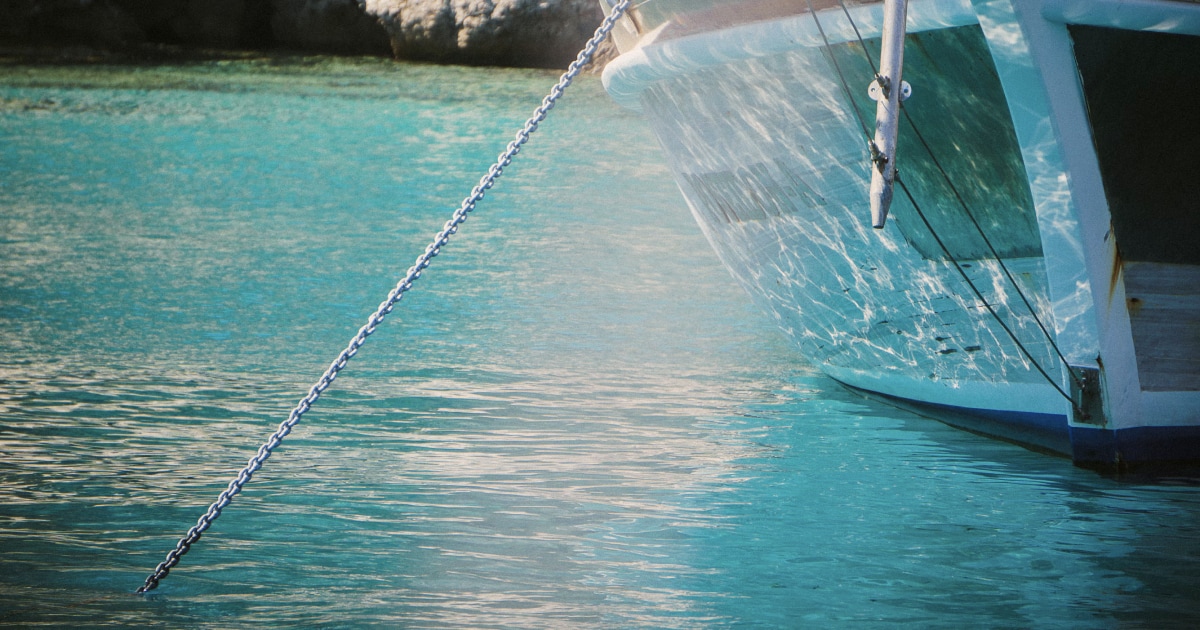
Learn how to keep a proper anchor watch, check whether your anchor is holding, monitor weather and wind shifts, and respond if your boat starts dragging.
All boaters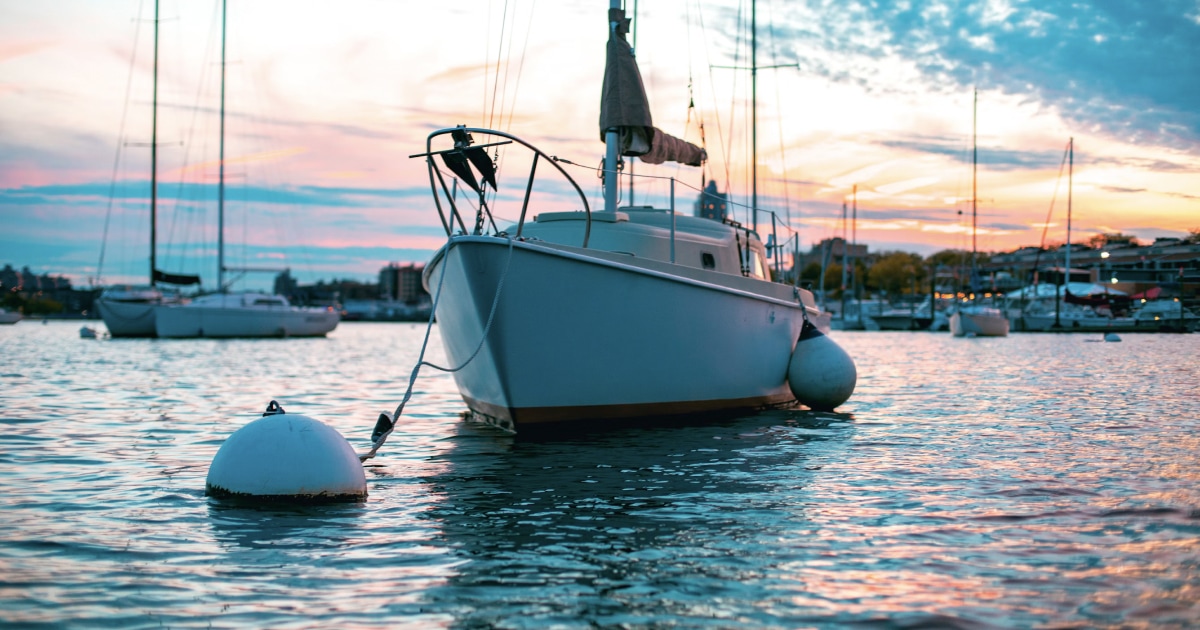
How to Pick Up a Mooring Buoy
Learn how to approach, pick up and secure a mooring buoy safely, with practical steps for sailboats and motorboats.
All boaters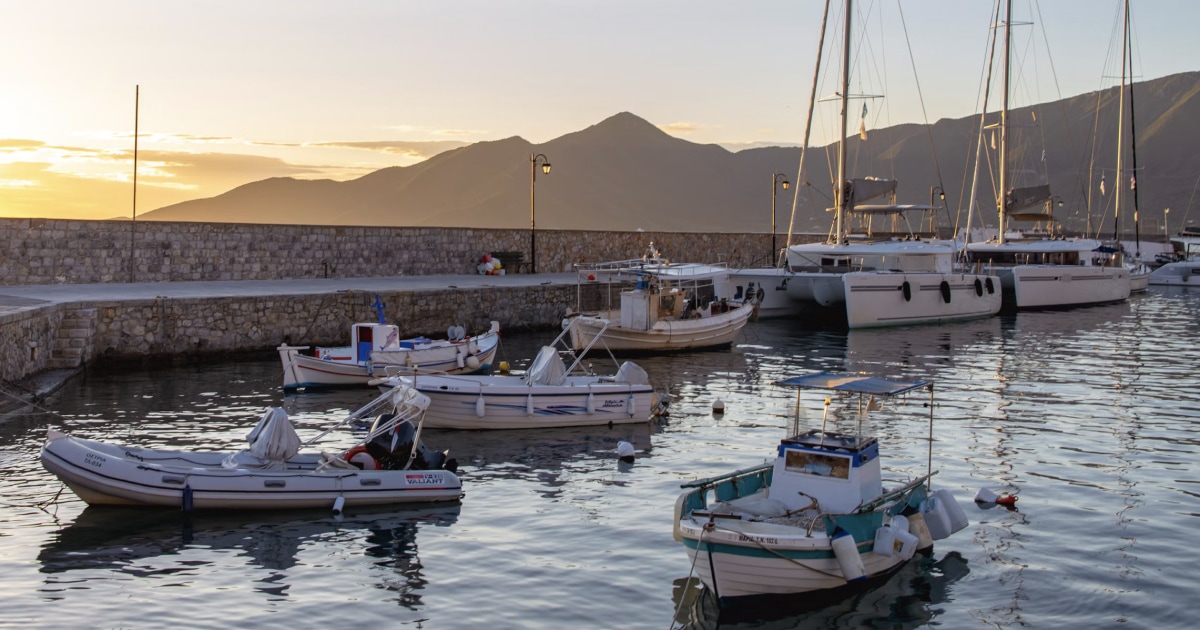
Mediterranean Mooring: A Step-by-Step Guide
Learn how to moor stern-to in a Mediterranean harbour, using your own anchor or a lazy line, with practical steps for preparation, approach and securing the boat.
All boaters