 Skipper
Navigate
•All boatersHow to Keep Anchor Watch
Learn how to keep a proper anchor watch, check whether your anchor is holding, monitor weather and wind shifts, and respond if your boat starts dragging.
How to Keep Anchor Watch
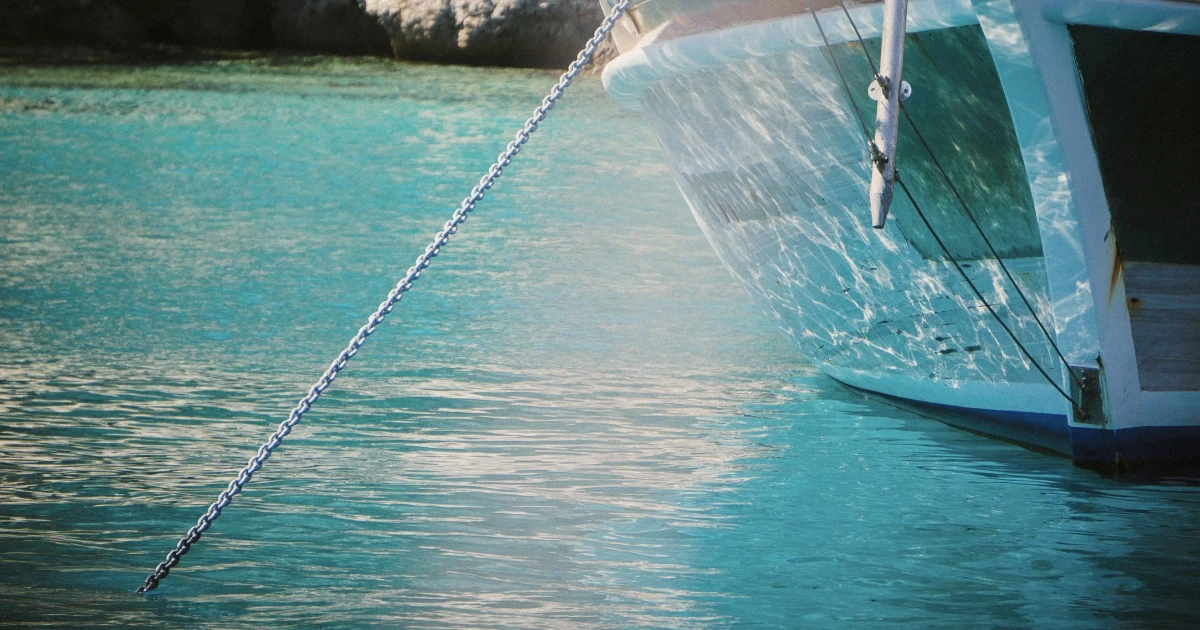
Dropping the anchor is only the beginning. Once your boat is settled in an anchorage, you need to make sure it stays where you expect it to, even as the wind shifts, the tide changes or other boats move around you.
This is the purpose of an anchor watch: monitoring your boat’s position, the holding of the anchor and the conditions around you so that you can identify a problem before it becomes an emergency.
Anchor watch matters during a short lunch stop, but it becomes especially important overnight, in changing weather or in a crowded anchorage.
This guide explains how to establish a reliable anchor watch, recognise the signs of dragging and respond when conditions change.
What Is an Anchor Watch?
An anchor watch is the process of monitoring a boat while it is at anchor to confirm that the anchoring arrangement remains safe.
It involves more than checking whether the anchor chain looks tight. You need to understand how your boat is expected to move, identify fixed references, monitor the weather and maintain enough space from other vessels and hazards.
A proper anchor watch includes:
- Confirming that the anchor has set and is holding.
- Establishing the boat’s expected swinging area.
- Checking the boat’s position against fixed landmarks or navigation equipment.
- Monitoring wind, current, tide and forecast changes.
- Watching for nearby vessels, traffic and other hazards.
- Taking action if the anchor drags or the anchorage becomes unsafe.
An anchor watch can be conducted visually, with navigation instruments and, where available, an anchor alarm. No single method is infallible, so use several sources of information.
1. Make Sure the Anchor Is Holding Before You Settle In
The most effective anchor watch starts when you first drop the anchor.
Do not assume that the anchor has set simply because the boat has stopped moving. It may have caught temporarily, settled on unsuitable ground or failed to dig into the seabed properly.
After deploying the anchor, allow the boat to settle back on the rode and follow an appropriate procedure to check that the anchor is holding.
Check the boat’s movement
Observe the boat as the anchor rode takes the load. Once the anchor is set, the boat should settle into a predictable position relative to the anchor, allowing for normal movement caused by wind and current.
If the boat continues moving backwards or the anchor rode continues to pay out unexpectedly, the anchor may not be holding.
Use gentle engine power if appropriate
A controlled check under engine power in reverse can help confirm that the anchor has set. The appropriate method and amount of power depend on the vessel, ground tackle and conditions.
Follow your boat’s anchoring procedure and avoid applying excessive throttle or sudden loads. If the anchor does not hold, retrieve it and reassess the location, seabed and equipment before trying again.
Record your initial position
Once satisfied that the anchor is holding, establish a reference position.
You can use:
- GPS coordinates or your chartplotter’s position display.
- Two bearings to fixed landmarks ashore.
- A transit, where two fixed objects appear aligned.
- The depth sounder, where changes in depth can help identify movement.
Taking two bearings soon after anchoring is particularly useful. If their relationship changes unexpectedly, it may indicate that the boat is moving rather than simply swinging normally.
2. Understand Your Swinging Circle
A boat at anchor does not remain perfectly stationary. It moves around the anchor as the wind and current change.
The area in which it can move is commonly called its swinging circle.
Understanding this area helps you determine whether your boat is behaving normally and whether it has enough room to remain safe.
Estimate the space you need
Your swinging area depends on several factors:
- The distance from the bow to the seabed.
- The length of anchor chain or rode deployed.
- The length of your boat.
- Changes in wind and current.
- The movement of other boats nearby.
- The shape of the seabed and the presence of surrounding hazards.
The rode’s horizontal reach is not simply equal to its full length because some of it lies at an angle between the bow and the seabed. Nevertheless, a conservative assessment should account for the full range of possible boat positions.
Allow enough space for the boat to swing without hitting another vessel, a rock, a buoy or the shore.
Remember that neighbouring boats may have different rode lengths and respond differently to wind and current. Their swinging circles can overlap even if the boats initially appear comfortably separated.
Reassess after a wind shift
If the wind changes direction, your boat may swing to a different heading around the anchor.
This movement can be completely normal. The important question is whether the boat remains within the expected area and whether the anchor continues to hold.
After a significant shift, reassess your position relative to nearby boats and hazards. A previously safe anchorage can become uncomfortable or unsafe when the wind changes.
3. Check Your Position Regularly
The central task of anchor watch is to determine whether the boat is remaining in the expected area.
Do not rely on a single observation. Compare your position over time and use more than one reference when possible.
Use shore bearings
Choose fixed objects on land, such as a prominent building, a headland or a navigation mark that is fixed in position.
Take bearings with a hand-bearing compass or use a transit if two objects can be aligned.
Check them again later. A change in bearing may indicate that the boat has moved, although normal swinging will also change bearings. Interpret them together with your expected swing pattern and other observations.
Avoid relying on floating objects or boats as fixed references.
For more detail, see How to Take a Bearing at Sea.
Monitor your GPS position
A GPS receiver or chartplotter can help you monitor your position relative to the point where you anchored.
Record the initial position and observe whether subsequent positions remain consistent with the expected swing area.
GPS positions can vary because of measurement accuracy, signal conditions and normal movement. Do not treat every small change as evidence that the anchor is dragging.
Check the depth
Depth readings can provide another useful reference, particularly in an anchorage with a relatively consistent seabed.
However, changes in depth may also result from tides, waves, boat movement or the sounder’s measurement conditions. Use depth as supporting evidence rather than as your only indicator.
4. Use an Anchor Alarm as an Additional Safety Layer
Many GPS chartplotters and some boating apps offer an anchor alarm. Depending on the system, it can alert you when the boat moves beyond a configured distance from a reference position.
An anchor alarm can be valuable when you are occupied with other tasks or resting, but it has limitations.
Set an appropriate radius
The alarm radius needs to accommodate normal swinging and reasonable position variation without being so large that it gives you too little time to react.
Consider:
- The boat’s expected swinging area.
- The length of rode deployed and the depth.
- GPS position variation.
- Nearby boats and hazards.
- The consequences if the boat moves beyond the safe area.
A radius that works in a spacious anchorage may be unsuitable in a narrow bay or near a lee shore.
Test the alarm
Before relying on an alarm, understand how it works and confirm that it is enabled and audible under the conditions in which you intend to use it.
Check that the device has sufficient battery power and that its alert can reach the person responsible for the watch.
Understand its limitations
An anchor alarm is not proof that the anchor is holding. It may generate false alerts because of normal swinging or position variation, and it may fail to alert you if the device loses power, GPS reception or its ability to notify you.
A boat can also be moving towards danger while remaining inside the alarm radius.
Use the alarm alongside visual monitoring, position checks and an assessment of the anchorage. Never treat it as a substitute for a proper watch.
5. Monitor Wind, Weather and Tidal Conditions
A well-set anchor can still become a concern if the conditions change substantially.
Before settling in, check the forecast for the full period you expect to remain at anchor. During the stay, monitor updated forecasts and observe the conditions directly.
Watch for increasing wind
Stronger wind increases the load on the anchor system and can cause the boat to swing more vigorously.
If wind is forecast to increase, reassess whether the anchorage provides adequate shelter and whether your ground tackle and available swinging room are suitable.
Do not wait until the boat is moving uncontrollably before making a decision.
Watch for changes in wind direction
A shift in wind direction may cause the boat to swing through a wide arc. It can also expose the boat to waves that were previously sheltered by the land.
Check whether the new direction creates a risk of grounding, collision or being blown towards the shore if the anchor fails.
Consider tide and current
In tidal waters, the current may reverse while the boat is anchored. The boat’s orientation and movement can change as a result.
Changes in water level also affect the relationship between the bow, the seabed and the deployed rode. Reassess the anchoring arrangement if the tide significantly changes the effective depth or available clearance.
Understand the risk of a lee shore
A lee shore is a shore towards which the wind is blowing. If the anchor drags or fails, the boat may be pushed towards land.
An anchorage that appears comfortable in light offshore winds may become dangerous if the wind changes and blows towards the shore.
If the forecast or actual conditions make the anchorage unsafe, be prepared to leave while you still have sufficient control and room to manoeuvre.
6. Maintain a Proper Watch Overnight
Overnight anchoring requires particular care because visibility is reduced and the crew may be asleep.
There is no single watch interval that is appropriate for every boat and every anchorage. The level of monitoring should reflect the conditions, the available equipment, the crew and the consequences of a failure.
Before going to sleep, complete a thorough check.
Before resting
- Confirm that the anchor is holding.
- Check the boat’s position against fixed references.
- Verify that there is sufficient swinging room.
- Review the latest forecast and any expected changes.
- Check the anchor alarm, if fitted.
- Ensure navigation equipment and communications are available as needed.
- Confirm that required anchor lights or shapes are displayed under the applicable rules.
- Agree on a watch arrangement appropriate to the conditions.
During the night
If someone is on watch, they should monitor the boat’s position, the surrounding vessels and changes in wind or current.
Even when an alarm is active, a responsible person must be able to respond if conditions deteriorate or an alert sounds.
In a calm, spacious anchorage, the monitoring arrangements may differ from those needed in a crowded bay with a forecast wind shift. In marginal or deteriorating conditions, the safest choice may be to maintain a more active watch or leave the anchorage.
Keep an escape plan in mind
Know which direction you can safely manoeuvre if you need to leave. Consider nearby boats, shallow water, rocks, traffic and the prevailing conditions.
If a problem develops, knowing the available options in advance can save valuable time.
7. Recognise the Signs of Dragging Anchor
Dragging anchor means the anchor is moving across the seabed instead of holding the boat in its intended position.
It can develop gradually or become apparent very quickly when the load increases or the anchor loses its grip.
Watch for the following signs:
- Bearings to fixed landmarks change in a way that cannot be explained by normal swinging.
- GPS positions move progressively outside the expected area.
- The boat approaches other vessels or hazards unexpectedly.
- The boat’s heading changes in an unusual way relative to the wind.
- The anchor rode behaves differently from when the anchor was set.
- The depth changes in a way that suggests movement towards shallow water, after accounting for tide and normal measurement variation.
No single sign proves that the anchor is dragging. Combine observations and act promptly if you believe the boat is moving towards danger.
8. What to Do If Your Anchor Starts Dragging
If you suspect the anchor is dragging, focus on protecting the crew and regaining a safe position.
Step 1: Alert the crew
Wake or notify the crew as necessary. Make sure everyone understands the situation and is ready to act.
Keep people clear of moving anchor gear, loaded lines and other hazards.
Step 2: Assess the immediate risk
Determine how close the boat is to other vessels, shallow water or the shore, and how quickly the situation is developing.
Consider the wind, current, visibility and whether there is enough space to manoeuvre safely.
Step 3: Take appropriate action
The correct response depends on the circumstances.
If there is enough room and the anchor is likely to hold with a suitable adjustment, paying out additional rode may help reduce the angle of pull. Do not do this blindly in a crowded anchorage or where extra rode could foul another boat or create a new hazard.
If the anchor is no longer holding or the location is becoming unsafe, prepare to weigh anchor and anchor again in a more suitable location, provided it is safe to do so.
If the boat is approaching a lee shore or another immediate hazard, manoeuvring away from danger may take priority. Use the engine and available equipment in accordance with the vessel’s procedures.
Step 4: Re-anchor if necessary
If you cannot restore a safe position, choose another anchoring location with suitable depth, seabed, shelter and swinging room.
Deploy the anchor again, verify that it is holding and establish new position references.
Do not assume that repeating the same manoeuvre in the same spot will solve the problem. The seabed, anchor type, rode arrangement or conditions may need to be reassessed.
9. Common Anchor Watch Mistakes
Assuming the anchor is secure because the boat appears stationary
A brief period without movement does not prove that the anchor has set. Verify that it holds before settling in.
Checking only the GPS
GPS is useful, but normal position variation and swinging can complicate interpretation. Combine it with bearings and visual observations.
Setting the anchor alarm radius too wide
An overly large radius can delay a warning until the boat is already close to danger. Configure the alarm around the actual safe area, not simply a convenient distance.
Ignoring a forecast wind shift
A change in wind direction can alter the boat’s swinging position and expose the anchorage to waves. Review the forecast and reassess when conditions change.
Anchoring too close to other boats
Every boat needs room to swing. Account for your own rode and the likely movement of neighbouring vessels, including when the wind reverses.
Relying entirely on an alarm while sleeping
An alarm can fail or be triggered too late to prevent a problem. It should support, not replace, appropriate watch arrangements and a realistic assessment of the anchorage.
Waiting too long to leave
If the weather is deteriorating and the anchorage is becoming unsafe, leaving early may be safer than waiting until conditions make manoeuvring difficult.
Anchor Watch Checklist
When you first anchor
- Confirm that the anchor has set and is holding.
- Record your initial GPS position.
- Take bearings to fixed landmarks where practical.
- Estimate the boat’s swinging area.
- Check clearance from neighbouring boats and hazards.
- Review the forecast, wind and current.
- Set and test an anchor alarm if available.
During your stay
- Monitor your position against the initial references.
- Observe wind direction and strength.
- Watch for changes in current and tide.
- Reassess clearance after significant changes in conditions.
- Keep an eye on nearby traffic and other boats.
- Respond promptly to signs of dragging or an unsafe situation.
Before sleeping
- Confirm the anchor is holding.
- Check the latest forecast.
- Verify that the alarm and monitoring equipment are working.
- Ensure required anchor signals are displayed.
- Establish a suitable watch arrangement.
- Know how to respond if the boat moves or conditions deteriorate.
Record Your Anchorage with Skipper
Keeping a record of an anchorage can help you review the places you visited and the conditions you experienced.
With Skipper, you can record boating trips, keep GPS tracks, add locations, weather details, notes and photos, and review your trip history on a map.
After an overnight stop, consider noting the anchorage, wind direction, weather changes and any observations that may be useful on a future visit. A log can help you remember the trip, but it does not replace live monitoring or an anchor alarm.
Frequently Asked Questions
What is an anchor watch?
An anchor watch is the ongoing monitoring of a boat at anchor to confirm that the anchor is holding, the boat has enough room to swing, and changing weather or traffic does not create a hazard.
How often should you check your anchor?
There is no universal interval suitable for every anchorage. Check the anchor after setting it, monitor conditions continuously while awake, and make more frequent checks when wind, current, visibility or nearby traffic makes the situation less predictable. Arrange an appropriate watch when sleeping.
Can you sleep while at anchor?
Whether it is safe to sleep depends on the conditions, anchorage, vessel, crew and applicable rules. Before resting, confirm the anchor is holding, assess the forecast and swinging room, set suitable alerts if available, and arrange a watch appropriate to the risk.
How can you tell if your anchor is dragging?
Look for changes in bearings to fixed landmarks, GPS position, depth or the boat’s relationship to nearby vessels that cannot be explained by normal swinging. A GPS anchor alarm can provide an additional warning but should not replace visual checks and good seamanship.
What should you do if your anchor starts dragging?
Alert the crew, assess the risk of collision or grounding, and take prompt action to regain a safe position. Depending on conditions, this may mean paying out additional rode if there is room and the anchor can hold, or weighing anchor and anchoring again elsewhere.
Is an anchor alarm enough to keep a boat safe overnight?
No. An anchor alarm is a useful additional safeguard, but it can be affected by GPS variation, device settings, power loss or notification problems. Combine it with a verified anchor set, an assessment of the swinging area, weather monitoring and an appropriate watch.
Related Articles
Remember your days at sea
Skipper is a ship’s log app for sailboats and powerboats, available on iPhone and iPad. It records every trip with GPS and keeps your whole sailing history in one searchable logbook. Free for your first three trips.

Keep reading

How to Anchor a Boat
Learn how to choose an anchorage, deploy an anchor, calculate anchor scope, check holding, and monitor your boat safely.
All boaters
How to Pick Up a Mooring Buoy
Learn how to approach, pick up and secure a mooring buoy safely, with practical steps for sailboats and motorboats.
All boaters
How to Take a Bearing at Sea
Learn how to take a compass bearing, identify landmarks, plot position lines, and use multiple bearings to estimate your position at sea.
All boaters