 Skipper
Navigate
•SailorsSails and Wind: Choosing the Right Sail Plan
Learn how to choose the right sail plan for different wind strengths and directions, from light-air sails to reefing and storm sails.
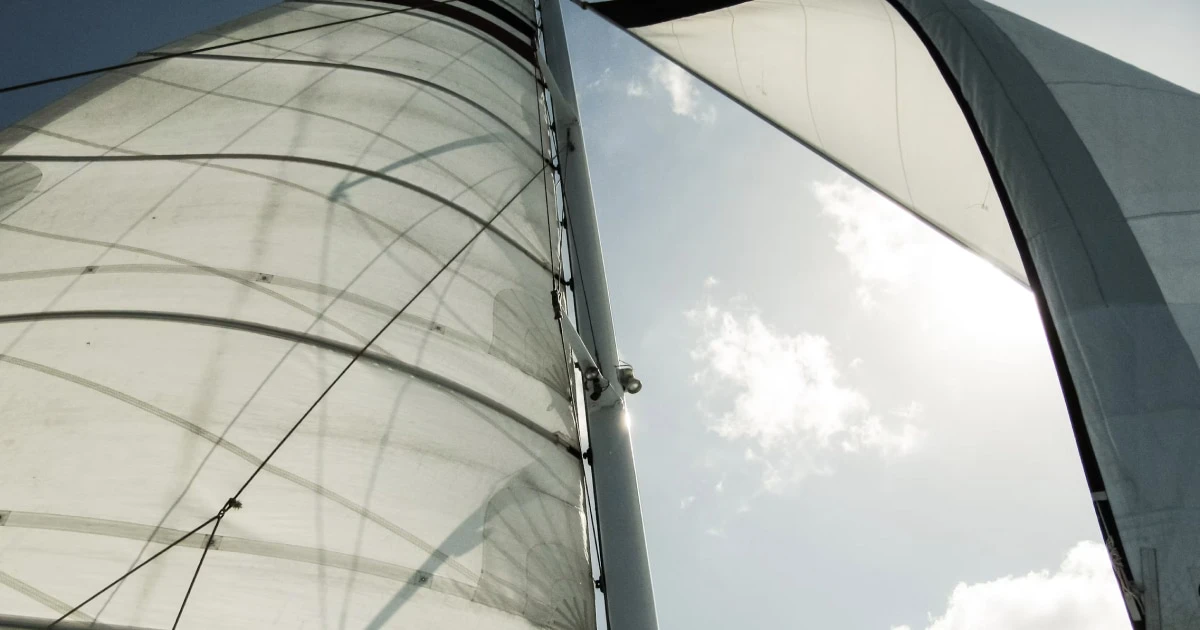
Sails and Wind: Choosing the Right Sail Plan
Choosing the right sail plan is one of the most important decisions you make when sailing. Too little sail in light winds can leave you struggling to make progress. Too much sail in stronger winds can create excessive heel, heavy loads and difficult handling.
The goal is not simply to maximise speed. A good sail plan balances power, control, comfort and safety for the boat, the conditions and the crew.
This guide explains the main sail types, how wind strength and direction influence your choices, and when to consider reducing sail area.
1. What is a sail plan?
A sail plan is the combination of sails set on a boat for the conditions and intended course.
On a typical cruising yacht, it may include:
- A mainsail attached to the mast and boom.
- A headsail, such as a jib or genoa, forward of the mast.
- Optional sails for reaching or downwind sailing.
- Reefed configurations that reduce the area exposed to the wind.
- Specialised heavy-weather sails for conditions beyond the normal operating range.
The right combination depends on several factors:
- True and apparent wind strength.
- Wind direction relative to the boat.
- Sea state and wave direction.
- The boat’s design, rig and sail inventory.
- The experience and physical capability of the crew.
- The distance to shelter and the expected evolution of the weather.
A sail plan that works well in flat water on a short afternoon sail may be unsuitable for a long offshore passage with a building sea.
2. Know your main sail types
Before deciding which sails to set, understand what each sail is designed to do.
Mainsail
The mainsail is attached to the mast and usually controlled by the boom. It is a central part of the sail plan on most conventional sailing yachts.
The mainsail contributes propulsion, balance and control. Its effective area can often be reduced by reefing, depending on the boat’s design.
Jib
A jib is a headsail set forward of the mast. Compared with a large genoa, it generally has less area and may be easier to manage in stronger winds, depending on its design.
A smaller headsail can help maintain control when a larger sail would create excessive power or difficult handling.
Genoa
A genoa is a large headsail that overlaps the mast or mainsail area when viewed from the side.
It is often useful in light to moderate conditions when the boat benefits from additional sail area. In stronger winds, a large genoa may generate more power than is comfortable or appropriate, so it may need to be partially furled or replaced by a smaller headsail.
Not every furling headsail is designed to operate efficiently or safely when heavily furled. Follow the sailmaker’s guidance.
Spinnaker
A spinnaker is a large sail designed primarily for reaching and downwind sailing. It can provide substantial power when the wind angle and conditions are suitable.
Spinnakers require more careful handling than a standard headsail and can become difficult to control if the wind strengthens or the boat’s course changes unexpectedly.
Gennaker or asymmetric spinnaker
A gennaker is an asymmetric sail that combines characteristics of a genoa and a spinnaker. It is commonly used on reaching courses and some downwind angles.
Its suitability depends on the particular design and its intended apparent-wind range. It is not automatically the best choice for every downwind course.
Light-air sails
Some boats carry specialised sails such as a Code Zero or windseeker for light conditions.
These sails are designed for particular wind angles and ranges. Their usefulness depends on the boat, the sail’s specifications and the apparent wind, not simply the forecast’s true-wind speed.
Storm jib and trysail
A storm jib is a small, strong headsail intended for heavy-weather use. A trysail is a specialised sail that can be used instead of the mainsail in appropriate heavy-weather configurations.
These are not simply smaller everyday sails. Their use may require dedicated attachment points, suitable rigging and prior crew training. Check the boat’s equipment and heavy-weather procedures before conditions deteriorate.
3. Choose sails according to wind strength
Wind strength is one of the main factors that determines how much sail area you should carry.
There is no universal wind-speed table that tells every boat when to change sails. Two boats can behave very differently in the same conditions because of their size, hull design, rig, loading and sail inventory.
Use the following guidance as a starting point rather than a set of fixed thresholds.
Light winds
In light winds, the priority is to maintain efficient airflow over the sails and avoid unnecessary drag.
You may consider:
- Using a larger headsail if the boat and conditions suit it.
- Setting a dedicated light-air sail when appropriate.
- Avoiding excessive mainsail tension that flattens the sail unnecessarily.
- Keeping the sails trimmed to the apparent wind.
- Reducing unnecessary manoeuvres that cause the sails to lose their shape.
A large sail is not always the answer. If the sea is confused or the wind direction is unstable, keeping the boat moving and maintaining control may matter more than carrying maximum sail area.
Moderate winds
Moderate conditions often allow a conventional mainsail-and-headsail combination to work efficiently.
Focus on:
- Matching the headsail size to the conditions.
- Adjusting the mainsail and headsail trim as the apparent wind changes.
- Monitoring heel and helm balance.
- Watching for gusts and shifts.
- Reefing early if the boat begins to feel overpowered.
The ideal sail plan is the one that lets the crew maintain a comfortable, controlled course without constant corrective action.
Strong winds
As wind strength increases, the force on the sails and rigging rises. The boat may heel more, develop stronger weather helm and become harder to control.
Consider:
- Reducing sail area before the boat becomes difficult to handle.
- Using a smaller headsail where appropriate.
- Reefing the mainsail in accordance with the boat’s reefing system and guidance.
- Avoiding large downwind sails outside their intended operating range.
- Preparing the crew and equipment before conditions become more demanding.
Do not wait until the boat is heavily overpowered to decide what to do. Reefing can be more difficult when the boat is pitching, heeling and taking frequent gusts.
Heavy weather
Heavy-weather sailing requires a broader assessment than simply reducing sail area.
Consider the forecast, wave conditions, sea room, the boat’s capabilities, the crew’s experience and the availability of shelter. Specialised heavy-weather sails and techniques may be necessary.
Follow the vessel’s heavy-weather procedures and seek qualified instruction if you are unfamiliar with the equipment. If conditions exceed the crew’s capabilities, consider changing the passage plan or seeking shelter while it remains safe to do so.
4. Choose sails according to wind direction
Wind strength alone does not determine which sail is most suitable. The angle between the boat’s course and the wind also matters.
Sailors commonly describe their course in relation to the wind as a point of sail.
Close-hauled
When sailing close-hauled, the boat is sailing as close to the wind as it can while keeping the sails drawing effectively.
The sails are generally trimmed in more tightly than on a reaching course. The exact angle depends on the boat, its sails, sea conditions and the strength of the wind.
Close reach
On a close reach, the wind comes from forward of the beam but at a wider angle than when close-hauled.
The sails can usually be eased slightly compared with an upwind course. The goal is to maintain efficient airflow without allowing the sails to luff excessively.
Beam reach
On a beam reach, the wind comes approximately from the side of the boat.
This is often a comfortable and efficient point of sail. The sails are eased farther than when close-hauled, with the precise trim depending on the boat and conditions.
Broad reach
On a broad reach, the wind comes from behind the beam.
The sails are eased farther out. A suitable reaching sail may provide additional power, but the choice depends on wind strength, apparent wind and the boat’s equipment.
Running downwind
When sailing with the wind from directly astern, sail handling and steering require particular attention.
The mainsail may be eased out, and a suitable downwind sail may be used when conditions permit. However, an accidental gybe can cause sudden boom movement and high loads.
A preventer or other suitable control arrangement may be appropriate, depending on the boat and conditions. The crew should understand the gybing risks before sailing downwind.
For more detail on sailing angles and sail trim, see How to Read Wind Conditions for Sailing.
5. True wind versus apparent wind
Understanding the difference between true and apparent wind helps explain why sail trim changes as the boat accelerates or changes course.
True wind is the wind experienced relative to the Earth or water, depending on the reference used.
Apparent wind is the wind experienced on the moving boat. It combines the true wind with the effect of the boat’s own movement.
For example, as a boat accelerates on a reach, the apparent wind can move farther forward and increase in strength, even if the true wind remains broadly unchanged.
This matters because the sails respond to the apparent wind.
A sail plan should therefore be chosen with both the forecast and the boat’s likely speed and course in mind. A sail that appears suitable based on true-wind direction alone may behave differently once the boat is moving.
6. When should you reef?
Reefing reduces the exposed area of a sail, usually the mainsail, to make the boat easier to manage as the wind strengthens.
The appropriate reefing threshold varies by boat and sail plan. Follow the boat manufacturer’s guidance and the recommendations of the sailmaker rather than relying on a universal wind-speed rule.
Signs that it may be time to reef include:
- The boat heels excessively or frequently.
- Weather helm becomes strong.
- The boat is difficult to steer consistently.
- Gusts cause sudden, uncomfortable changes in heel or speed.
- The crew is struggling to move safely around the boat.
- The conditions are expected to strengthen during the passage.
Reefing earlier can help preserve control and reduce crew workload. It is generally preferable to prepare while conditions still allow the manoeuvre to be carried out safely.
A reefed sail is not merely a smaller version of an unreefed sail: the sail’s shape and trim may also change. Adjust the sail controls appropriately after reefing.
For a step-by-step explanation, read How to Reef a Sail.
7. Balance the sail plan, not just the sail area
Choosing a sail plan is about more than deciding how much fabric to expose to the wind.
The balance between the mainsail and headsail influences the boat’s handling, helm feel and ability to maintain its course.
A poorly balanced sail plan can contribute to excessive weather helm or lee helm. The correct response depends on the boat’s design and the cause of the imbalance.
When adjusting the sail plan:
- Consider whether the mainsail or headsail is contributing most to excessive power.
- Check whether the sails are trimmed appropriately for the apparent wind.
- Monitor heel, rudder load and steering effort.
- Make changes progressively and assess the result.
- Avoid assuming that one adjustment will work identically on every boat.
If the boat remains difficult to control, reducing sail area may be necessary. Consult the vessel’s sailing instructions and seek experienced help if the cause is unclear.
8. Match the sail plan to sea state and crew
The same wind speed can produce very different sailing conditions depending on wave height, period, direction and current.
Short, steep waves can make the boat pitch and slam, interrupting airflow over the sails and making manoeuvres more difficult. A following sea can introduce steering challenges and increase the importance of maintaining control.
The crew also matters. A sail plan that an experienced crew can manage may be inappropriate for a short-handed boat or a crew that is tired or unfamiliar with the vessel.
Before choosing your sails, consider:
- Is the sea state comfortable and manageable for this boat?
- Are gusts or squalls expected?
- How much sea room is available?
- Is there a safe place to reduce sail if conditions worsen?
- Can the crew reef or change sails safely with the equipment on board?
- Is the boat’s rig and sail inventory appropriate for the passage?
The best sail plan is not necessarily the fastest one. For cruising, a manageable and comfortable configuration often makes for a better passage.
9. A practical sail-plan checklist
Use this checklist before departure and whenever the conditions change significantly.
- Check the latest forecast, including gusts and expected changes.
- Assess the current wind direction and strength.
- Consider wave conditions, visibility and available sea room.
- Select sails appropriate for the boat and expected conditions.
- Check the condition of sails, sheets, halyards and reefing equipment.
- Make sure the crew understands the planned sail configuration.
- Identify how and where to reef or change sails.
- Reduce sail early if the boat becomes difficult to control.
- Reassess the sail plan after significant changes in wind or sea state.
- Record any useful observations for future passages.
10. Keep a record of your sail plan and conditions
Keeping notes about the sail plan used during a passage can help you understand how your boat behaves in different conditions.
Useful information to record includes:
- Date and time.
- Wind direction and estimated strength.
- Sea state and visibility.
- Sails set and reefing configuration.
- Boat speed and GPS track.
- Changes made during the passage.
- How the boat handled after each adjustment.
- Any equipment or crew difficulties.
Over time, these records can help you compare similar conditions and prepare more effectively for future trips. They are observations about your own boat, not universal rules for other vessels.
With Skipper, you can document boating trips with GPS tracks, locations, notes and photos, then review your trip history later.
Conclusion
Choosing the right sail plan means balancing wind strength, wind direction, sea state, boat design and crew capability. Larger sails can help in suitable light-air conditions, while reefing and smaller sails can improve control as the wind builds.
There is no single sail plan that works for every boat or every forecast. Learn your vessel’s limits, understand the sails available on board and make adjustments before conditions become difficult.
Good sail selection is not just about performance. It is about maintaining control, reducing unnecessary loads and keeping the crew safe throughout the passage.
Frequently asked questions
What is a sail plan?
A sail plan is the combination of sails set on a sailing vessel for the prevailing conditions and intended course. It includes the mainsail, headsail and any additional sails, along with the amount of sail area exposed.
Which sails should I use in light winds?
A larger headsail such as a genoa, or a dedicated light-air sail, may help generate power in light winds. The appropriate choice depends on the boat, apparent wind, sea state and the sail’s operating limits.
When should I reef the mainsail?
Reef before the boat becomes difficult to control, following the boat’s guidance and your crew’s capabilities. Increasing heel, strong weather helm, frequent gusts and a tiring crew can all indicate that reducing sail area is appropriate.
Should I use a spinnaker when sailing downwind?
A spinnaker can provide substantial power on downwind courses, but it requires suitable wind and sea conditions, appropriate equipment and a crew able to handle it safely. A conventional headsail may be a simpler option.
Is a smaller sail always safer in strong winds?
Reducing sail area can improve control, but the correct sail plan depends on the boat, rig, sea state and wind angle. In severe conditions, specialised heavy-weather sails and established procedures may be necessary.
Remember your days at sea
Skipper is a ship’s log app for sailboats and powerboats, available on iPhone and iPad. It records every trip with GPS and keeps your whole sailing history in one searchable logbook. Free for your first three trips.

Keep reading
Beaufort Wind Force Scale
Understand the Beaufort scale from force 0 to 12, with wind speeds in knots and km/h, sea conditions, practical sailing advice, and guidance for interpreting marine forecasts.
All boaters
How to Read Wind Conditions for Sailing
Learn how to read wind forecasts for sailing, understand knots and gusts, assess wind direction and sea state, and decide when conditions are suitable for your boat and crew.
All boaters
How to Reef a Sail
Learn when to reef a sail, why early reefing matters, and how to reduce sail area safely as wind conditions change.
Sailors