 Skipper
Navigate
•SailorsTacking and Gybing Explained
Learn the difference between tacking and gybing, when to use each manoeuvre, and how to change direction safely under sail.
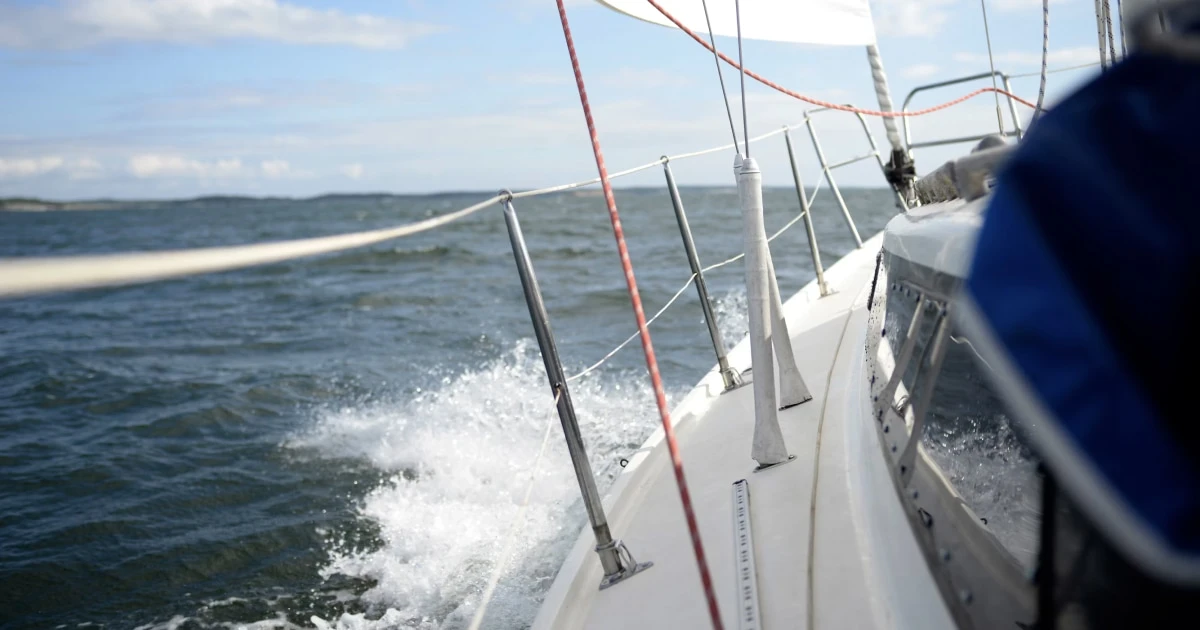
Tacking and Gybing Explained
Changing direction under sail involves more than turning the helm. Depending on where the wind is coming from, you need to choose the right manoeuvre to change the side of the boat from which the wind is received.
Two of the most important sailing manoeuvres are tacking and gybing. Both change the boat from one tack to the other, but they work differently and are used in different situations.
Understanding the distinction helps you sail efficiently, communicate clearly with your crew, and reduce the risk of an uncontrolled sail movement.
What Is the Difference Between Tacking and Gybing?
The key difference is which end of the boat passes through the wind.
| Feature | Tacking | Gybing |
|---|---|---|
| What passes through the wind? | The bow | The stern |
| Typical point of sail | Close-hauled or sailing upwind | Broad reach or running downwind |
| Why do it? | Change tack while making progress upwind or changing direction | Change tack while sailing downwind |
| What happens to the mainsail? | It crosses as the boat turns through the wind | It crosses as the stern passes through the wind |
| Main challenge | Maintaining enough speed to complete the turn | Controlling the mainsail and boom as they cross |
Both manoeuvres require coordination between the helm, sail trim, and crew. The exact technique depends on the boat, its rig, and the conditions.
Understanding Wind Direction and Tack
Before learning either manoeuvre, it helps to understand what sailors mean by tack.
A boat is on port tack when the wind comes over its port (left) side, and on starboard tack when the wind comes over its starboard (right) side. These definitions are based on the direction from which the wind is received, not the side on which the mainsail happens to be positioned.
A boat changes tack when the wind shifts from one side to the other relative to the boat.
Sailors also describe their direction of travel in relation to the wind:
- Close-hauled: Sailing as close to the wind as the boat can effectively manage.
- Close reach: Sailing away from the wind, but still relatively close to it.
- Beam reach: Sailing with the wind coming approximately from the side.
- Broad reach: Sailing with the wind coming from behind and to one side.
- Run: Sailing with the wind coming from directly or nearly directly behind.
These points of sail help determine whether a tack or gybe is appropriate.
What Is Tacking?
Tacking is a manoeuvre in which the bow turns through the direction from which the wind is blowing. The wind then comes from the opposite side of the boat.
It is the standard way for a sailboat to make progress towards a destination that lies upwind.
Because a sailboat cannot sail directly into the wind under conventional sail propulsion, it follows a zigzag course. Each tack allows it to progress at an angle to the wind, gradually working towards its destination.
When do you tack?
You typically tack when:
- You want to make progress upwind.
- Your current course no longer takes you towards your destination.
- You need to avoid a hazard while continuing to sail.
- You want to change direction while sailing close-hauled or on a close reach.
A tack can also be used as part of a tactical decision in racing or when navigating around other vessels and obstacles.
How to tack a sailboat
The following is a general overview of a conventional tack on a boat with a mainsail and headsail. The exact sequence depends on the boat, rig, and crew arrangement.
1. Check your surroundings.
Look for other vessels, navigation hazards, and sufficient sea room. Check that the intended course change is safe and that the crew is ready.
2. Prepare the crew.
Communicate the manoeuvre before initiating the turn. On many sailing boats, a common exchange is:
- Helm: “Ready about?”
- Crew: “Ready.”
- Helm: “Helm’s alee!” or another agreed command to initiate the tack.
Commands vary by sailing tradition and boat. The important point is that everyone understands what is about to happen.
3. Turn the bow through the wind.
The helm turns the boat smoothly towards the wind. As the bow crosses the wind direction, the sails temporarily lose their drive and begin to move to the other side.
Avoid turning too slowly, which can leave the boat head-to-wind without enough momentum to complete the manoeuvre. Turning too aggressively can also reduce control.
4. Release and trim the headsail.
The crew releases the working headsail sheet at the appropriate point and trims the opposite sheet as the sail moves across. The timing depends on the sail and the boat’s handling characteristics.
5. Move across safely and settle on the new course.
The crew moves to the appropriate side when safe to do so. The helm establishes the new close-hauled course, and the crew trims the sails for the new wind angle.
6. Check speed and balance.
After the tack, confirm that the boat is sailing efficiently, the sails are correctly trimmed, and the crew and lines are clear.
Common tacking mistakes
- Turning too slowly: The boat can lose too much speed and fail to complete the turn.
- Turning too sharply: Excessive rudder movement can increase drag and disrupt the boat’s momentum.
- Releasing the wrong sheet: This can prevent the headsail from crossing correctly.
- Moving across too early or too late: Poorly timed crew movement can affect balance and safety.
- Forgetting to trim after the tack: The boat may continue on an inefficient course or lose speed.
Smooth coordination is more important than making the turn quickly. Practise the manoeuvre in suitable conditions until the helm and crew can perform it consistently.
What Is Gybing?
Gybing, also spelled jibing, is a manoeuvre in which the stern passes through the wind. The wind changes sides, and the mainsail crosses to the other side of the boat.
A gybe is commonly used when sailing downwind. It allows the boat to change direction while continuing to make progress with the wind coming from behind.
Unlike a tack, where the bow turns through the wind and the sails temporarily lose drive, a gybe can involve a more forceful transfer of wind pressure across the mainsail.
When do you gybe?
You typically gybe when:
- You want to change direction while sailing downwind.
- You need to alter your course towards a destination.
- You are following a route that requires a change of tack while sailing on a broad reach or run.
- You need to avoid a hazard and have determined that a gybe is the appropriate manoeuvre.
A gybe should be planned rather than treated as an improvised turn. The wind angle, sea state, traffic, and crew experience all influence how and when to carry it out.
How to gybe a sailboat
The following describes the general principles of a controlled gybe on a conventional sailboat. It is not a universal step-by-step procedure: the appropriate technique differs between dinghies, cruising yachts, boats with different mainsheet arrangements, and vessels carrying additional sails.
1. Check the wind and your surroundings.
Confirm your intended course and check for traffic, hazards, and sufficient sea room. Make sure the crew knows a gybe is coming.
2. Prepare the crew and the cockpit.
Secure loose objects and keep everyone clear of the mainsheet, blocks, and the path of the boom. Agree on clear commands and ensure the crew understands their responsibilities.
3. Steer towards the new course gradually.
The helm turns the boat so the stern approaches and then passes through the wind. Avoid abrupt steering that could cause the boat to heel or turn more sharply than intended.
4. Control the mainsail crossing.
The mainsail and boom move from one side to the other as the stern passes through the wind. The mainsheet must be managed using the boat’s established technique to keep this movement controlled.
On some boats, the mainsheet can be brought in progressively before the gybe. Other systems and sail plans require different techniques. Never assume that one procedure is suitable for every boat.
5. Steer onto the new course.
Once the stern has passed through the wind, establish the intended course on the new tack. Avoid allowing the boat to turn further than planned.
6. Ease and trim the sail progressively.
Manage the mainsheet as appropriate for the new wind angle, and trim the headsail and any other sails. Check that the rig and lines are clear and that the boat is stable.
7. Reassess the boat’s balance.
Confirm that the crew is safe, the sail plan is appropriate, and the boat is under control. If conditions are too demanding for a safe gybe, consider whether a different course or manoeuvre is more appropriate.
Why Is Gybing More Risky?
The main concern is the movement of the mainsail and boom.
During a gybe, the boom can move rapidly across the boat if the sail is carrying significant pressure. This can injure anyone in its path, damage equipment, or cause a sudden change in the boat’s balance.
The risk increases when:
- Wind strength or gusts increase.
- The boat is sailing on a broad reach or run with a large mainsail set.
- The helm unintentionally steers the stern through the wind.
- The crew is not prepared for the manoeuvre.
- Loose lines or equipment obstruct the movement of the sail.
- The sea state makes it difficult to steer a consistent course.
A gybe is not inherently unsafe, and it is a normal part of sailing. The risk comes from losing control of the manoeuvre or allowing the boom to cross unexpectedly.
What is an accidental gybe?
An accidental gybe happens when the stern passes through the wind unintentionally. A change in wind direction, a wave, a steering error, or a moment of inattention can cause it.
The mainsail can then cross suddenly, creating a serious hazard for anyone near the boom or mainsheet.
To reduce the risk:
- Monitor the boat’s course and wind angle when sailing downwind.
- Keep the crew informed about the intended course.
- Avoid steering so far downwind that an unintended gybe becomes likely.
- Know how your boat’s mainsheet and boom respond in different conditions.
- Consider reducing sail when the wind strengthens.
- Practise controlled gybes under appropriate supervision and in suitable conditions.
A preventer or other rig-specific equipment may help reduce the risk of an unintended boom movement when properly fitted and used. However, it introduces its own handling considerations and must be managed in accordance with the boat’s setup and operating guidance.
Accidental Gybe vs. Controlled Gybe
| Controlled gybe | Accidental gybe | |
|---|---|---|
| Preparation | The crew is briefed and ready | The crew may be unaware that the manoeuvre is happening |
| Steering | The course change is deliberate | The stern crosses the wind unexpectedly |
| Mainsail | Its movement is managed according to the boat’s system | It may cross suddenly under load |
| Risk | Managed through preparation and control | Increased risk of injury, loss of control, and equipment damage |
The practical lesson is straightforward: when sailing downwind, know where the wind is relative to your course and communicate before changing direction.
Tacking vs. Gybing: Which Should You Choose?
The right manoeuvre depends primarily on your current point of sail and the direction you need to go.
| Situation | Typical manoeuvre | Reason |
|---|---|---|
| Making progress towards a destination upwind | Tack | The bow passes through the wind to establish the opposite tack |
| Changing direction while sailing downwind | Gybe | The stern passes through the wind to establish the opposite tack |
| Avoiding a nearby vessel or hazard | Depends on the situation | The safest option depends on traffic, sea room, wind, and the applicable collision regulations |
| Wind and sea conditions are becoming challenging | Reassess the plan | You may need to reduce sail, change course, or delay the manoeuvre |
Do not choose a manoeuvre based on wind direction alone. The boat’s position, nearby traffic, navigational hazards, and the crew’s ability to perform the turn safely all matter.
How to Practise Tacking and Gybing
The best way to improve is to practise both manoeuvres under suitable conditions, ideally with an experienced instructor or skipper who knows the boat.
Start with a clear plan and enough sea room. Before each manoeuvre, brief the crew, check the wind and traffic, and confirm that everyone knows what to do.
After each turn, review:
- Did the boat maintain enough speed through the manoeuvre?
- Was the steering smooth and controlled?
- Did the sails cross without unnecessary delay or force?
- Did everyone move safely and at the right time?
- Was the new course and sail trim established efficiently?
When practising gybing, give particular attention to the mainsail and boom. Do not use strong winds as a training environment for an unfamiliar manoeuvre.
For more guidance on preparing your sail plan for changing conditions, read How to Reef a Sail.
Record Your Sailing Experience
Tacking and gybing become easier to understand when you connect the theory to your own experience on the water.
After a sailing trip, consider noting:
- The approximate wind conditions during the manoeuvres.
- Whether the boat maintained speed through each turn.
- How the boat behaved before and after the manoeuvre.
- Any difficulties with sail trim, steering, or crew coordination.
- What you would change next time.
With Skipper, you can record your sailing trips using GPS tracks, trip statistics, notes, and photos. Adding observations about conditions and manoeuvres can help you build a useful record of your sailing experience over time.
Frequently Asked Questions
What is the main difference between tacking and gybing?
During a tack, the bow passes through the wind. During a gybe, the stern passes through the wind. Tacking is commonly used to make progress upwind, while gybing is commonly used when sailing downwind.
Is gybing more dangerous than tacking?
Gybing can be more hazardous because the mainsail and boom may cross rapidly under load. A controlled gybe is a normal sailing manoeuvre, but an accidental gybe can cause serious injury or equipment damage.
Can you sail directly into the wind?
No. A conventional sailboat cannot make forward progress directly into the wind under sail. To approach a destination upwind, sailors normally tack between courses on either side of the wind.
What is an accidental gybe?
An accidental gybe occurs when the stern passes through the wind unintentionally. It can cause the mainsail and boom to cross suddenly, potentially injuring crew or damaging the rig.
Can you gybe in strong winds?
A gybe may be possible in strong winds, but the loads and risks can increase significantly. The decision depends on the boat, sail plan, sea state, crew experience, and available sea room. Follow appropriate training and boat-specific procedures rather than relying on a generic technique.
What does “port tack” or “starboard tack” mean?
A boat is on port tack when the wind comes over its port (left) side, and on starboard tack when the wind comes over its starboard (right) side. The terminology describes the side from which the wind is received.
Final Thoughts
Tacking and gybing are fundamental sailing manoeuvres, but they serve different purposes and require different approaches.
Tacking helps you work towards a destination upwind. Gybing lets you change direction while sailing downwind, but demands particular attention to the mainsail and boom.
Learn the procedure for your specific boat, communicate clearly with the crew, and practise in conditions appropriate to your experience. A well-planned manoeuvre is smoother, more efficient, and safer for everyone on board.
Remember your days at sea
Skipper is a ship’s log app for sailboats and powerboats, available on iPhone and iPad. It records every trip with GPS and keeps your whole sailing history in one searchable logbook. Free for your first three trips.

Keep reading
Crew Roles on a Sailing Yacht
Learn the key crew roles on a sailing yacht, from skipper and helm to sail trimmers, navigator and bow person, and how to work together safely.
Sailors
How to Read Wind Conditions for Sailing
Learn how to read wind forecasts for sailing, understand knots and gusts, assess wind direction and sea state, and decide when conditions are suitable for your boat and crew.
All boaters
How to Reef a Sail
Learn when to reef a sail, why early reefing matters, and how to reduce sail area safely as wind conditions change.
Sailors