 Skipper
Document
•All boatersBest Practices for a Sailing Logbook
Learn how to keep a useful sailing logbook with consistent entries, accurate navigation records, weather observations, and practical routines. Discover how a digital logbook can simplify the process.
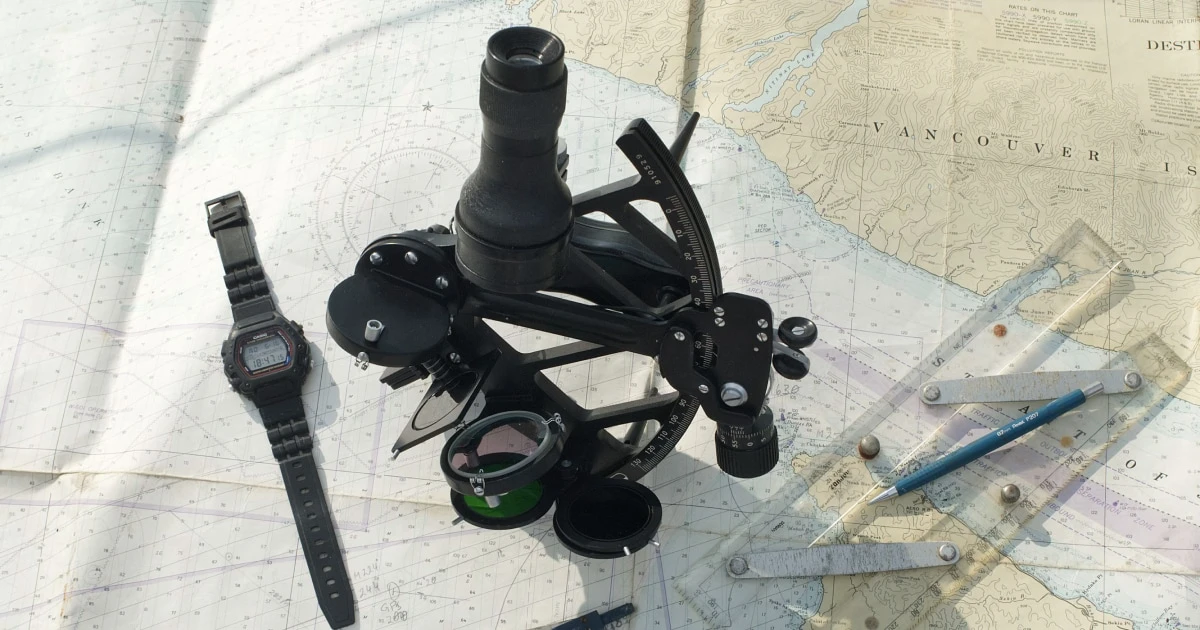
Best Practices for a Sailing Logbook: 10 Essential Tips
A sailing logbook is only as useful as the information it contains. A few consistent habits can turn a basic record of your trips into a reliable reference for navigation history, weather observations, decisions, and lessons learned.
The challenge is not writing more. It’s recording the right information, at the right time, in a format you can understand months or years later.
Whether you use a traditional notebook or a digital sailing logbook, these ten best practices will help you maintain clearer, more useful records.
1. Establish a consistent routine
The easiest way to maintain a sailing logbook is to make it part of your sailing routine.
Instead of trying to remember everything at the end of the day, divide your record-keeping into three stages.
Before departure
Record the information that establishes the context of the trip:
- Date and departure time.
- Vessel and crew, where relevant.
- Departure location and intended destination.
- Initial weather and sea conditions.
- Relevant starting readings or observations.
During the trip
Add entries when something significant happens:
- A change in weather or sea conditions.
- A change in course, destination, or sailing plan.
- A sail change or significant propulsion event.
- Arrival at an anchorage or other notable location.
- An equipment issue, unusual observation, or important decision.
For longer passages, establish a regular interval for recording position and conditions, appropriate to the voyage and any applicable requirements.
After arrival
Complete the record while the details are still fresh:
- Arrival time and location.
- Distance and duration, where available.
- Final observations about conditions.
- Significant events or issues.
- Notes and photos worth keeping.
A consistent routine reduces the amount you need to reconstruct from memory later.
For a step-by-step approach, see How to Keep a Sailing Logbook.
2. Record facts, not assumptions
A good logbook distinguishes what you observed from what you estimated or inferred.
For example, compare these entries:
Less useful: “The wind was about 20 knots and the current caused us to drift off course.”
More useful: “Wind estimated at 15–20 knots. Vessel made less progress toward the destination than expected. Current may have contributed; no direct current measurement was taken.”
The second entry makes the limits of the observation clear.
When recording information, distinguish between:
- Measured data: Information obtained from an instrument or reliable source.
- Estimated values: Approximate figures based on observation.
- Interpretations: Your explanation of why something happened.
- Decisions: The action you took in response.
This distinction becomes particularly important when reviewing a difficult passage or trying to understand why the boat behaved differently than expected.
If you are unsure about a detail, say so. An honest estimate is more useful than false precision.
3. Use consistent units and time references
Inconsistent notation can make a logbook difficult to interpret.
Choose a clear convention and stick to it throughout the trip.
Time
For example, record times using a 24-hour clock and state whether you use UTC or local time when that distinction matters.
This is especially important during longer passages, when crossing time zones, or when comparing records from different sources.
Distance and speed
Use nautical miles for distance and knots for speed when appropriate for your sailing records.
Be clear about what each value represents. Speed over ground and speed through the water are different measurements. Likewise, distance travelled is not necessarily the same as distance made good toward your destination.
Wind and sea conditions
Use a consistent wind scale or unit and distinguish wind conditions from sea state.
If you use the Beaufort scale, identify the scale or force rather than mixing qualitative descriptions with unexplained numerical values.
The objective is simple: someone reading the entry later should understand what you meant without having to guess.
4. Record significant events, not every small action
A sailing logbook does not need to become a transcript of the entire day.
Focus on events that help explain the trip or preserve useful information.
Examples include:
- Departure and arrival.
- Significant changes in weather.
- Changes in route or destination.
- Sail configuration changes that matter to the voyage.
- Anchoring, mooring, or harbour manoeuvres worth documenting.
- Equipment problems and the actions taken.
- Communications or assistance relevant to an event.
- Decisions that materially affected the passage.
Routine actions can be omitted from a personal logbook when they add no meaningful context, unless specific requirements call for more detailed recording.
A useful question to ask is:
Would this detail help me understand the trip if I read this entry next season?
If the answer is yes, it may be worth recording.
5. Explain important decisions
Recording what happened is useful. Recording why you made a significant decision can be even more valuable.
Suppose you change your planned destination because the wind increases.
A basic entry might say:
“Changed destination and headed for a sheltered harbour.”
A more useful entry could say:
“Wind increased during the afternoon and conditions became less comfortable than expected. Changed destination to the planned sheltered harbour. Updated estimated arrival and informed the crew.”
The second version provides context for the decision without turning the logbook into a lengthy narrative.
When documenting a decision, record:
- What you observed.
- What alternatives or constraints mattered, if relevant.
- What action you took.
- What happened afterward.
This practice can help you review your judgement, identify recurring patterns, and learn from experience.
It is not about proving that every decision was perfect. It is about understanding the circumstances in which it was made.
6. Include weather and sea conditions
Weather observations help explain how a trip unfolded.
A route or distance figure alone cannot tell you whether you sailed in light winds, encountered a developing sea, or changed plans because conditions deteriorated.
Depending on the voyage, useful observations may include:
- Wind direction and force.
- Visibility.
- Cloud cover and precipitation.
- Sea state and swell.
- Current, when known or relevant.
- Significant changes during the trip.
Record what you observed and distinguish it from forecasts or instrument readings.
For example:
“At 14:00, wind increased from approximately 8–10 knots to 15–18 knots. Sea became more developed. Reduced sail area and reassessed the planned route.”
This gives a clearer picture than simply writing “windy afternoon.”
Do not rely on a logbook entry as a substitute for checking current forecasts, monitoring conditions, or making appropriate navigational decisions.
7. Add context with notes and photos
Numbers explain part of a trip, but context often explains the rest.
A GPS track can show where you travelled. It cannot tell you why you chose a particular anchorage, what the crew noticed, or which part of the day you want to remember.
Short notes can capture details such as:
- Why you selected a particular stop.
- What made an anchorage suitable or unsuitable.
- An observation about the boat’s handling.
- A memorable event during the trip.
- Something you would do differently next time.
Photos can complement these notes by preserving visual details of a location, the conditions, or a memorable moment.
Keep descriptions factual when documenting equipment problems or incidents, and avoid assuming that a photograph alone establishes the cause of an event.
Keep the context with the trip
A common problem is scattering information across different places: GPS tracks in one app, photos in a camera roll, and observations in a notebook.
A digital sailing logbook can help bring those details together.
With Skipper, you can record GPS tracks, routes, distance, duration, and speed, then add details such as weather, crew, locations, notes, and photos to your trip records.
This makes it easier to revisit not only where you sailed, but also what happened during the trip.
8. Review your logbook regularly
A logbook becomes more valuable when you revisit it.
A short review after each trip helps you complete missing details while your memory is fresh. A broader review at the end of a season can reveal patterns you might otherwise overlook.
Consider asking yourself:
- Which routes did I sail most often?
- How did trip duration and distance vary?
- Which conditions made passages more demanding?
- Which decisions worked well?
- What would I change about a similar trip?
- Are there recurring issues that need further attention?
Use recorded data as evidence, not as a substitute for judgement. A few trips do not necessarily establish a reliable pattern, and changing conditions can make direct comparisons misleading.
A digital logbook that lets you revisit trip history, maps, and statistics can make this review easier.
With Skipper, you can look back at your recorded sailing trips and use their routes and statistics as a starting point for reflecting on your experience.
9. Keep sailing records separate from maintenance records
A sailing logbook and a boat maintenance log serve different purposes.
A sailing logbook focuses on voyages, navigation, conditions, crew, and events during trips.
A maintenance log focuses on the condition of the boat and its equipment, including inspections, servicing, repairs, replacement parts, and follow-up work.
The two records can complement each other. For example, a logbook entry might document an engine alarm during a trip, while the maintenance record documents the subsequent inspection and repair.
For engine-related records, distinguish between elapsed trip duration and engine-hour readings. A boat may be underway for several hours without running the engine continuously.
If you need a dedicated maintenance record, see How to Keep a Boat Maintenance Log.
Do not assume that a sailing logbook automatically replaces maintenance records or other documentation required for your boat.
10. Choose a format you can maintain
The best system is the one you will actually use.
A paper logbook is straightforward, works without a powered device, and gives you complete freedom over the layout. Its limitations include manual data entry, physical storage, and the effort required to find or compare old records.
A digital sailing logbook can make it easier to organize trips and combine supported GPS data with notes, photos, and trip history. However, it depends on electronic devices and the capabilities of the app you choose.
| Best practice | Paper logbook | Digital logbook |
|---|---|---|
| Maintain a consistent format | Use a printed template or repeated layout | Use consistent fields and entry habits |
| Record navigation information | Write or copy readings manually | Use GPS and trip data when supported |
| Add observations | Write directly in the notebook | Add digital notes |
| Preserve visual context | Sketch or attach printed photos | Attach photos when supported |
| Review previous trips | Search through stored notebooks | Revisit organized trip history and maps |
| Preserve important records | Store notebooks safely | Check export and backup options |
For a more detailed comparison, read Digital vs. Paper Sailing Logbook.
A practical digital option for iPhone
If you sail regularly and want a structured way to keep your trip history, Skipper offers a digital sailing logbook for iPhone.
You can record GPS tracks, routes, distance, duration, and speed, add details about crew and weather, and enrich your records with locations, notes, and photos. You can then revisit your sailing history, maps, and statistics.
Rather than relying on memory to reconstruct each trip, you can build a record as you go.
Want to make your sailing logbook part of every trip? Explore Skipper and start recording your sailing experiences on iPhone.
A simple checklist for every sailing trip
Use this checklist to put the best practices into action.
Before departure
- Record the date, departure time, vessel, and relevant crew details.
- Note the departure location and intended destination.
- Record relevant weather and sea conditions.
- Capture any starting readings that matter to your record.
During the trip
- Record significant events and changes in conditions.
- Note important route changes and the reasons for them.
- Keep time references and measurement units consistent.
- Add observations while the details are fresh.
- Document equipment issues or incidents factually.
After arrival
- Record arrival time and location.
- Complete relevant distance and duration details.
- Add notes and photos that provide useful context.
- Review entries for missing information or unclear wording.
- Preserve important records using an appropriate method.
Adapt this checklist to the type of sailing you do. Longer passages, commercial operations, and voyages subject to specific regulations may require additional procedures and records.
Frequently asked questions
What are the best practices for keeping a sailing logbook?
Record entries consistently, use a clear time convention and units, distinguish observations from estimates, document significant events and decisions, and review your entries after each trip. The goal is to create a record that remains understandable and useful later.
How often should I update my sailing logbook?
For a recreational day sail, record departure, significant events, changes in conditions, and arrival. Longer passages may require regular position and condition entries. Follow any applicable official requirements rather than relying on a general personal-logbook routine.
Should I record every detail in a sailing logbook?
No. Focus on information that helps reconstruct the trip, understand conditions, explain decisions, or preserve useful observations. The required level of detail depends on the voyage and any applicable regulations.
Is a digital sailing logbook easier to maintain?
A digital logbook can simplify trip organization and help keep GPS tracks, routes, notes, photos, and trip statistics together when the app supports those features. Skipper provides GPS track recording, trip information, and tools to revisit your sailing history on iPhone.
How can I make my sailing logbook more accurate?
Write entries while details are fresh, use consistent units and time references, identify estimates, check recorded data when possible, and avoid presenting assumptions as facts. Be especially clear when documenting significant decisions or incidents.
Can a digital sailing logbook replace an official logbook?
Not automatically. Official requirements depend on the vessel, flag state, voyage, and applicable regulations. Check the relevant requirements before relying on a personal digital logbook for formal record-keeping.
Build a better sailing logbook, one trip at a time
A useful sailing logbook does not need to be complicated. It needs to be consistent, factual, and detailed enough to explain what happened during each trip.
Establish a routine, record meaningful changes, distinguish observations from assumptions, and review your entries regularly. Add notes and photos when they provide context that navigation data alone cannot capture.
If you want a practical way to maintain that habit, Skipper helps you record sailing trips on iPhone, review GPS tracks and trip statistics, and keep the details of each outing together.
Start recording your trips with Skipper, and turn every sail into a record you can revisit.
Remember your days at sea
Skipper is a ship’s log app for sailboats and powerboats, available on iPhone and iPad. It records every trip with GPS and keeps your whole sailing history in one searchable logbook. Free for your first three trips.

Keep reading
Digital vs. Paper Sailing Logbook
Compare digital and paper sailing logbooks, from GPS tracking and trip history to reliability and ease of use. Find the right format for your sailing and discover Skipper for iPhone.
All boaters
How to Keep a Sailing Logbook
Learn how to keep a sailing logbook with a simple routine, practical entries and tips for recording every trip consistently.
All boaters
Sailing Logbook Examples
Explore practical sailing logbook examples for day sails, longer passages, changing weather, and incidents. Learn what to record and how to structure your entries.
All boaters