 Skipper
Document
•All boatersHow to Keep a Sailing Logbook
Learn how to keep a sailing logbook with a simple routine, practical entries and tips for recording every trip consistently.

How to Keep a Sailing Logbook
Keeping a sailing logbook shouldn’t feel like doing paperwork after every trip. The goal is to create a reliable record of where you sailed, what conditions you encountered and what you learned along the way.
The easiest way to achieve that is to establish a simple routine. Record the essentials before departure, add meaningful observations during the voyage and complete the entry as soon as you can after arriving.
A few consistent minutes can make the difference between an empty notebook and a useful sailing history.
1. Choose a logbook format you will actually use
Before deciding what to write, choose a format that fits the way you sail.
Paper logbook
A paper logbook is straightforward, works without batteries and can be useful when you prefer handwriting or need a specific physical record.
Its main drawback is that you must enter information manually. Finding a particular trip, comparing distances across a season or organising photographs can also take time.
Digital logbook
A digital logbook can bring routes, trip details, notes and photos together in one place. Depending on the application, GPS data may also be recorded automatically.
For example, Skipper records GPS tracks, routes, distances, duration and speed during trips on iPhone. You can add contextual details such as the boat, crew, weather, locations, notes and photos.
This reduces the amount of information you need to reconstruct manually after a trip. You can then review the recorded route alongside your own observations.
Neither format is automatically suitable for every official purpose. If your vessel or operation is subject to a prescribed recordkeeping requirement, confirm that your chosen format meets it.
2. Build a routine around three moments
The simplest approach is to divide your logbook routine into three stages: before leaving, during the trip and after arrival.
Before departure: establish the baseline
Start with the information that identifies the trip.
Record:
- The date and departure time.
- The boat being used.
- Your departure point and intended destination.
- The people aboard, when relevant.
- The forecast and any conditions that affect your plan.
- Important equipment issues or operational notes.
You don’t need to write a long introduction. A few structured fields are usually enough.
For example:
08:45 — Departing Port A for Bay B. Three people aboard. Forecast: westerly wind, 10–15 knots. Alternative anchorage identified if conditions deteriorate.
This establishes what you intended to do and the information available when you made the decision.
During the trip: record meaningful changes
You do not necessarily need to write continuously throughout a recreational outing.
Instead, add entries when something changes or happens that you may want to understand later.
Examples include:
- A change in wind strength or direction.
- A sail change or reef.
- A route deviation.
- A change in destination.
- An equipment issue.
- An anchoring attempt.
- A significant event or safety concern.
For example:
11:20 — Wind increased on the exposed section. Took a reef and reduced speed. Continued toward the planned destination after reassessing conditions.
This entry is more useful than a note saying only that the wind increased. It captures the decision made in response.
For longer passages or vessels subject to formal requirements, the appropriate frequency and content of entries may be more demanding. Follow the rules applicable to your operation.
After arrival: close the entry
Complete the trip record before you forget the details.
Record the arrival time and location, distance travelled if available, final conditions and any observations worth keeping.
Then ask yourself three questions:
- What happened that I might forget?
- What did I learn about the boat or the conditions?
- Is there anything I should check before the next trip?
A short answer to each question is often enough.
For example:
14:10 — Arrived at Bay B. The anchorage was sheltered from the prevailing wind. Check the headsail furling line before the next outing.
The entry now records the end of the trip, an observation about the location and a useful follow-up action.
3. Keep entries short, factual and consistent
A sailing logbook is most useful when its entries are easy to interpret months or years later.
You don’t need polished prose. You need clear information.
Prefer specific observations
Instead of:
Weather was bad.
Write:
Wind increased through the afternoon, with frequent stronger gusts. Reduced sail and changed course toward the sheltered coast.
The second version provides context without requiring a long narrative.
Separate facts from estimates
If a value comes from an instrument, record the reading and the relevant unit. If it is an estimate, say so.
For example:
- Recorded distance: 18 nautical miles, according to the trip track.
- Estimated wind: approximately 15 knots, based on onboard observations.
Do not imply a level of precision that the source does not support.
Use consistent units
Choose a consistent convention for distance, speed, wind and other measurements.
For nautical navigation, nautical miles and knots are common units. Where you use another unit, identify it clearly.
Consistency makes it easier to compare trips without having to reinterpret every entry.
Record times carefully
Use a consistent time convention and identify the time zone when it matters, especially for longer passages, offshore navigation or records spanning different locations.
If your logbook is intended to meet a formal requirement, follow the time standard and entry conventions prescribed for that record.
4. Record decisions, not just conditions
One of the most valuable habits is to write down why you changed your plan.
A route on a chart or GPS track can show where you went. It may not show why you chose that route.
Consider the difference:
Basic entry
Changed course at 13:00.
More useful entry
13:00 — Changed course to avoid the exposed headland as the wind strengthened. Continued toward the alternative anchorage.
The second entry makes the reasoning easier to understand later.
You can apply the same principle to other situations:
- Why you delayed departure.
- Why you chose one anchorage over another.
- Why you started the engine.
- Why you shortened sail.
- Why you turned back.
Do not try to justify every decision retrospectively. Record the relevant observations and reasoning as accurately as possible.
Over time, this practice can help you recognise recurring patterns in your decisions and understand how your experience develops.
5. Use photos and notes to add context
A GPS track is valuable, but it rarely tells the whole story.
A photograph, a short note or a saved location can help explain what happened at a particular point in the trip.
Useful additions include:
- A photograph of an anchorage or harbour entrance.
- A note about the holding ground or shelter observed.
- A reminder about an equipment issue.
- A description of a manoeuvre you want to practise again.
- An observation about the boat’s behaviour in particular conditions.
- A memorable moment with the crew.
Keep these additions selective. You don’t need to document every detail of every outing.
With Skipper, you can combine the recorded trip with notes and photos to make the history more meaningful than a track alone.
6. Keep technical records accurate
If you own or manage a boat, your logbook may also contribute to a wider record of its use.
However, don’t confuse a sailing logbook with a maintenance register.
Engine hours
If you need to track engine hours, use the actual engine-hour meter or another appropriate measurement. Record readings when available and document any meter replacement or reset.
A GPS trip duration is not the same as engine operating time: a sailing yacht may spend much of its voyage under sail.
Fuel consumption
Record fuel quantities and the associated measurements if you want to calculate consumption. A trip distance alone cannot tell you how much fuel was used.
Maintenance
When an issue arises during a trip, note what you observed and what action was taken. Transfer any necessary work into your maintenance log, including the date, engine hours where applicable, parts used and follow-up work.
This separation keeps your records useful for their intended purposes.
For a deeper look at maintenance records, see How to Keep a Boat Maintenance Log.
7. Review your logbook regularly
A logbook becomes more valuable when you return to it.
At the end of a month or sailing season, review your entries and look for useful patterns.
You might ask:
- Which destinations did I visit?
- How far did I sail?
- Which conditions did I encounter most often?
- Which routes worked well?
- What equipment issues kept recurring?
- Which skills did I practise?
- What should I prepare differently next time?
You can also review photographs and notes to recall the details behind particular trips.
This is where a consistent record pays off. If you have used the same units, recorded key events and completed entries regularly, comparing outings becomes much easier.
Read How to Review a Sailing Season for a more structured approach.
8. Common logbook mistakes to avoid
Even a simple logbook becomes less useful when important details are missing or inconsistent.
Waiting too long to write the entry. Memory fades quickly. Record the essentials while the trip is still fresh.
Writing only the departure and arrival points. A route is useful, but it doesn’t explain the conditions, events or decisions.
Recording the forecast as if it were observed weather. Keep expected conditions distinct from what you actually experienced.
Mixing units. Specify the units and use them consistently.
Treating estimates as measurements. Identify approximate values and their sources.
Leaving out the reason for a route change. A short explanation can make the record far more useful later.
Confusing trip duration with engine hours. Record engine use separately when you need it for maintenance or fuel analysis.
Assuming a personal logbook meets every official requirement. Check the applicable regulations and any specific documentation rules.
Trying to record too much. An elaborate system that you abandon is less useful than a simple routine you maintain.
9. How much time should you spend on your logbook?
For an ordinary recreational trip, aim for a short, repeatable routine rather than a lengthy report.
A practical starting point is:
| Moment | Task | Suggested approach |
|---|---|---|
| Before departure | Record the trip details and relevant conditions | Keep it brief |
| During the trip | Add entries for significant events and decisions | Record when useful and safe |
| After arrival | Complete the route, notes and follow-up actions | Write while details are fresh |
| End of month or season | Review patterns and organise records | Set aside time periodically |
The time required depends on the trip, the information you want to retain and whether you have formal recordkeeping obligations. There is no universal time target.
The key is to remove unnecessary friction while preserving the information that matters.
Frequently asked questions
How do you keep a sailing logbook?
Choose a format, establish a consistent routine and record the departure, route, conditions, crew, significant events and arrival. Add details that serve your particular purpose, then review the record periodically.
Should you write in your logbook every day?
Record every voyage you want to document. During a multi-day passage, the frequency of entries depends on the conditions, the purpose of the logbook and any applicable requirements.
Can you keep a sailing logbook on your phone?
Yes. A digital logbook can combine route information with notes and photographs. Skipper records GPS tracks, distance, duration and speed during trips on iPhone, and allows additional trip details to be added.
Is a sailing logbook legally required?
That depends on the vessel, jurisdiction and operation. Recreational sailors should check the requirements applicable to their boat rather than assuming either that a logbook is always compulsory or that it is never required.
What is the difference between a sailing logbook and a maintenance log?
A sailing logbook documents voyages, conditions, navigation and events. A maintenance log documents servicing, inspections, defects, parts, engine-hour readings and work completed. They can complement each other but serve different purposes.
Make your logbook a habit
A useful sailing logbook does not need to be complicated. Record the essentials before departure, document meaningful events during the voyage and complete the entry after arrival.
Keep your observations factual, explain important decisions and use consistent units. Over time, your logbook becomes a record you can use to revisit routes, understand past conditions, document experience and prepare for future trips.
If you want to reduce manual work, Skipper can record your trip’s GPS track and key navigation statistics, while letting you add the notes and photos that explain the journey.
Start with the guide to what to write in a sailing logbook, explore the sailing logbook examples, or use the printable sailing logbook template to establish your own routine.
Remember your days at sea
Skipper is a ship’s log app for sailboats and powerboats, available on iPhone and iPad. It records every trip with GPS and keeps your whole sailing history in one searchable logbook. Free for your first three trips.

Keep reading
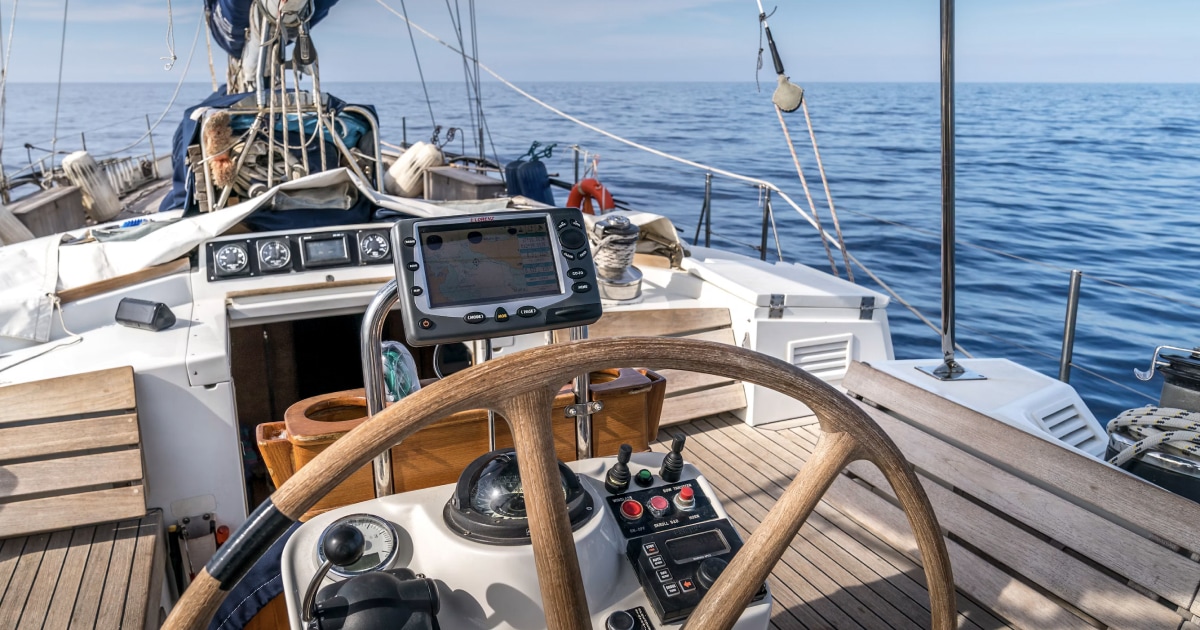
Digital vs. Paper Sailing Logbook
Compare digital and paper sailing logbooks, from GPS tracking and trip history to reliability and ease of use. Find the right format for your sailing and discover Skipper for iPhone.
All boaters
Sailing Logbook Examples
Explore practical sailing logbook examples for day sails, longer passages, changing weather, and incidents. Learn what to record and how to structure your entries.
All boaters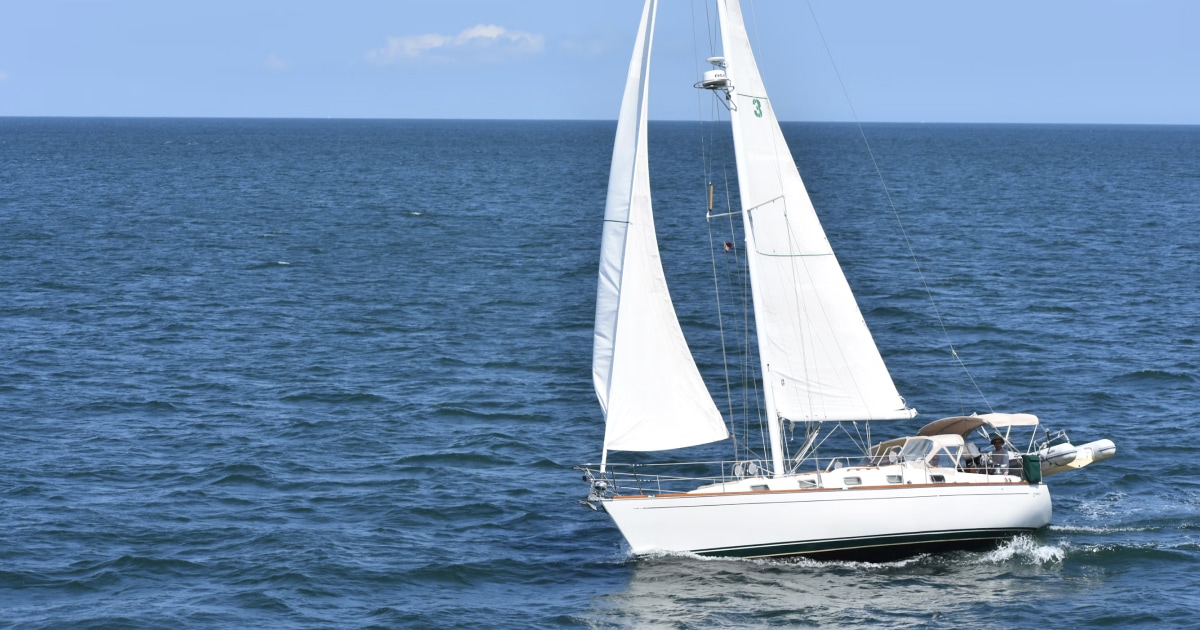
What to Write in a Sailing Logbook
Learn what to record in a sailing logbook, from date and position to weather, crew, engine hours and important events, with practical examples.
All boaters