 Skipper
Prepare
•All boatersBoat Safety Equipment: Inspection and Expiry Dates
Learn how to inspect boat safety equipment, track expiry dates, check lifejackets, flares, fire extinguishers and liferafts, and prepare a reliable inspection checklist.
Boat Safety Equipment: Inspection and Expiry Dates
Safety equipment is only useful if it works when you need it. A lifejacket with a failed inflation mechanism, an expired flare or a liferaft that has not been serviced can create a serious problem during an emergency.
A good inspection routine helps you identify damaged equipment, track expiry dates, arrange servicing and make sure essential items are accessible before leaving the harbour.
The key is to treat safety equipment checks as an ongoing part of boat ownership, not a task to complete once a year or just before a long passage.
This guide explains what to inspect, how to organise expiry dates and servicing records, and how to build a practical safety equipment checklist.
Why inspect boat safety equipment regularly?
Safety equipment is exposed to moisture, salt, sunlight, vibration, temperature changes and sometimes accidental damage. Even equipment that appears unused can deteriorate while stored on board.
Regular inspections help you:
- Identify damage, corrosion, leaks or missing components.
- Replace equipment that has expired or reached its service limit.
- Confirm that equipment is accessible and ready to use.
- Schedule professional servicing before it becomes overdue.
- Prepare for inspections or handovers when required.
- Keep a record of what was checked, repaired or replaced.
A visual inspection is not a substitute for a technical service where one is required. An item may look fine externally while an internal component, battery or inflation mechanism needs attention.
Which boat safety equipment should you inspect?
The exact equipment required depends on the vessel, the number of people aboard, the type of navigation and the applicable regulations. The following list is a practical starting point, not a universal legal inventory.
1. Lifejackets and personal flotation equipment
Lifejackets should fit the intended wearer and be appropriate for the conditions and type of sailing.
Check:
- The outer fabric, seams, straps and buckles for damage.
- Webbing and adjustment systems for wear.
- Inflation mechanisms, indicators and cylinders on inflatable models.
- The manufacturer’s inspection and servicing instructions.
- Any expiry or replacement dates for relevant components.
- Lights, sprayhoods, harnesses or other fitted accessories, where applicable.
- That the equipment is correctly sized and accessible to the people who may need it.
Inflatable lifejackets need particular attention because their readiness depends on the condition of the inflation system as well as the outer garment.
Do not assume that an unused lifejacket is automatically in good condition. Follow the manufacturer’s maintenance procedure and arrange professional servicing when required.
2. Lifebuoys and man-overboard equipment
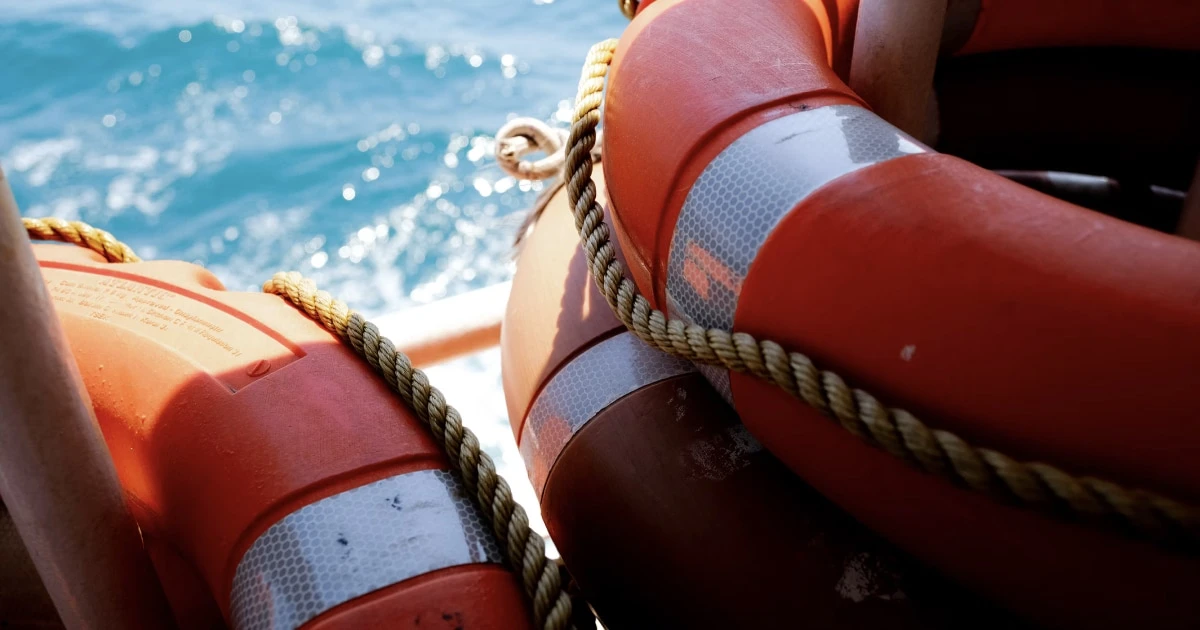
Lifebuoys, horseshoe buoys, recovery lines and other man-overboard equipment should be ready to deploy quickly.
Check:
- The buoy for cracks, deterioration or damage.
- The attachment and condition of any recovery line.
- The condition of reflective material and fitted lights.
- Batteries and replacement dates for electronic or illuminated components.
- That the equipment is correctly secured but can be released quickly.
- That crew members know where it is and how to deploy it.
An item stored in a locker that is difficult to open may not be useful during an emergency. Accessibility matters as much as condition.
3. Marine flares and visual distress signals
Pyrotechnic distress signals have a limited service life and must be handled carefully.
Check:
- The expiry date printed on each item.
- The packaging for damage, moisture or signs of deterioration.
- That the required types and quantities are carried for your navigation area.
- That the crew knows where the signals are stored and how to access the instructions.
- That replacement and disposal arrangements are in place before expiry.
Never use a flare that is damaged or expired simply because it appears intact. Follow the manufacturer’s instructions and applicable regulations.
Expired pyrotechnics must not be discarded casually into household rubbish or discharged as a test. Contact an appropriate local authority, supplier or specialist disposal service for safe handling.
4. Fire extinguishers and fire-fighting equipment
Fire extinguishers need to be appropriate for the hazards aboard and installed in the locations specified by the vessel’s documentation and applicable rules.
Check:
- The cylinder for corrosion, dents, leaks or other damage.
- The pressure indicator, if the model has one.
- The safety pin and tamper seal.
- The hose, nozzle and operating instructions.
- The inspection or service label and any required service date.
- That the extinguisher is secured and readily accessible.
- That crew members know which extinguisher to use and where it is located.
Do not rely on a pressure gauge alone to establish that an extinguisher is serviceable. Follow the manufacturer’s instructions and arrange servicing or replacement as required.
Also inspect fire blankets, fixed fire-suppression systems and other fitted equipment according to their specific requirements.
5. Liferafts
Liferafts are specialised safety equipment that require careful maintenance.
Check:
- The service date and any applicable servicing interval.
- The condition of the container or valise.
- The securing arrangement and deployment access.
- The condition of the cradle or mounting system.
- Any visible damage, corrosion or deterioration.
- That the raft is suitable for the vessel’s intended navigation and the number of people aboard.
Do not open a sealed liferaft container to inspect its contents unless the manufacturer’s procedure or an authorised service provider instructs you to do so.
Liferaft servicing should be arranged with an appropriately authorised or approved service provider where required. Confirm the next service date and retain the documentation.
6. Emergency communications and locating devices
Depending on the boat and navigation area, this equipment may include a VHF radio, an emergency position-indicating radio beacon (EPIRB), a personal locator beacon (PLB) or an automatic identification system (AIS) man-overboard device.
Check the items you carry against their own manuals and regulatory requirements.
For electronic equipment, inspect:
- Battery expiry or replacement dates.
- Self-test results and fault indicators.
- Antenna connections and visible cabling.
- Physical damage, corrosion and water ingress.
- Registration details for applicable distress beacons.
- Required tests and servicing intervals.
Follow the manufacturer’s instructions for testing radio and distress equipment. Do not activate a distress alert or transmit an emergency signal as a casual test.
7. First-aid kit and medical supplies
A first-aid kit can become incomplete as items are used, damaged or expire.
Check:
- Expiry dates on medicines and sterile products.
- Packaging for moisture damage or loss of integrity.
- That essential items have not been used without replacement.
- The kit’s suitability for the number of people and duration of the trip.
- That it is stored in a dry, accessible location.
Replace expired or compromised items and restock anything used during the previous trip. Medicines should be stored and handled according to their labels and relevant advice.
8. Bilge pumps, bailing equipment and emergency tools
Water-ingress equipment may not have a single expiry date, but it still requires inspection and functional checks.
Check:
- Manual bilge pumps and their handles.
- Electric bilge pumps and their controls.
- Relevant electrical connections and fuses.
- Hoses, strainers and discharge arrangements.
- Buckets, bailers or other required manual equipment.
- Emergency tools and any equipment needed to operate essential systems.
Test equipment according to the manufacturer’s instructions and the boat’s operating procedures. Make sure discharge outlets are unobstructed and the crew understands how to operate the equipment.
9. Safety harnesses, tethers and jacklines
Harnesses and tethers are exposed to UV, salt, abrasion and loading. Their condition is especially important because a damaged component may fail when loaded.
Check:
- Webbing for cuts, fraying, discolouration or chemical damage.
- Stitching and load-bearing areas.
- Hooks, clips and buckles for corrosion or deformation.
- The condition of energy-absorbing components, if fitted.
- Manufacturer inspection criteria and any retirement requirements.
- Jackline attachments and the condition of their mounting points.
Remove suspect equipment from service until it has been assessed. Do not continue using a damaged harness or tether merely because its label is still within date.
10. Gas systems and other safety-critical components
On boats fitted with gas appliances, inspect the system in accordance with the manufacturer’s instructions and applicable requirements.
Pay attention to:
- Hose condition and any marked replacement date.
- Regulators, shut-off valves and connections.
- Signs of leaks, corrosion or damage.
- Ventilation and gas-locker arrangements.
- Any required professional inspections.
Do not attempt to identify a gas leak with a flame. If you suspect a leak, follow the boat’s gas safety procedure, shut off the supply if safe to do so, avoid ignition sources and obtain appropriate assistance.
Boat safety equipment inspection schedule
Different items need different inspection intervals. Some require a quick check before each departure, while others need periodic detailed inspection or professional servicing.
Use the following as a general planning framework, then adapt it to the equipment manuals and rules that apply to your boat.
| Equipment | Before departure | Periodic detailed check | Date or service to track |
|---|---|---|---|
| Lifejackets | Check condition, fit and accessibility | Inspect components according to manufacturer instructions | Service date and component expiry, where applicable |
| Lifebuoy and man-overboard equipment | Confirm it is accessible and ready to deploy | Inspect buoy, lines, lights and attachments | Battery or accessory replacement dates, where applicable |
| Flares and distress signals | Confirm availability and accessibility | Inspect packaging and condition | Printed expiry date |
| Fire extinguishers | Confirm accessibility and visible condition | Inspect and service as specified | Inspection or service date |
| Liferaft | Confirm secure installation and access | Arrange required professional servicing | Next service date |
| VHF and distress beacons | Check operation and visible condition | Carry out prescribed tests and maintenance | Battery, service and registration dates, where applicable |
| First-aid kit | Confirm it is present and accessible | Review contents and replace used or expired items | Individual product expiry dates |
| Bilge pumps | Confirm readiness and check for obvious problems | Test and inspect according to manufacturer instructions | Service or maintenance dates, where applicable |
| Harnesses and tethers | Check visible condition before use | Inspect according to manufacturer criteria | Retirement or replacement criteria, where specified |
| Gas system | Check for obvious problems and follow the boat’s pre-use procedure | Arrange required inspections and maintenance | Hose or component replacement dates, where applicable |
The schedule above is not a substitute for a manufacturer’s maintenance programme or a legal inspection schedule. Some items may need checks more frequently, depending on use, exposure and condition.
How to organise expiry dates and servicing
The simplest reliable system is to maintain one list of safety equipment with a clear record for each item.
Useful fields include:
| Field | What to record |
|---|---|
| Equipment | Lifejacket, flare, liferaft, extinguisher or other item |
| Location | Where it is stored or installed |
| Quantity | Number of units aboard |
| Identification | Model, serial number or other identifier, where useful |
| Last inspection | Date and outcome of the last check |
| Expiry date | Manufacturer’s expiry date, if applicable |
| Last service | Date of the last professional service |
| Next service | Next required or recommended service date |
| Condition | Serviceable, needs attention or removed from service |
| Action required | Repair, replacement, restocking or booking |
| Notes | Observations, instructions or supporting details |
Not every item has an expiry date. For those items, track the inspection criteria, service intervals or replacement conditions specified by the manufacturer.
Use reminders before items expire
Do not wait until the day an item expires to arrange a replacement or service.
Set a reminder early enough to allow time for:
- Finding a suitable replacement.
- Booking a specialist service.
- Obtaining parts or replacement batteries.
- Completing any required inspection.
- Updating the inventory and retaining the service record.
For equipment that is required by law, ensure that replacement or servicing is completed before the item becomes non-compliant.
Keep supporting records
Retain receipts, service certificates, manuals and relevant inspection records. These documents help establish what was done, when it was done and what is due next.
For boats that are hired out or subject to specific inspection requirements, check whether a prescribed register or formal documentation is required.
What to do when equipment is damaged, expired or overdue
If an item is damaged, expired or overdue for a required service, do not assume it is ready for use.
- Identify the issue. Record the item, its location and the problem.
- Assess its status. Check the manufacturer’s instructions and applicable rules to determine whether it needs replacement, repair or professional servicing.
- Arrange the corrective action. Obtain an appropriate replacement or book the required service.
- Update the record. Enter the completion date and any new expiry or service date.
- Check the boat’s readiness. If the item is required for the planned trip, do not depart until the applicable safety requirements are met.
Do not substitute a different item without confirming that it is suitable for the vessel, navigation area and applicable regulations.
Legal requirements: check the rules for your boat
Required safety equipment varies by jurisdiction and by factors such as vessel type, length, intended use, flag state and distance from shore or a recognised place of refuge.
For example, France’s Division 240 sets safety and equipment requirements for recreational vessels operating at sea within its scope. The required equipment depends in part on the navigation category, and the regulation includes provisions for maintaining equipment in good working order and meeting applicable inspection requirements.
The official French government guidance explains the equipment requirements and the registre de vérification spéciale relevant to certain vessels and uses.
Start with the official sources for the waters where you sail:
- France: Safety equipment and limits of use — French maritime authorities
- France: Division 240 — current legal text on Légifrance
If you sail under another flag or in another country, consult the relevant maritime authority. A general checklist cannot establish compliance for every vessel.
How a safety equipment log supports boat maintenance
Safety equipment inspections are one part of a broader boat maintenance routine. Keeping a record helps you see what has been checked, which items need attention and when the next service is due.
For each inspection, record:
- The date and the person who carried out the check.
- The equipment inspected.
- The result and any defects found.
- Corrective actions taken.
- Replacement or service details.
- The next action or due date.
A separate maintenance log can be useful for tracking work on the boat itself, including repairs, inspections and component replacements. Read How to Keep a Boat Maintenance Log for a more detailed approach.
Skipper helps you document sailing trips with GPS tracks, route information, trip statistics, notes, photos, weather information and locations. You can use it to keep trip records and contextual notes alongside your wider boat-management process. For detailed equipment inventories and maintenance schedules, maintain a dedicated register suited to those tasks.
Discover Skipper to keep a consistent digital record of your time on the water.
Boat safety equipment inspection checklist
Use this checklist before a trip, during a scheduled inspection or when preparing a boat for a new sailing season.
- Confirm that required safety equipment is aboard for the planned navigation.
- Check lifejackets for condition, fit and service requirements.
- Inspect lifebuoys, recovery lines and man-overboard equipment.
- Check flare and distress-signal expiry dates.
- Inspect fire extinguishers and confirm servicing is up to date.
- Check the liferaft’s next service date and deployment access.
- Check communication equipment and relevant battery dates.
- Review emergency beacons and registration details where applicable.
- Inspect first-aid kit contents and replace expired items.
- Test bilge pumps and inspect bailing equipment as appropriate.
- Inspect harnesses, tethers and jacklines for damage.
- Review gas-system maintenance and hose replacement dates, if fitted.
- Record defects and remove unsafe items from service.
- Book required servicing and order replacements before they are overdue.
- Update the inspection record and schedule the next review.
Frequently asked questions
How often should boat safety equipment be checked?
Carry out a practical readiness check before departure and more detailed inspections at the intervals specified by the manufacturer and applicable regulations. Equipment exposed to harsh conditions or heavy use may require more frequent attention.
Do all boat safety items have an expiry date?
No. Flares and certain batteries or components may have marked expiry or replacement dates. Other items need inspection, maintenance or replacement based on their condition and the manufacturer’s instructions.
How often should a liferaft be serviced?
Follow the liferaft manufacturer’s instructions, the stated service interval and applicable rules. Use an appropriately authorised or approved service provider where required, and keep the service documentation.
When should marine flares be replaced?
Check the date printed on each flare and replace it before or when it expires, in accordance with the manufacturer’s instructions and local requirements. Arrange safe disposal of expired pyrotechnics.
Is a visual inspection enough for a fire extinguisher or lifejacket?
Not always. Visual checks can identify obvious damage, but some equipment requires specific tests, component replacement or professional servicing. Follow the instructions for the exact model.
What should I do if required safety equipment is overdue for service?
Determine the applicable requirements and arrange servicing or replacement. If the item is required for your planned navigation and is not serviceable, do not depart until the relevant safety requirements have been met.
Final thoughts
Safety equipment needs more than a place on board. It needs to be in good condition, accessible, appropriate for the planned navigation and maintained according to its instructions and applicable regulations.
Build a routine around three actions: inspect equipment, track expiry and service dates, and record corrective work. This makes it easier to prepare for each trip and reduces the risk of discovering a problem during an emergency.
A current inventory and a reliable inspection record are simple tools that help make boat ownership more organised and sailing safer.
Remember your days at sea
Skipper is a ship’s log app for sailboats and powerboats, available on iPhone and iPad. It records every trip with GPS and keeps your whole sailing history in one searchable logbook. Free for your first three trips.

Keep reading
Boat Maintenance Schedule
Build a practical boat maintenance schedule with recurring checks for the hull, engine, batteries, safety equipment, rigging and onboard systems.
All boaters
How to Keep a Boat Maintenance Log
Learn how to keep a boat maintenance log, record repairs and engine hours, organize receipts, track replacement parts, and build a reliable service history.
All boaters
How to Plan a Sailing Trip
Learn how to plan a sailing trip, from choosing your destination and checking the weather to preparing your boat, crew, route, and backup plans.
All boaters