 Skipper
Improve
•All boatersBoat Maintenance Schedule
Build a practical boat maintenance schedule with recurring checks for the hull, engine, batteries, safety equipment, rigging and onboard systems.
Boat Maintenance Schedule: A Complete Checklist
Boat maintenance is easier to manage when it follows a schedule rather than relying on memory or waiting for something to break.
A good maintenance routine helps you spot developing problems, prepare for the next trip, reduce avoidable breakdowns and keep track of work that needs professional attention.
The challenge is that no two boats have exactly the same maintenance requirements. A sailing yacht has sails, rigging and often a keel or centreboard to inspect. A motorboat may have an outboard, sterndrive or inboard engine, each with its own servicing requirements. Boats kept in salt water may also face different corrosion and fouling risks from boats used in fresh water.
This guide gives you a practical maintenance schedule for recreational boats, from checks before every outing to seasonal servicing and long-term recordkeeping.
Important: Use this schedule as a planning framework, not as a replacement for your boat, engine and equipment manuals. Manufacturer instructions and applicable safety requirements take priority.
1. Boat maintenance schedule at a glance
Start with this overview, then adapt each task to your boat and how you use it.
| Frequency | Main tasks |
|---|---|
| Before every outing | Visual inspection, steering, propulsion, safety equipment, weather-related preparation |
| After every outing | Rinse or clean as appropriate, inspect for damage, secure equipment and address problems |
| Weekly or after frequent use | Check bilge, batteries, visible leaks, engine area, lines and equipment condition |
| Monthly during the season | Inspect hoses, electrical connections, deck fittings, steering, safety equipment and corrosion |
| At manufacturer-specified operating-hour intervals | Service engine, drive, transmission and other equipment as required |
| Before the season | Inspect hull, propulsion, batteries, rigging, through-hull fittings and safety equipment |
| During the season | Monitor wear, corrosion, leaks, fouling and recurring defects |
| Before winter storage or an extended lay-up | Prepare the engine and systems, protect the boat, store equipment and document outstanding work |
| Annually or at specified calendar intervals | Complete required servicing, inspections, renewals and equipment checks |
| At component-specific intervals | Replace parts according to manufacturer instructions, condition and applicable requirements |
These are planning categories, not universal deadlines for every component. Some items need checking more frequently, while others have longer service or replacement intervals.
2. Before every outing: the essential checks
The most useful maintenance routine begins before you leave the dock, mooring or launch area.
These checks are intended to identify obvious problems before they become problems on the water.
Hull and exterior
- Look for new cracks, impact damage or other visible changes.
- Check for unusual water accumulation or signs of a leak.
- Inspect accessible deck fittings, cleats and guardrails for obvious looseness or damage.
- Check that hatches and openings are properly secured.
- Confirm that the drain plug is installed on boats that require one.
Engine and propulsion
For a motorboat or a sailboat with an auxiliary engine:
- Check relevant fluid levels according to the engine manual.
- Look for fuel, oil or coolant leaks where applicable.
- Check accessible hoses and belts for obvious damage.
- Inspect the propeller and surrounding area where this can be done safely.
- Confirm that the steering and engine controls operate correctly.
- Check the engine’s cooling-water indicators or discharge as specified by the manufacturer.
- Pay attention to warning lights, alarms or unusual noises.
Never put your hands near a propeller or moving machinery. Follow the engine’s shutdown and isolation procedures before inspecting components that could move.
Batteries and electrical systems
- Check that batteries are secured and accessible connections show no obvious damage.
- Confirm that the battery charge is suitable for the planned trip.
- Check essential electrical equipment.
- Verify that navigation lights work if they may be needed.
- Investigate unusual smells, heat, corrosion or damaged wiring.
Safety equipment
- Confirm that required safety equipment is aboard.
- Check that lifejackets and other personal safety equipment are accessible and in suitable condition.
- Check expiry dates or service dates where applicable.
- Confirm that communications and emergency equipment are ready for use.
- Make sure everyone aboard knows where essential equipment is stored.
Sailing-specific checks
- Inspect accessible standing and running rigging for obvious damage or wear.
- Check lines for chafe, knots or tangles that could interfere with a manoeuvre.
- Inspect sails for visible tears or damage.
- Check that essential controls and reefing arrangements are ready for use.
- Ensure that deck equipment and loose items are secured.
The depth of the inspection should reflect the boat, conditions and planned passage. A short harbour outing and an exposed offshore passage do not call for the same level of preparation.
3. After every outing: clean, inspect and secure
Maintenance doesn’t end when you return to the marina.
A few simple tasks after a trip can prevent dirt, salt, moisture and small defects from developing into larger problems.
Clean the boat
- Remove rubbish and loose items.
- Clean surfaces as appropriate for the materials and finish.
- Rinse salt deposits from suitable exterior surfaces and equipment when needed.
- Clean the cockpit and other areas where water or debris has accumulated.
- Store equipment in its designated location.
Use cleaning products suitable for the boat’s materials. Avoid methods that could damage seals, coatings, electronics or the surrounding environment.
Check for new problems
- Look for damage caused by contact with docks, buoys or other vessels.
- Inspect lines and fenders for unusual wear.
- Check the bilge for unexpected water or fluid accumulation.
- Note unusual engine behaviour, warning alarms or steering problems.
- Record any equipment that did not work as expected.
If you notice a problem that affects safe operation, resolve it before the next outing rather than leaving it on a general to-do list.
Secure the boat
- Check mooring lines and fenders.
- Secure sails, covers, hatches and loose equipment.
- Follow the boat’s procedures for electrical systems, fuel systems and shore power.
- Check the boat’s condition again after severe weather or an unusually demanding trip.
The exact shutdown procedure depends on the boat and its systems.
4. Weekly or after frequent use
If the boat is used regularly, a recurring inspection helps you catch changes before they become more serious.
For boats used less frequently, carry out these checks at an appropriate interval and before the next outing.
Bilge and water ingress
Inspect accessible bilge areas for unusual water, oil, fuel smells or debris. Test bilge pumps and automatic switches according to the manufacturer’s instructions.
An unexpected increase in water should be investigated. A bilge pump is not a substitute for identifying the source of water ingress.
Batteries
Check the state of charge and the condition of accessible terminals and connections. Look for corrosion, loose connections or signs of overheating.
Battery charging, inspection and maintenance procedures vary by battery chemistry. Follow the battery manufacturer’s instructions and never open or service a sealed battery unless the manufacturer explicitly permits it.
Engine compartment
Where fitted, inspect for:
- Fluid leaks.
- Damaged hoses or loose clamps.
- Unusual corrosion.
- Worn or damaged belts.
- Debris around ventilation openings.
- Signs of overheating or other abnormal conditions.
Do not work around moving machinery or hot engine components. Carry out inspections under safe conditions.
Lines, fittings and deck hardware
Check mooring lines, anchor rode, sheets, halyards and other frequently used lines for chafe and damage.
Look at accessible cleats, blocks, winches and deck fittings for looseness, corrosion or unusual movement.
Any fitting that appears structurally compromised should be assessed before it is relied upon.
5. Monthly maintenance during the boating season
A monthly inspection is a useful planning habit for boats in regular use. It does not replace checks before and after trips or any shorter intervals specified by a manufacturer.
Hull and exterior fittings
- Inspect accessible hull and deck surfaces.
- Check for cracks, impacts, blisters or unusual changes in the finish.
- Look for corrosion around metal fittings.
- Inspect rub rails, guardrails, cleats and accessible fasteners.
- Check covers, seals and hatches for deterioration.
A visual inspection cannot reliably identify every structural defect. Seek professional assessment when you find damage that may affect the hull or a load-bearing fitting.
Fuel and fluid systems
- Inspect accessible fuel lines and hoses for cracking, stiffness or other deterioration.
- Look for leaks around accessible connections.
- Check relevant fluid levels according to the equipment manual.
- Inspect fuel filters and water separators according to the manufacturer’s instructions.
- Check that ventilation openings are unobstructed.
Do not dismantle fuel systems or carry out repairs beyond your competence. Fuel leaks and persistent fuel smells require prompt investigation.
Electrical systems
- Look for damaged cable insulation, corrosion and loose accessible connections.
- Check essential lights, pumps, instruments and other equipment.
- Monitor battery performance.
- Inspect charging equipment according to the relevant manual.
Electrical work on boats requires particular care because of moisture, corrosion and the potential for fire. Use a qualified marine electrician when the fault or repair is beyond your training.
Steering and controls
Check the steering system for unusual play, stiffness, leaks or damage. Inspect accessible control cables, linkages and hydraulic components according to the equipment manual.
A steering fault can compromise the boat’s safe operation. Do not take the boat out until a safety-critical problem has been resolved.
Safety equipment
Review the condition, accessibility and service dates of equipment such as:
- Lifejackets and personal flotation devices.
- Liferafts, where carried.
- Fire extinguishers and fixed fire-suppression systems.
- Distress signals and beacons, where carried.
- First-aid supplies.
- VHF radio and other communications equipment.
The required equipment and inspection intervals depend on the boat, location, activity and applicable regulations.
6. Engine maintenance: follow operating hours and calendar time
Engine servicing is one of the areas where a generic schedule can be misleading.
Different engines have different requirements, and maintenance can depend on both operating hours and elapsed time. A boat that is rarely used may still need calendar-based servicing, while a heavily used boat may reach an operating-hour service interval much earlier.
Typical maintenance categories
| Maintenance item | How to schedule it |
|---|---|
| Engine oil and filter | Follow the engine manufacturer’s time- and hour-based intervals |
| Gearbox or drive lubricant | Follow the relevant engine or drive manual |
| Fuel filters and water separators | Inspect and replace according to the manufacturer’s schedule and fuel-system condition |
| Cooling system | Check and service as specified for the engine’s cooling arrangement |
| Impeller or water pump components | Inspect or replace at the interval specified by the manufacturer |
| Belts and hoses | Inspect regularly and replace according to condition and prescribed intervals |
| Spark plugs, where fitted | Follow the specified inspection and replacement schedule |
| Corrosion protection and anodes | Inspect according to the installation, material and operating environment |
| Engine alarms and instruments | Check as specified by the manufacturer and investigate any warning |
| Winterisation or storage preparation | Follow the engine manufacturer’s procedure for the climate and storage conditions |
This table describes categories of work, not universal service intervals. Do not use a generic number of hours as a substitute for the manual for your particular engine.
Record engine hours
Engine hours help determine when hour-based servicing is due. Record the reading when maintenance is performed and update it at appropriate intervals.
For example, a service entry should include the date, engine-hour reading, work performed, parts used and the next due interval.
See How to Track Engine Hours on a Boat for more on maintaining an accurate record.
7. Sailing yacht maintenance
Sailboats have equipment that does not appear on many motorboats. The maintenance schedule should account for the rig, sails and associated systems.
Standing rigging
Inspect accessible stays, shrouds, terminals and other rigging components for visible corrosion, broken wires, cracks or other signs of deterioration.
A visual check from deck level cannot establish the condition of every part of the rig. Follow professional inspection recommendations and the rigging or boat manufacturer’s guidance, especially before demanding passages.
Running rigging
Check halyards, sheets, reefing lines and other frequently loaded lines for:
- Chafe.
- Damaged covers.
- Stiffness or contamination.
- Worn splices or terminations.
- Problems running through blocks or clutches.
Replace or repair lines when their condition no longer meets the requirements of the task.
Sails
Inspect sails for tears, damaged stitching, worn attachment points and other visible defects. Check sail covers and storage arrangements as well.
The appropriate repair depends on the sail material, damage and intended use.
Winches and blocks
Check that winches and blocks operate as intended. Clean, lubricate and service them according to their specific maintenance instructions.
Using the wrong lubricant or applying it to the wrong area can impair operation. Follow the equipment manufacturer’s guidance.
Keel, rudder and underwater fittings
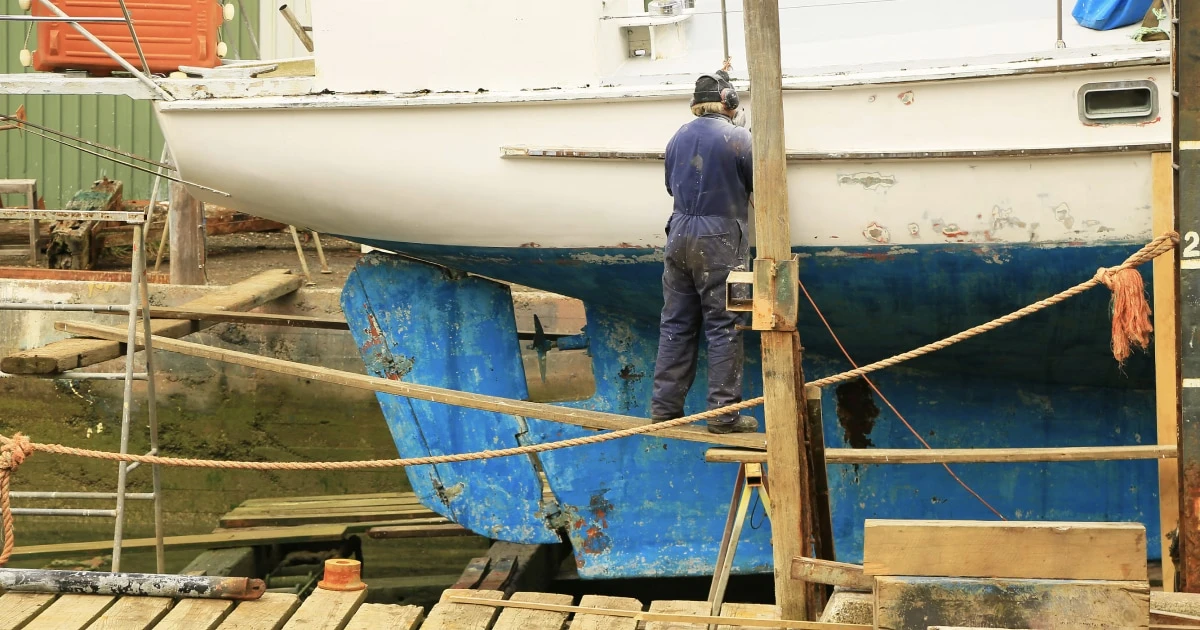
When the boat is ashore or access is otherwise safe, inspect the accessible underwater structure for damage, corrosion, unusual movement or other concerns.
Structural cracks, unusual rudder movement or suspected keel damage warrant professional assessment before the boat returns to service.
8. Hull, antifouling and underwater equipment
Boats kept in the water can accumulate marine growth, while boats stored ashore may still need inspection for deterioration and damage.
Hull cleaning
Clean the hull and deck with suitable products and methods. Choose a cleaning method appropriate to the material and local environmental requirements.
Antifouling
Antifouling coatings help control marine growth on surfaces where they are intended to be used. Inspect the coating condition and renew it when required by the product instructions, boat use and local conditions.
There is no universal repainting interval for every boat. Product life, water temperature, time afloat, coating type and storage conditions can all affect the schedule.
Anodes
Sacrificial anodes help protect certain underwater metal components from galvanic corrosion. Their condition depends on the materials, electrical arrangement and water in which the boat is kept.
Inspect them at suitable intervals and replace them when required by the equipment or installation guidance. If anodes deteriorate unusually quickly, investigate the underlying cause rather than repeatedly replacing them without diagnosis.
Through-hull fittings and seacocks
Inspect accessible through-hull fittings, hoses, clamps and seacocks for corrosion, damage, leakage or deterioration.
Operate and service seacocks according to the manufacturer’s instructions. A fitting or valve below the waterline can be safety-critical, so have questionable components assessed by a qualified professional.
9. Seasonal maintenance: prepare for spring
Before the first trip of the season, perform a more thorough inspection than the routine pre-departure check.
Before launch
- Inspect the hull for damage and deterioration.
- Check underwater fittings and seacocks.
- Inspect propellers, shafts and other accessible propulsion components.
- Check steering and control systems.
- Inspect hoses, clamps and fuel-system components.
- Check batteries and electrical connections.
- Test bilge pumps and their switches.
- Inspect sails, rigging and running rigging where fitted.
- Review safety equipment and service dates.
- Confirm that required navigation and communication equipment works.
- Check any trailer used to transport the boat.
- Complete engine commissioning according to the engine manual.
Once the boat is launched, inspect accessible below-waterline fittings for leaks as appropriate. If a leak or other safety-critical fault appears, address it before proceeding.
A spring inspection is also a good opportunity to review outstanding work from the previous season and confirm that any necessary repairs have been completed.
10. Seasonal maintenance: prepare for winter or extended storage
Storage preparation depends on the climate, boat type and whether the vessel will remain afloat or be stored ashore.
Engine and fuel system
Follow the engine manufacturer’s storage procedure. Depending on the engine and installation, this may involve changing fluids, protecting the cooling system, managing fuel and preparing components against corrosion.
Do not assume every engine needs the same winterisation procedure. Some steps are different for outboards, inboards, diesel engines and other propulsion systems.
Batteries and electrical equipment
Prepare batteries for storage according to their chemistry and manufacturer’s instructions. Confirm the appropriate charging, isolation and storage arrangements.
Disconnecting or removing a battery may not be appropriate for every installation, particularly where alarms, pumps or other systems need power.
Water systems
Prepare freshwater, sanitation and other water systems for the expected temperatures and storage conditions. Use only products and procedures suitable for the system.
Sails, canvas and loose equipment
Clean and dry suitable equipment before storage. Store sails, cushions, canvas and other removable items in conditions appropriate to their materials.
Hull and exterior
Clean the boat, inspect for damage and address problems that could worsen during storage. Check the cover or storage arrangement so that water can drain and ventilation is appropriate.
Mooring and storage
If the boat remains afloat, check mooring arrangements and the equipment used to protect it against expected weather. If it is stored ashore, confirm that supports and storage arrangements are suitable for the vessel.
See End-of-Season Boat Checklist for a more detailed seasonal checklist.
11. Annual maintenance and professional inspections
An annual review helps bring together the tasks that may not fit into a weekly or monthly routine.
The exact scope should reflect the boat, the equipment fitted, usage, age and manufacturer recommendations.
Consider reviewing:
- Engine and drive service history.
- Steering and propulsion systems.
- Hull, underwater fittings and corrosion protection.
- Rigging and sail condition, where applicable.
- Batteries, charging and electrical systems.
- Fuel, freshwater and sanitation systems.
- Bilge pumps and water-ingress controls.
- Navigation, communications and safety equipment.
- Fire-safety equipment and required inspections.
- Trailer, brakes, bearings and lights, where applicable.
- Service dates and replacement intervals for equipment.
- Any defects noted during the previous season.
Some equipment requires inspection or servicing by a qualified technician. Safety-critical systems should not be treated as do-it-yourself tasks if the work requires specialist knowledge, tools or certification.
An annual review is also an opportunity to update the boat’s inventory and identify spare parts or consumables that need replenishing.
12. Build a maintenance schedule for your own boat
A useful schedule should reflect the equipment actually installed rather than trying to apply every possible task to every vessel.
Start with the boat’s manuals, then create a list of components and their required maintenance.
For each task, record:
| Field | What to record |
|---|---|
| Task | The inspection, service or replacement required |
| Component | The engine, battery, pump, sail, fitting or other item concerned |
| Interval | Calendar interval, operating hours, condition-based trigger or a combination |
| Last completed | Date the task was performed |
| Operating hours | Relevant meter reading, where applicable |
| Next due | The next specified date or hour reading |
| Parts and materials | Consumables or replacement parts used |
| Notes | Findings, defects, measurements and follow-up work |
| Status | Due, scheduled, completed or awaiting repair |
Example maintenance record
| Task | Last completed | Interval basis | Next action |
|---|---|---|---|
| Engine oil service | 12 October | Manufacturer’s time/hour interval | Check the manual and current engine hours |
| Bilge pump test | 12 October | Recurring inspection | Test again at the next scheduled check |
| Inspect mooring lines | 12 October | Condition and usage | Recheck for chafe and damage |
| Inspect sail condition | 12 October | Seasonal and condition-based | Inspect before demanding passages |
| Review safety equipment dates | 12 October | Expiry/service dates | Schedule any required renewals |
These are illustrative records, not recommended service intervals. The dates and next actions must be adapted to the actual boat and its equipment.
13. Common boat maintenance mistakes
Waiting for a failure
A noisy pump, stiff steering control or small leak may indicate a developing fault. Record and investigate problems rather than waiting for them to become urgent.
Following generic service intervals blindly
A schedule from another boat or engine may not apply to yours. Use manufacturer instructions to determine exact service and replacement intervals.
Ignoring time-based maintenance
A boat that is used infrequently can still develop corrosion, deteriorating hoses, battery problems and expired safety equipment.
Replacing parts without investigating the cause
Repeated battery failure, rapid anode consumption or recurring water ingress may point to an underlying problem. Replacing the affected component alone may not resolve it.
Keeping no maintenance history
Without records, it is difficult to know when a component was serviced, what was replaced or whether a problem is recurring.
Treating safety equipment as ordinary inventory
Some safety equipment requires specific inspections, servicing or replacement dates. Simply confirming that an item is aboard is not enough.
Doing work beyond your competence
Fuel systems, electrical installations, structural repairs, steering and underwater fittings can involve significant risks. Seek qualified assistance when needed.
14. Keep a boat maintenance log
A maintenance schedule tells you what should happen and when. A maintenance log records what actually happened.
The two work best together.
For each maintenance task, record:
- Date of inspection or service.
- Engine hours or other relevant readings.
- Component inspected or serviced.
- Work performed.
- Parts and consumables used.
- Condition found and any defects.
- Technician or service provider, where relevant.
- Next service or inspection due.
Keep receipts, service reports, photographs and other relevant documentation alongside the record when useful.
A good log helps you avoid duplicate work, follow up on unresolved defects and establish a clearer maintenance history when you sell the boat.
With Skipper, you can document your boating trips with GPS tracks, trip details, notes and photos. Keeping a record of trips and observations can complement a dedicated maintenance log by preserving context around equipment problems or unusual events.
For a step-by-step guide to maintenance records, see How to Keep a Boat Maintenance Log.
Boat maintenance checklist
Use this summary to build your own routine.
Before every outing
- Inspect for visible damage, leaks and unusual water accumulation.
- Check steering, propulsion and relevant fluid levels.
- Confirm that essential electrical and navigation equipment works.
- Verify that required safety equipment is present and accessible.
- Check relevant lines, rigging and deck equipment.
During the season
- Monitor batteries, bilge condition and visible leaks.
- Inspect hoses, connections, lines and fittings for deterioration.
- Service the engine and equipment at their specified intervals.
- Check safety equipment dates and condition.
- Record defects and arrange repairs promptly.
Before and after the season
- Carry out a thorough inspection before recommissioning.
- Prepare the engine and onboard systems for storage as required.
- Inspect the hull, underwater equipment and corrosion protection.
- Clean and store suitable removable equipment.
- Review outstanding repairs and upcoming service dates.
- Update the maintenance log and inventory.
Throughout ownership
- Keep the relevant manuals accessible.
- Record dates, operating hours and completed work.
- Track component-specific replacement intervals.
- Arrange professional inspections when needed.
- Update the schedule whenever equipment is added or replaced.
Frequently asked questions
How often should a boat be serviced?
There is no single service interval for every boat. Follow the manufacturer’s requirements for the hull systems, engine, drive and other equipment. Carry out routine checks before outings, inspect the boat regularly and schedule maintenance by both elapsed time and operating hours where specified.
What maintenance should be done before every boat trip?
Perform a visual inspection, check for leaks or damage, verify steering and propulsion, check relevant fluid levels, confirm essential equipment works and make sure required safety equipment is accessible. Add checks appropriate to the boat and the planned conditions.
Does a boat need maintenance if it is rarely used?
Yes. Batteries can discharge, seals and hoses can deteriorate, corrosion can develop and safety equipment can reach its expiry or service date while the boat is idle. Follow time-based maintenance requirements even if the boat accumulates few operating hours.
When should a boat engine be serviced?
Use the exact schedule in the engine manual. Some tasks depend on operating hours, others on calendar time, and some on whichever limit comes first. Operating conditions and manufacturer updates can also affect the required maintenance.
What should be included in annual boat maintenance?
Review the hull, steering, propulsion, fuel and electrical systems, batteries, bilge pumps, safety equipment and any rigging or underwater components. Confirm that required servicing and inspections have been completed. The actual checklist depends on the vessel and its equipment.
Is boat maintenance expensive?
Costs depend on boat size, age, condition, propulsion system, equipment and whether work can be completed by the owner or requires a professional. Routine inspections and timely repairs can help identify problems earlier, but they cannot eliminate unexpected costs.
Should I maintain my boat myself or use a professional?
Owners can often perform basic cleaning, visual inspections and straightforward tasks when they have the necessary knowledge and tools. Safety-critical, structural or technically complex work may require a qualified marine professional. Always follow the manufacturer’s instructions and applicable requirements.
What is the difference between a maintenance schedule and a maintenance log?
A maintenance schedule defines what should be checked or serviced and when. A maintenance log records inspections, work completed, parts used, defects found and the next due date. Together, they make maintenance easier to plan and verify.
A reliable boat maintenance routine is built on three habits: inspect the boat regularly, follow the specific requirements of its equipment and keep accurate records. Use a schedule that fits your vessel, update it as the boat changes, and address safety-critical problems before the next trip.
Remember your days at sea
Skipper is a ship’s log app for sailboats and powerboats, available on iPhone and iPad. It records every trip with GPS and keeps your whole sailing history in one searchable logbook. Free for your first three trips.

Keep reading

Boat Inventory Checklist: Everything to Keep Track of on Board
Use this boat inventory checklist to organize safety equipment, tools, spare parts, documents and supplies, and keep your onboard inventory up to date.
All boaters
Boat Maintenance Consumables: What to Keep on Board
Discover the essential boat maintenance consumables to stock, from engine oil and filters to lubricants, sealants, electrical supplies, and cleaning products.
All boaters
Boat Spare Parts: What to Carry on Board
Build a practical boat spare parts kit with essential engine, electrical, plumbing, and sailing components. Learn what to carry based on your boat and cruising plans.
All boaters