 Skipper
Improve
•All boatersHow to Track Engine Hours on a Boat
Learn how to track boat engine hours, read an hour meter, record operating time, calculate maintenance intervals, and keep an accurate engine service history.
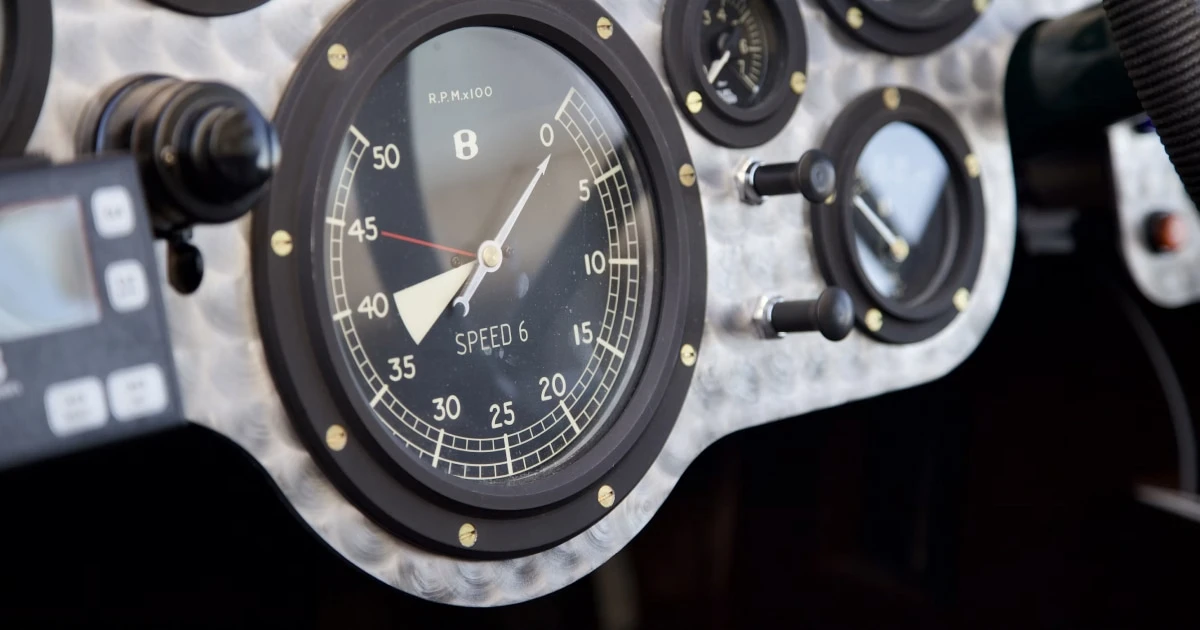
How to Track Engine Hours on a Boat
Tracking engine hours is one of the simplest ways to stay on top of boat maintenance. It tells you how long an engine has operated, helps you follow service intervals, and creates a useful record of how heavily the boat has been used.
But engine hours are easy to overlook. You might remember when you changed the oil without remembering the hour-meter reading. If your boat has two engines, a generator, or an auxiliary engine used occasionally under sail, keeping the records straight becomes even more important.
This guide explains how boat engine hours work, where to find the reading, how to record it accurately, and how to use it to plan maintenance.
What Are Engine Hours on a Boat?
Engine hours measure accumulated operating time. An engine hour meter records how long the engine has run according to the meter’s design and operating logic.
For example, an engine that runs for two hours during a passage adds approximately two hours of operating time. If you repeat that trip five times, the total increases by roughly ten hours.
The reading is cumulative. It is not the number of hours since the last service, nor does it directly indicate the engine’s remaining lifespan.
Engine hours help you understand usage and plan maintenance. They do not, on their own, tell you whether an engine is in good condition.
Engine hours versus boat hours
A boat can be in use without its engine running. A sailboat may spend an entire afternoon under sail, while a motorboat may spend time drifting, anchored, or moored.
Keep these concepts separate:
- Engine hours: time recorded while the engine is operating.
- Generator hours: time recorded by the generator’s own meter, if fitted.
- Time underway: the time spent moving or making a passage, whether under sail, engine, or both.
- Time aboard: the total time people spend on the boat, including time at anchor or in port.
These figures answer different questions. A trip log can record time underway, while the engine’s meter provides the primary reference for engine operating hours.
1. Find the Engine Hour Meter
Before creating a tracking system, establish where your boat’s operating hours are displayed.
Instrument panel
Many inboard engines have an hour meter integrated into the tachometer or instrument panel. It may display accumulated hours on a digital screen or a separate counter.
Check the panel with the engine’s electrical system powered as described in the operator’s manual. Some displays require you to cycle through several screens to find the reading.
Electronic engine display
Modern engines may show operating hours on a digital engine display or control interface. Depending on the installation, the reading may also be available through an approved monitoring system.
The exact menu and available data vary by engine and equipment.
Outboard engine
An outboard may have a digital display, an electronic control system, or a separate hour meter installed by the manufacturer or a previous owner.
If the engine has no visible meter, check the owner’s manual and ask a qualified dealer about the available options. Do not assume that every outboard stores or exposes engine hours in the same way.
Remote monitoring systems
Some connected engine systems can transmit operating data to a compatible display, app, or service platform. Availability depends on the engine model, installed hardware, and subscription or connectivity requirements.
Confirm which reading is authoritative for your particular installation, especially if multiple displays show different values.
2. Record Engine Hours Consistently
Finding the meter is only the first step. The real value comes from recording readings in a consistent way.
At a minimum, record:
- Date of the reading.
- Engine identification, especially if there is more than one.
- Current hour-meter reading.
- Operating context, such as the trip or maintenance task.
- Any unusual behavior or discrepancy.
For a more complete maintenance record, also note service work performed, parts replaced, and the next relevant maintenance interval.
Example of an engine-hours log
| Date | Engine | Hour-meter reading | Event | Notes |
|---|---|---|---|---|
| 3 May | Main engine | 412.0 h | Before departure | Reading checked |
| 3 May | Main engine | 414.4 h | After arrival | 2.4 h recorded during trip |
| 18 May | Main engine | 421.1 h | Maintenance | Oil and filter replaced |
| 2 June | Main engine | 428.6 h | After passage | No discrepancy observed |
These are illustrative figures, not a maintenance schedule. The interval between services must come from the engine manufacturer’s instructions.
If you record hours before and after each trip, you can calculate the difference and compare it with the trip duration. This is also a useful way to notice a possible meter-reading error.
3. Calculate Engine Hours Between Readings
When you have two reliable readings from the same meter, calculating the operating time is straightforward.
[ \text{Operating hours}=\text{Ending reading}-\text{Starting reading} ]
For example:
- Starting reading: 428.6 hours.
- Ending reading: 432.1 hours.
- Operating time recorded: 3.5 hours.
If the meter shows tenths of an hour, keep that precision when recording it. Do not round every reading to the nearest whole hour, because rounding can introduce unnecessary errors over time.
What if the reading appears to go backwards?
A lower reading may indicate a replaced meter, a reset, an incorrect entry, or a different display being used.
Do not silently overwrite the earlier figure. Record the discrepancy, investigate it, and preserve the last known reliable reading.
If a meter has been replaced, document:
- Date of replacement.
- Last known reading from the old meter.
- Reading on the new meter when installed.
- Any documented estimate of total operating time, clearly labeled as an estimate.
- Supporting service records, if available.
This preserves the history without pretending that an uncertain figure is exact.
4. Track Each Engine Separately
Boats with multiple engines require separate records. The port engine may accumulate different operating hours from the starboard engine, and their maintenance histories may diverge.
Use clear identifiers, such as:
- Port engine.
- Starboard engine.
- Auxiliary engine.
- Generator.
Record the meter reading for each one independently. Do not calculate maintenance from the average of two engines unless the manufacturer’s procedure explicitly calls for it.
For twin-engine boats, note which engine received each service and which parts were replaced. A shared invoice may cover both engines, but the maintenance log should still make the individual work clear.
The same principle applies to separate gearboxes, drives, and other equipment with their own operating-hour counters.
5. Use Engine Hours to Plan Maintenance
One of the main reasons to track engine hours is to identify when maintenance is due.
Many manufacturers specify service intervals based on operating hours, elapsed time, or whichever limit comes first. The exact intervals and tasks vary by engine model and operating conditions.
For example, a particular engine might require a service after a specified number of operating hours or after a calendar period, even if it has barely been used.
Do not copy another boat owner’s interval or apply a generic number to every engine.
Calculate the hours remaining until service
Suppose your engine manual specifies a service at 500 operating hours, and your current reading is 428.6 hours.
[ 500-428.6=71.4\text{ hours} ]
You have 71.4 operating hours remaining until that hour-based threshold, assuming the previous service and current reading are correct.
This calculation does not account for a calendar-based deadline or any additional conditions in the manufacturer’s schedule. If the service is also due after a specified number of months, you must follow whichever applicable limit arrives first.
Record the service baseline
After completing a service, record the current hour-meter reading alongside the date and work performed.
For example:
| Maintenance item | Service date | Engine hours | Next requirement |
|---|---|---|---|
| Engine oil and filter | 18 May | 421.1 h | Check the engine manual |
| Fuel filter | 18 May | 421.1 h | Check the engine manual |
| Cooling-system inspection | 18 May | 421.1 h | Check the engine manual |
This table illustrates the record format only. Different tasks may have different intervals, and not every item is necessarily serviced at the same time.
For a complete approach to planning and documenting work, see Boat Maintenance Schedule and How to Keep a Boat Maintenance Log.
6. Engine Hours on a Sailboat
Sailboats also benefit from engine-hour tracking. An auxiliary engine may be used for harbour manoeuvres, motoring in calm conditions, charging batteries, or maintaining progress when the wind is unsuitable.
Because engine use may be intermittent, calendar time alone does not provide a complete picture of usage.
Record the auxiliary engine’s hours just as you would on a motorboat. If the boat has a separate generator, track its hours independently.
When documenting a sailing trip, you can also note whether a passage was completed under sail, under engine, or using a combination of propulsion methods. This provides context for the operating-hour record without confusing sailing time with engine time.
If you want to review routes, duration, distance, and trip notes, Skipper helps document your boating activity. Use the engine meter and a dedicated maintenance record for verified engine hours and service planning.
7. What If Your Boat Has No Engine Hour Meter?
If no hour meter is installed, you can still maintain a useful record, but you need a reliable method of tracking operating time.
Option 1: Install a suitable meter
A compatible meter can make future tracking easier. Before installation, confirm compatibility with the engine and electrical system. Installation requirements differ, so seek qualified help if you are unsure.
Option 2: Use an approved electronic display
Some engines already provide operating-hour data through an electronic control system. Check the owner’s manual or contact the engine manufacturer or dealer to establish whether your installation supports it.
Option 3: Keep a manual running-time log
If no reliable meter is available, record engine start and stop times, or otherwise record operating duration for each use.
For example:
| Date | Start | Stop | Recorded duration | Notes |
|---|---|---|---|---|
| 3 May | 10:15 | 11:45 | 1 h 30 min | Harbour exit and passage |
| 4 May | 08:20 | 09:05 | 45 min | Return to marina |
| 11 May | 14:00 | 16:10 | 2 h 10 min | Passage in light winds |
The durations above are examples. A manual log depends on consistent entries and is more vulnerable to omissions than a functioning hour meter.
If you miss a reading, label any reconstruction as an estimate and retain the underlying notes. Do not present estimated cumulative hours as a verified meter reading.
8. Digital Tracking vs. Paper Records
Both paper and digital records can work. The best choice depends on your boat, how often you use it, and how consistently you update the information.
Paper logbook
A paper logbook is straightforward and does not depend on a charged phone or a working electronic system.
It is useful for recording readings at the helm, especially when you already maintain a traditional vessel log. Its main disadvantages are limited searchability, the risk of loss or damage, and the effort required to summarize long-term usage.
Spreadsheet
A spreadsheet is useful for calculating differences between readings and organizing data by engine, date, or maintenance item.
It can also help estimate the remaining hours until a service threshold, provided the correct interval and baseline are entered. Keep backups and avoid changing historical readings without documenting the correction.
Digital logbook and engine-monitoring tools
Digital tools can make trip documentation and maintenance records easier to organize. However, not every boating app automatically reads engine-hour data.
Before relying on automatic tracking, confirm that the tool is compatible with your engine’s hardware and actually receives verified operating-hour readings.
A GPS track or trip duration is not the same as engine operating time. A boat may be under sail, stopped, or moving with the engine switched off.
9. Common Engine-Hour Tracking Mistakes
Avoid these mistakes when maintaining your records:
- Confusing trip duration with engine hours. A passage may include time under sail, at anchor, or with the engine switched off.
- Combining readings from different engines. Each engine and generator needs its own record.
- Recording only whole hours. Preserve the precision displayed by the meter.
- Forgetting to record the reading after maintenance. Without a baseline, it becomes harder to identify the next hour-based service threshold.
- Ignoring calendar-based intervals. Low engine usage does not automatically mean maintenance can be postponed.
- Assuming every meter behaves the same way. Check the manual for the installed engine and instrument system.
- Overwriting unexplained discrepancies. Preserve the last reliable figure and document any reset or replacement.
- Treating engine hours as a measure of engine condition. Hours describe accumulated operation, not the quality of maintenance or the severity of past use.
A consistent record helps you make better decisions, but it does not replace inspections, diagnostic checks, or the manufacturer’s maintenance instructions.
10. Engine Hours and Boat Ownership Costs
Engine-hour records can also help you understand how you use your boat and how operating costs develop over time.
If you record maintenance costs, fuel purchases, and operating hours, you can calculate an approximate cost per engine hour for a defined period.
[ \text{Cost per engine hour}=\frac{\text{Relevant operating costs}}{\text{Engine hours recorded}} ]
For example, if you spent €600 on a defined set of engine-related operating costs over 40 recorded hours, the resulting figure would be €15 per hour.
That number is only meaningful if you define which costs are included. It might cover fuel and routine engine servicing, or it might include additional propulsion-related expenses. It does not automatically represent the total cost of owning or operating the boat.
For a broader financial picture, read Boat Expenses: A Complete Budget Guide.
Frequently Asked Questions
How do I track engine hours on a boat?
Read the installed hour meter or the engine’s electronic display and record the reading with the date and engine identification. If no meter is available, maintain a manual record of running time and clearly identify any estimated values.
What are engine hours on a boat?
Engine hours represent accumulated operating time recorded by a meter or engine monitoring system. They help owners understand usage and follow maintenance schedules.
How many engine hours are too many for a boat?
There is no universal cutoff. Engine type, age, maintenance history, operating conditions, and current condition all matter. A boat with higher documented hours and good maintenance may be a better proposition than one with low hours and a poor service history.
Do engine hours reset when the battery is disconnected?
That depends on the meter and engine electronics. Some systems retain accumulated hours independently of ordinary battery power, while others may behave differently. Check the relevant manual and investigate any unexpected reset.
Should I record engine hours on a sailboat?
Yes. An auxiliary engine and a generator accumulate operating time even if the boat spends most of its time under sail. Record each system separately.
Are engine hours more important than the calendar date for maintenance?
Neither takes precedence universally. Many service requirements are based on operating hours or elapsed time, whichever comes first. Follow the exact instructions for your engine and installed equipment.
Can I use GPS data to calculate engine hours?
Not reliably on its own. GPS data can show a boat’s movement and trip duration, but it does not prove when the engine was running. Use the engine meter or a reliable record of engine operation.
Make Engine-Hour Tracking a Routine
Tracking engine hours does not require a complicated system. Read the meter consistently, identify each engine separately, record the reading after maintenance, and use the manufacturer’s schedule to determine what is due.
Over time, those records create a useful operating and service history that helps you plan maintenance, investigate discrepancies, and understand how your boat is used.
Pair engine-hour records with a boat maintenance log and a boat maintenance schedule so you can track both completed work and upcoming requirements.
Use Skipper to document your trips, routes, locations, and observations on the water, alongside the dedicated engine records you rely on for verified operating hours and service planning.
Remember your days at sea
Skipper is a ship’s log app for sailboats and powerboats, available on iPhone and iPad. It records every trip with GPS and keeps your whole sailing history in one searchable logbook. Free for your first three trips.

Keep reading
Boat Expenses: A Complete Budget Guide
Learn how to track boat expenses, organize maintenance and fuel costs, build an annual boating budget, and calculate the true cost of owning a boat.
All boaters
Boat Maintenance Consumables: What to Keep on Board
Discover the essential boat maintenance consumables to stock, from engine oil and filters to lubricants, sealants, electrical supplies, and cleaning products.
All boaters
Boat Maintenance Schedule
Build a practical boat maintenance schedule with recurring checks for the hull, engine, batteries, safety equipment, rigging and onboard systems.
All boaters