 Skipper
Navigate
•All boatersRule 19: Collision Avoidance in Restricted Visibility
Understand COLREG Rule 19, safe speed in fog, radar collision assessment, course alterations, and what to do when another vessel cannot be seen.
Rule 19: Collision Avoidance in Restricted Visibility
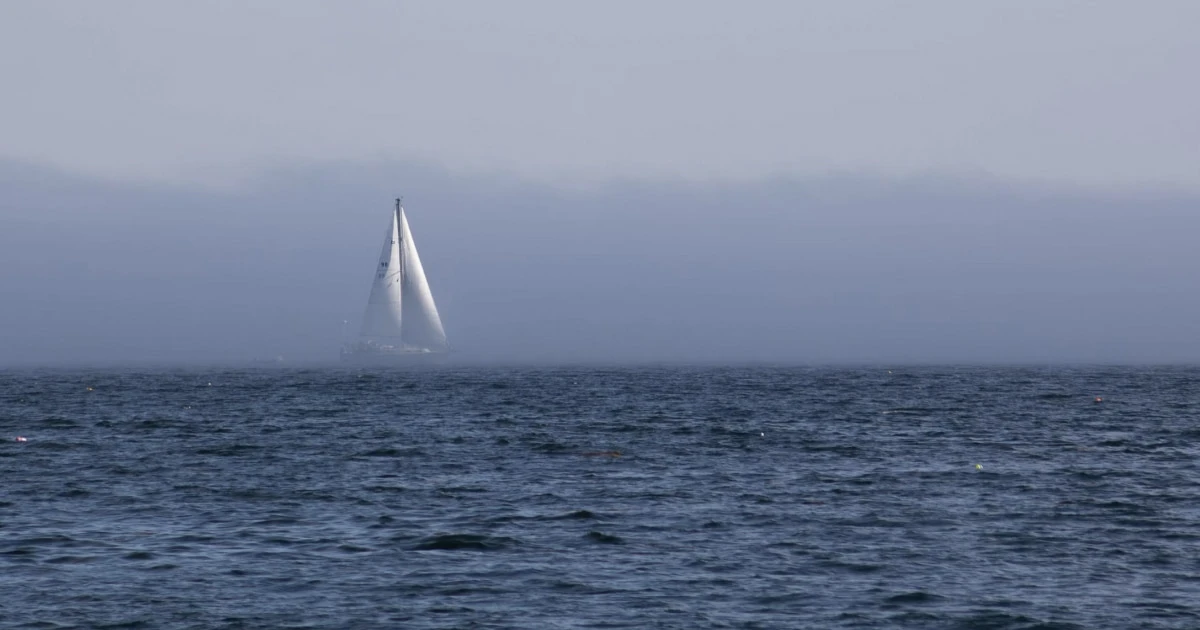
Fog rolls in, the horizon disappears, and another vessel shows up on radar. You cannot see its lights or determine its direction visually. What should you do?
COLREG Rule 19 sets out how vessels must navigate when visibility is restricted and they are not in sight of one another. It focuses on safe speed, assessing collision risk, and taking appropriate avoiding action without relying on the usual visual assumptions.
The rule applies to sailing yachts, motorboats, and commercial vessels. It does not replace the other collision regulations: it must be read alongside the rules on lookout, safe speed, risk of collision, and action to avoid collision.
Restricted visibility is not just fog. It can also result from mist, falling snow, heavy rainstorms, sandstorms, or similar causes.
1. When does Rule 19 apply?
Rule 19 applies to vessels that are not in sight of one another when navigating in or near an area of restricted visibility.
Under the COLREGs, vessels are considered to be in sight of one another only when one can be observed visually from the other. Detecting a vessel by radar or AIS does not, by itself, mean that the vessels are in sight of each other.
This distinction matters because the rules for vessels in sight of one another, Rules 11–18, include specific head-on, crossing, overtaking, and sailing-vessel situations. Rule 19 governs encounters where those visual assessments cannot be made.
Restricted visibility may occur:
- In dense fog or sea mist.
- During heavy rain or snow.
- In haze or other conditions that significantly reduce visibility.
- Near a localised fog bank or other area where visibility is restricted.
Rule 19 is not the only rule that matters. Rules 4–10, which cover conduct in any condition of visibility, continue to apply.
2. Rule 19 at a glance
The rule has five main parts.
| Provision | Practical meaning |
|---|---|
| Rule 19(a) | Applies when vessels are not in sight of one another in or near restricted visibility. |
| Rule 19(b) | Every vessel must proceed at a safe speed; a power-driven vessel must have its engines ready for immediate manoeuvre. |
| Rule 19(c) | Other applicable rules for all visibility conditions must still be followed, taking the conditions into account. |
| Rule 19(d) | When a vessel detects another vessel by radar alone, it must assess collision risk and take avoiding action in ample time if required. |
| Rule 19(e) | If a fog signal is heard apparently forward of the beam, or a close-quarters situation ahead cannot be avoided, the vessel must reduce speed to the minimum needed to maintain course, take all way off if necessary, and navigate with extreme caution. |
The practical message is straightforward: slow down enough to react, keep assessing the situation, and do not wait until a close-quarters situation has developed before acting.
3. Proceed at a safe speed
Rule 19 requires every vessel to proceed at a safe speed adapted to the prevailing circumstances and conditions of restricted visibility.
There is no single speed that is safe in every fog situation. A speed that may be reasonable in open water with light traffic could be excessive in a narrow channel, near a harbour entrance, or in an area with frequent small craft.
When determining a safe speed, consider:
- Visibility: How far ahead can you reliably detect hazards?
- Traffic density: How likely are you to encounter another vessel?
- Detection equipment: Do you have operational radar, and can you interpret its information correctly?
- Manoeuvrability: How quickly can your vessel turn or stop?
- Sea room: Is there space to manoeuvre without creating another hazard?
- Navigation hazards: Are you near land, shoals, traffic lanes, or confined waters?
- Weather and sea conditions: Will wind, waves, or current affect your ability to manoeuvre?
- Crew readiness: Can the crew maintain a proper lookout and respond promptly?
Safe speed is a continuing assessment, not a decision made once when the fog appears.
Keep the engine ready when under power
Rule 19 specifically requires a power-driven vessel to have its engines ready for immediate manoeuvre.
On a motorboat, this means being ready to adjust propulsion promptly. On a sailing yacht using an auxiliary engine, the skipper should consider the vessel’s operating situation and readiness to manoeuvre.
A sailing vessel under sail alone still has to proceed at a safe speed and comply with the other applicable rules.
4. Maintain a proper lookout
Rule 5 requires every vessel to maintain a proper lookout by sight and hearing, as well as by all available means appropriate to the circumstances.
Restricted visibility makes this especially important. A lookout should not rely on a single instrument or assume that the absence of a radar target means the water is clear.
Useful measures include:
- Assigning a dedicated lookout where crew numbers allow.
- Listening carefully for fog signals and other sounds.
- Using radar correctly, if fitted and operational.
- Monitoring relevant navigational information and the surrounding traffic.
- Checking position and proximity to hazards on the chart.
- Keeping navigation lights and required sound-signalling equipment ready for use.
AIS can help identify and monitor equipped vessels, but it should not be treated as a complete picture of nearby traffic or as a substitute for radar, lookout, or collision-risk assessment. Small craft may not transmit AIS and may be difficult to detect.
If you are unsure whether visibility is restricted, it is prudent to adopt the appropriate precautions rather than wait for conditions to deteriorate further.
5. Assess collision risk using radar
Rule 19(d) specifically addresses a vessel that detects another vessel by radar alone.
You must determine whether a close-quarters situation is developing or a risk of collision exists. If so, you must take avoiding action in ample time.
What should you look for?
Radar can help establish the other vessel’s relative movement, range, and bearing. Where the equipment supports it, systematic plotting or target tracking can help estimate:
- CPA (Closest Point of Approach): The predicted minimum distance between the two vessels if their current movements continue.
- TCPA (Time to Closest Point of Approach): The estimated time until that closest approach.
A small CPA or a short TCPA may indicate a developing problem, but there is no universal CPA distance that is safe for every vessel and situation. Vessel size, speed, manoeuvrability, sea room, traffic, and local conditions all matter.
A steady compass bearing of an approaching vessel can indicate collision risk. However, an appreciable change in bearing does not always mean there is no risk, particularly when a vessel is very large, towing, or close by.
Do not rely on a single radar observation
One observation may not provide enough information to judge another vessel’s movement reliably. Use systematic observations, allow enough time for meaningful assessment, and account for the limitations of the equipment.
If there is doubt about whether a collision risk exists, Rule 7 requires that risk to be assumed to exist.
6. How should you alter course?
Rule 19(d) includes specific guidance on course alterations when avoiding a vessel detected by radar alone.
So far as possible, avoid:
- Altering course to port for a vessel forward of your beam, except when overtaking that vessel.
- Altering course towards a vessel abeam or abaft your beam.
“Forward of the beam” means that the other vessel lies ahead of a line extending sideways from your vessel. “Abeam” means approximately alongside; “abaft the beam” means behind that sideways line.
These provisions are not a complete manoeuvre plan for every encounter. They are constraints to consider when deciding what action is appropriate under the circumstances.
Any avoiding action must also comply with the wider COLREG requirements, including Rule 8. Action should be taken in ample time and, where circumstances permit, be positive and readily apparent. Continue checking that the manoeuvre is working and that it has not created a new collision risk with another vessel.
Is there a stand-on vessel in restricted visibility?
Do not simply apply the familiar visual crossing or head-on assumptions when vessels are not in sight of one another.
Rule 19 does not assign a stand-on vessel in the same way that the rules for vessels in sight of one another do. Each vessel must assess the situation and take appropriate action under the applicable rules.
7. What if you hear a fog signal?
Rule 19(e) covers two important situations:
- You hear the fog signal of another vessel apparently forward of your beam.
- You cannot avoid a close-quarters situation with another vessel forward of your beam.
Unless you have determined that no risk of collision exists, you must reduce speed to the minimum at which your vessel can be kept on course. If necessary, you must take all way off — in other words, stop the vessel’s forward movement through the water — and navigate with extreme caution until the danger of collision is over.
Sound can be difficult to locate accurately in fog. Do not assume that you know the other vessel’s precise bearing or distance simply because you hear a signal.
The appropriate response depends on your vessel, the surrounding hazards, and the developing situation. Be ready to reduce speed further or stop if required.
8. Do not forget navigation lights and sound signals
Rule 19 works alongside other parts of the COLREGs.
Navigation lights
Rule 20 addresses when prescribed navigation lights must be exhibited. In restricted visibility, lights required by the rules must also be shown during daylight, not just after sunset.
Check the requirements for your vessel type, status, and operating conditions. Do not assume that daylight makes navigation lights unnecessary in fog.
Sound signals
Rule 35 specifies the sound signals to be used in or near restricted visibility, whether by day or night. The appropriate signal depends on the vessel’s status and circumstances, such as whether it is making way, underway but stopped, or anchored.
Learn the signals relevant to your vessel and make sure the required sound-signalling equipment is operational. This article is not a substitute for learning the complete requirements of Rule 35.
9. Common mistakes to avoid
- Maintaining normal cruising speed: Speed should reflect visibility, traffic, hazards, and the time needed to react.
- Assuming radar or AIS shows every vessel: Small craft and vessels without AIS may be difficult to detect.
- Treating AIS as the primary collision-avoidance method: AIS information supports situational awareness but does not replace proper lookout and collision-risk assessment.
- Making repeated small course changes: Where circumstances permit, avoiding action should be clear and effective rather than a succession of minor adjustments.
- Assuming a changing bearing means you are safe: Collision risk may still exist, especially at short range or with large vessels and tows.
- Ignoring fog signals: A signal heard ahead should prompt careful assessment and the response required by Rule 19(e), unless it has been determined that no collision risk exists.
- Assuming another vessel will manoeuvre correctly: Continue assessing the situation and the effectiveness of your own action.
- Forgetting other COLREG rules: Rule 19 must be applied alongside the rules on lookout, safe speed, risk of collision, avoiding action, lights, and sound signals.
10. A practical restricted-visibility checklist
When visibility deteriorates, use this as a reminder alongside your vessel’s procedures and training.
- Reduce to a safe speed for the actual conditions.
- Keep the engine ready for immediate manoeuvre when required.
- Maintain a proper lookout by sight, hearing, and appropriate available equipment.
- Ensure the required navigation lights and sound signals are in use.
- Use radar properly, if fitted, and assess targets systematically.
- Monitor collision risk, including CPA and TCPA where available.
- Take avoiding action in ample time when required.
- Avoid course alterations restricted by Rule 19(d), so far as possible.
- Respond cautiously to fog signals and developing close-quarters situations.
- Continue monitoring the effectiveness of any avoiding action.
- Reassess the conditions continuously and do not resume normal speed until it is safe to do so.
11. Record the passage and review it afterwards
Restricted visibility can make a passage particularly demanding. After the situation is under control, recording the conditions and decisions can help you review the passage and improve future planning.
With Skipper, you can record a trip using your iPhone, keep a GPS track, and add details such as locations, weather, notes, and photos. Reviewing your recorded trips can help you build a clearer history of your boating experience.
A logbook is useful for reflection and record-keeping, but it does not replace proper lookout, navigation equipment, training, or compliance with the COLREGs.
Frequently asked questions
Does Rule 19 apply only in fog?
No. Restricted visibility includes fog, mist, falling snow, heavy rainstorms, sandstorms, and similar causes of reduced visibility.
Does Rule 19 apply if I can see the other vessel?
Rule 19 applies to vessels that are not in sight of one another. If the vessels are visually in sight, the rules for vessels in sight of one another generally apply, together with the rules that apply in all visibility conditions.
Should I always turn to starboard in fog?
No. Rule 19 does not prescribe a universal turn for every encounter. It says that, so far as possible, a vessel should avoid altering course to port for a vessel forward of the beam, except when overtaking, and avoid altering course towards a vessel abeam or abaft the beam. The correct action depends on the situation and all applicable rules.
Can I rely on AIS to avoid a collision?
No. AIS is a useful aid, but not all vessels carry or transmit AIS, and its information may be incomplete or inaccurate. Maintain a proper lookout and use all appropriate available means to assess collision risk.
What should I do if I hear a fog signal ahead?
Unless you have determined that no risk of collision exists, Rule 19(e) requires you to reduce speed to the minimum at which you can keep your vessel on course. If necessary, take all way off and navigate with extreme caution until the danger has passed.
Conclusion
COLREG Rule 19 is built around a few essential principles: safe speed, a proper lookout, systematic assessment of collision risk, timely avoiding action, and extreme caution when another vessel may be close ahead.
The exact response depends on the vessel, conditions, and surrounding traffic. Learn the full COLREGs, practise using your equipment, and seek qualified instruction so you can apply the rules confidently when visibility deteriorates.
Remember your days at sea
Skipper is a ship’s log app for sailboats and powerboats, available on iPhone and iPad. It records every trip with GPS and keeps your whole sailing history in one searchable logbook. Free for your first three trips.

Keep reading
Boat Navigation Lights Explained
Learn how to identify boat navigation lights, understand what they reveal about a vessel, and recognise the lights required at night and in restricted visibility.
All boaters
COLREGs: International Collision Regulations Explained
Understand the COLREGs, the international rules for preventing collisions at sea, including right of way, lookout, safe speed, navigation lights and sound signals.
All boaters
How to Keep a Sailing Logbook
Learn how to keep a sailing logbook with a simple routine, practical entries and tips for recording every trip consistently.
All boaters