 Skipper
Navigate
•All boatersTypes of Boats Explained
Explore the main types of boats, from sailboats and motorboats to catamarans, RIBs, fishing boats and cruisers, and learn what each is designed for.
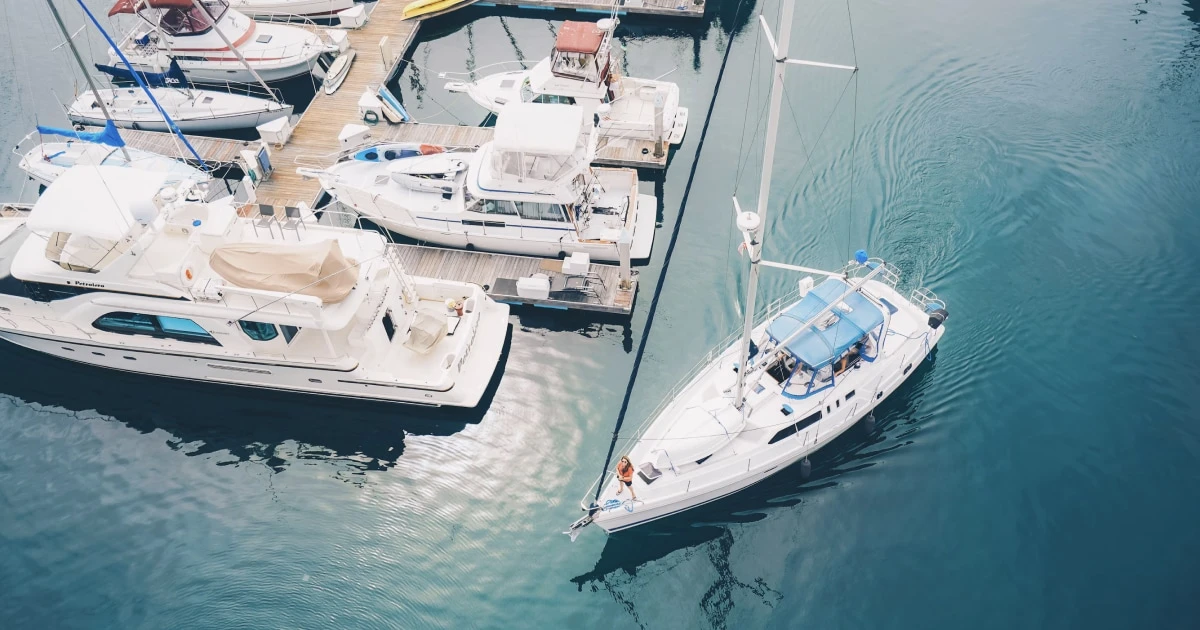
Types of Boats Explained: A Complete Guide
Not all boats are built for the same purpose. Some are designed for sailing long distances, others for fishing, watersports, family outings or travelling comfortably between ports.
Choosing the right type of boat starts with understanding what each design does well—and where its limitations lie.
This guide covers the main types of recreational boats, how they differ and what to consider when deciding which one fits your plans.
1. The two main propulsion categories: sailboats and motorboats
One of the simplest ways to classify boats is by how they are propelled.
Sailboats
Sailboats use the wind acting on their sails to generate propulsion. Many recreational sailboats also have an auxiliary engine for manoeuvring in harbours, motoring in calm conditions or dealing with situations where sailing is impractical.
Common types include:
- Dinghies and small sailing boats.
- Keelboats and day sailors.
- Cruising sailboats.
- Racing sailboats.
- Sailing catamarans and trimarans.
Sailing involves more than setting a sail and letting the wind do the work. The crew must manage sail trim, heading, navigation and changing conditions.
Best suited to: people who enjoy learning sailing skills, travelling under sail, racing or exploring the coast at a pace shaped by the wind.
Motorboats
Motorboats rely primarily on an engine for propulsion. Their designs range from small open boats to large yachts with accommodation for extended trips.
Common types include:
- Open recreational boats.
- Fishing boats.
- Rigid inflatable boats.
- Bowriders.
- Cabin cruisers.
- Motor yachts and trawlers.
Motorboats offer control over speed without depending on the wind. However, fuel consumption, engine maintenance, range and handling characteristics vary significantly between models.
Best suited to: day trips, fishing, watersports, transport, coastal cruising and trips where predictable powered movement is important.
2. Dinghies and small boats
A dinghy is a small boat that may be powered by oars, a small engine or sails. Some are used independently; others serve as tenders for larger boats.
Common variations include:
- Sailing dinghies: small sailboats used for learning, recreation and racing.
- Rowing dinghies: boats propelled by oars.
- Inflatable dinghies: lightweight boats that can often be deflated for storage.
- Rigid dinghies: small boats with a solid hull, often used for transport or utility tasks.
Small boats can be relatively easy to transport, launch and store. They are also useful for learning the fundamentals of boat handling.
Their limitations include lower carrying capacity, limited shelter and greater exposure to wind and waves. A small boat suitable for a calm lake may be inappropriate for open coastal conditions.
Best suited to: beginners, short trips, sheltered waters, learning to sail and serving as a tender.
3. Keelboats and day sailers
Keelboats are sailboats with a keel that contributes to lateral resistance and, on many designs, stability. They range from compact club-racing boats to larger cruising yachts.
A day sailer is designed primarily for outings without requiring overnight accommodation. It may have a cockpit and basic storage, but usually prioritises sailing space over living space.
These boats can be suitable for learning, recreational sailing and short coastal or inland trips, depending on their design.
Advantages
- A direct way to develop sailing skills.
- Often simpler than a larger cruising yacht.
- Suitable for day trips and club sailing.
- Available in a wide range of sizes and performance levels.
Limitations
- Limited accommodation on many models.
- Some designs require an experienced crew to sail efficiently.
- Conditions and intended use determine how far offshore a particular boat should go.
Best suited to: learning, weekend sailing, club racing and day trips.
4. Cruising sailboats and sailing yachts
Cruising sailboats are designed to travel under sail, often with facilities for spending nights aboard. Larger examples may be referred to as sailing yachts.
Depending on the design, they can include:
- Sleeping berths.
- A galley for preparing meals.
- A saloon or indoor living area.
- A marine toilet and freshwater systems.
- Navigation equipment.
- Storage for provisions and safety gear.
- An auxiliary engine.
Cruising sailboats are used for coastal holidays, longer passages and, when suitably designed and equipped, offshore or ocean sailing.
The distinction between a day boat and a cruising yacht is not simply length. Accommodation, storage, systems, design and intended operating conditions all matter.
Advantages
- The ability to travel under sail.
- Accommodation for overnight trips on suitable models.
- A wide range of sizes and sailing characteristics.
- Suitable for coastal exploration and longer voyages when properly prepared.
Limitations
- Sail handling and navigation require knowledge and practice.
- Progress depends partly on wind and weather.
- Rigging, sails, engine and onboard systems need maintenance.
- More accommodation means more systems to inspect and manage.
Best suited to: sailing holidays, coastal cruising, multi-day passages and longer-term exploration.
5. Catamarans and trimarans
Multihulls have more than one hull. The two main recreational configurations are catamarans and trimarans.
Catamarans
A catamaran has two hulls connected by a structure that supports the deck and, depending on the design, the accommodation.
Catamarans can be sail-powered or motor-powered.
Sailing catamarans are popular for cruising because many offer generous living space, wide deck areas and a different motion from monohull sailboats. Their relatively wide beam can also provide substantial form stability.
However, a catamaran’s behaviour depends on its design and conditions. It does not heel like a typical monohull, but it can still be affected by waves, wind and loading. Crew must understand the vessel’s operating limits.
Advantages
- Spacious deck and accommodation on many models.
- Often relatively little heel under sail.
- Potentially shallow draft (e.g. 1 m (3.3 ft) to 1.5 m (4.9 ft)) compared with some monohulls of similar accommodation.
- Twin engines on many motor and sailing models can help with low-speed manoeuvring.
Limitations
- Greater width can make marina berthing more difficult or expensive.
- Handling and manoeuvring characteristics differ from a monohull.
- Purchase, maintenance and mooring costs depend on size and design.
- A wide platform does not remove the need to understand stability and weather limits.
Trimarans
A trimaran has three hulls: a central hull and two smaller side hulls, commonly called amas.
Many sailing trimarans prioritise speed and performance. Some smaller models have folding structures that reduce their width for storage or transport.
Their layout, accommodation and handling differ widely between small sailing trimarans and larger cruising designs.
Best suited to: sailors looking for multihull characteristics, additional platform width or performance-oriented sailing, depending on the model.
6. Rigid inflatable boats (RIBs)
A rigid inflatable boat, or RIB, combines a rigid hull with inflatable tubes around its sides.
The tubes provide buoyancy and can help absorb contact with other surfaces. Many RIBs are powered by an outboard engine, although configurations vary.
RIBs are common as tenders, for coastal day trips, watersports and utility use. Some are designed for demanding professional or offshore roles, but not every RIB is suitable for those conditions.
Advantages
- Often lightweight for their size.
- Useful for short trips and tender duties.
- Inflatable tubes can provide buoyancy and cushioning.
- Many models are easy to launch and manoeuvre at speeds up to 25–35 kn (46–65 km/h / 29–40 mph).
Limitations
- Limited shelter on open models.
- Payload and range depend on the size and design.
- Tubes require care and inspection.
- Ride comfort depends on hull shape, speed, loading and sea state.
Best suited to: tender duties, coastal outings, watersports and utility trips when the boat is appropriately equipped.
7. Open motorboats and bowriders
Open motorboats are designed around an open deck or cockpit rather than a full cabin.
A bowrider is a common recreational design with additional seating in the bow. Many are intended for day cruising, swimming stops and watersports.
Other open motorboat configurations include centre-console boats, runabouts and deck boats. Their names describe particular layouts rather than a single universal design.
Advantages
- Open layouts for socialising and day trips.
- Convenient access to seating and deck areas.
- Many models suit swimming stops and recreational activities.
- Usually less interior accommodation to maintain than a cabin boat.
Limitations
- Limited protection from sun, rain and cold on many models.
- Little or no overnight accommodation.
- Storage and carrying capacity vary.
- Open layouts can be less suitable for exposed conditions than a boat designed for that purpose.
Best suited to: family outings, day cruising, swimming and recreational boating in suitable conditions.
8. Fishing boats
Fishing boats are designed to make fishing practical and efficient. Their features vary according to whether they are intended for lakes, rivers, bays or offshore waters.
Freshwater fishing boats
These are often compact boats designed for lakes and rivers. Some use aluminium hulls and relatively shallow draft (under 0.5 m (1.6 ft)), making them practical for launching and accessing sheltered areas.
Bass boats
Bass boats are specialised fishing boats with features such as casting decks, storage for tackle and dedicated equipment for fishing in freshwater.
Centre-console fishing boats
Centre-console boats have a steering console near the centre of the deck. This arrangement provides access around much of the boat and is common in coastal and offshore fishing designs.
Sportfishing boats
Larger sportfishing boats can include extensive fishing equipment, substantial engine power and accommodation for longer trips. Their offshore suitability depends on the actual vessel, equipment and operating limits.
Advantages
- Layouts designed around fishing equipment and techniques.
- Storage for rods, tackle and other gear.
- Options for different environments and target species.
- Some models combine fishing with family recreation.
Limitations
- Specialist layouts may be less comfortable for general cruising.
- Fishing equipment can take up usable space.
- Offshore capability cannot be inferred from appearance alone.
- Range, payload and weather suitability vary widely.
Best suited to: anglers choosing a boat for a specific type of fishing and operating environment.
9. Cabin cruisers
A cabin cruiser is a motorboat designed to combine powered cruising with enclosed accommodation.
Depending on its size and layout, it may include sleeping berths, a small galley, a toilet, a cockpit and sheltered helm controls.
Cabin cruisers allow boaters to extend a trip beyond daylight hours or spend a night aboard without needing a separate accommodation booking.
Advantages
- Shelter from weather on suitable models.
- Overnight accommodation.
- Convenient for coastal holidays and weekend trips.
- A combination of cockpit space and indoor living areas.
Limitations
- More onboard systems to maintain.
- Fuel use and range depend on the engines, speed (often cruising at 15–20 kn (28–37 km/h / 17–23 mph)) and hull.
- Accommodation can be compact on smaller boats.
- The boat’s design and equipment determine its suitability for different sea conditions.
Best suited to: weekend cruising, overnight stays and coastal trips where powered travel and shelter are priorities.
10. Motor yachts and trawlers
Motor yachts
Motor yachts are powered vessels that typically place a strong emphasis on accommodation, comfort and cruising capability.
Features may include multiple cabins, indoor and outdoor living areas, navigation stations, galley facilities and substantial storage. Equipment and range vary enormously with size and design.
The term motor yacht covers a broad category, not one precise hull type or operating capability.
Trawlers
Recreational trawler-style boats are often designed for comfortable cruising at moderate speeds (typically 7–10 kn (13–19 km/h / 8–12 mph)). Many use displacement or semi-displacement hulls and prioritise range, storage and accommodation over high speed.
Despite the name, recreational trawler yachts are not necessarily commercial fishing vessels.
Advantages
- Comfortable accommodation on many models.
- Suitable for extended powered cruising when properly equipped.
- Space for provisions and onboard systems.
- Some designs prioritise fuel efficiency at their intended cruising speed.
Limitations
- Larger vessels generally involve greater purchase and operating costs.
- Engine systems and onboard equipment require maintenance.
- Range depends on fuel capacity, speed, loading and conditions.
- A large yacht is not automatically suitable for every offshore passage.
Best suited to: longer powered cruises, comfortable trips between ports and spending extended time aboard.
11. Pontoon boats
Pontoon boats use two or more buoyant tubes to support a broad deck. They are particularly common on lakes and other sheltered waters.
Their layout usually prioritises seating, socialising and easy movement around the deck. Some models are equipped for fishing or watersports.
Advantages
- Large usable deck area relative to the overall layout.
- Comfortable seating for social outings.
- Practical for calm-water recreation.
- Flexible configurations for leisure or fishing.
Limitations
- Many are designed primarily for sheltered conditions.
- Windage and manoeuvring characteristics depend on the design.
- Performance and payload vary with the number of pontoons, engine and loading.
- A broad deck does not mean the boat is suitable for rough seas.
Best suited to: leisurely lake cruising, social outings, fishing and family recreation on suitable waters.
12. Personal watercraft
A personal watercraft, often referred to generically as a jet ski, is a small powered craft designed to be operated by a rider sitting, standing or kneeling on it, depending on the model.
Personal watercraft are used for recreational riding and, where permitted, certain towing or watersports activities.
They are not simply small versions of conventional motorboats. Their controls, handling, passenger limits and safety considerations are different.
Advantages
- Compact and highly manoeuvrable.
- Suitable for short recreational outings.
- Easy to store relative to many larger boats.
- Offers a different experience from conventional boating.
Limitations
- Limited storage and range compared with larger boats.
- Riders are exposed to the elements.
- Operation requires attention to local rules, traffic and other water users.
- Passenger, towing and operating restrictions vary by model and jurisdiction.
Best suited to: recreational riding in permitted areas, subject to local regulations and suitable conditions.
13. Understanding hull types
Boat type and hull type are not the same thing.
A fishing boat describes a boat’s intended use. A catamaran describes a configuration with two hulls. A planing hull describes how a hull can operate at speed. A single boat can belong to several categories at once.
Displacement hulls
A displacement hull moves through the water while supported by buoyancy. Traditional cruising sailboats and many trawler-style boats use displacement hulls.
They are often designed for steady movement and carrying capacity rather than very high speed.
Planing hulls
A planing hull is designed to generate hydrodynamic lift as speed increases, allowing much of the hull to ride higher on the water.
Many recreational powerboats use planing hulls. Their performance depends on hull design, engine power, loading and conditions.
Flat-bottom hulls
Flat-bottom hulls can provide shallow draft and useful deck space. They are common in some small fishing boats and boats intended for sheltered, relatively calm waters.
Their ride can be uncomfortable in chop, depending on the design and speed.
V-shaped hulls
V-shaped hulls have a bottom that forms a V when viewed in cross-section. Deeper V designs can provide a more comfortable ride through some waves, but may require more power to achieve a given speed than a flatter hull.
Multihulls
Multihulls use two or more separate hulls. Catamarans have two; trimarans have three. They can be sail-powered or motor-powered and differ in stability, space, drag and handling according to their design.
There is no single best hull shape. Each involves trade-offs between speed, comfort, draft, load capacity and intended operating conditions.
14. Which type of boat is right for you?
The right boat depends on what you want to do, where you intend to use it and how much time you can dedicate to learning and maintenance.
| Your main goal | Types worth considering | What to prioritise |
|---|---|---|
| Learn to sail | Sailing dinghy, day sailer, keelboat | Training, simplicity and suitable local sailing conditions |
| Take short recreational trips | Open motorboat, RIB, day sailer | Easy handling, storage and passenger capacity |
| Spend weekends aboard | Cruising sailboat, cabin cruiser | Berths, shelter, facilities and range |
| Sail with family or friends | Cruising sailboat, sailing catamaran | Crew comfort, accommodation and ease of handling |
| Fish on lakes or rivers | Fishing boat, small aluminium boat | Fishing layout, draft and transport |
| Fish offshore | Suitable centre-console or sportfishing boat | Design limits, range, equipment and sea conditions |
| Cruise at a relaxed pace | Trawler-style boat, cruising sailboat | Range, comfort, storage and intended cruising speed |
| Enjoy watersports | Suitable bowrider, wake boat or personal watercraft | Engine, safety equipment, local rules and intended activity |
| Host groups on sheltered water | Pontoon boat, suitable open motorboat | Deck space, passenger capacity and local conditions |
Use this table as a starting point, not as a substitute for checking a particular boat’s specifications and limits.
15. Questions to ask before choosing a boat
Before buying, renting or chartering a boat, think through these questions.
Where will you use it?
A boat intended for a sheltered lake may not be suitable for exposed coastal water. Consider the environment, distance in NM (km / mi), weather, tides, currents and access to safe places to stop.
How many people will be aboard?
Look at the permitted capacity, available seating, accommodation and payload. The number of people you can safely carry is not determined by the number of seats alone.
Will you need overnight accommodation?
If you plan to sleep aboard, consider berths, ventilation, freshwater, toilets, cooking facilities and storage. Check whether the layout is comfortable for the number of people travelling.
How much experience do you have?
Some boats are easier to learn on than others, but no boat is automatically easy or safe in every situation. Consider the controls, manoeuvring characteristics, size and training you will need.
What is your total budget?
Purchase price is only part of the cost. Allow for mooring or storage, fuel, insurance, maintenance, repairs, equipment and possible transport or winter storage.
Can you manage the boat and its equipment?
Think about docking, anchoring, launching, cleaning and routine maintenance. A boat that fits your budget but is difficult to operate or store may not be the best choice.
For more on ongoing costs and upkeep, see Boat Maintenance Schedule.
16. Boat type and boat size are different questions
Two boats of similar length can offer very different experiences.
A sailing yacht may need more attention to rigging and sail handling. A motorboat of the same length may have a different interior layout, propulsion system and fuel requirement. A catamaran may provide more beam and living space but require a wider berth.
When comparing boats, look beyond length and advertised capacity. Check:
- Hull design and intended operating conditions.
- Propulsion type and engine specifications.
- Draft in m (ft) and overall dimensions.
- Passenger capacity and maximum load.
- Accommodation and storage.
- Safety equipment and navigation systems.
- Maintenance history, where applicable.
- Operating costs and availability of support.
For used boats, the condition of the hull, engine, rigging and onboard systems can matter as much as the original design.
17. Record your boating experience
Whatever type of boat you use, keeping a record of your trips can help you learn how it behaves and make future outings easier to plan.
A useful boating log can include:
- The boat and its configuration.
- Departure and arrival locations.
- GPS track, distance in NM (km / mi) and duration.
- Weather and sea conditions (wind in kn (km/h / mph), wave height in m (ft)).
- Crew and passengers.
- Notes about handling, equipment or incidents.
- Photos from the trip.
Over time, this history can help you compare outings, remember routes and identify recurring equipment issues.
With Skipper, you can record boating trips with GPS tracks, trip details, notes and photos, then review your history and statistics.
Frequently asked questions
What are the main types of boats?
Common recreational types include sailboats, motorboats, dinghies, RIBs, fishing boats, bowriders, cabin cruisers, catamarans, pontoon boats, motor yachts and personal watercraft. These categories overlap because they describe different aspects of a boat, such as propulsion, hull configuration or intended use.
What is the difference between a sailboat and a motorboat?
A sailboat uses wind in its sails for propulsion, although many also have an auxiliary engine. A motorboat relies primarily on an engine. The right choice depends on how you want to travel, the experience you want and the conditions in which you intend to operate.
What is the difference between a catamaran and a monohull?
A monohull has one hull, while a catamaran has two. Catamarans often provide more deck and interior space and tend to heel less under sail than conventional monohulls. However, they are wider, which can make berthing more demanding, and their motion and handling differ.
Which type of boat is best for beginners?
A small sailing dinghy can be a good starting point for learning sailing, while an appropriately sized motorboat may suit someone learning powered boating. The best option depends on local conditions, intended activities, access to training and the boat’s handling characteristics.
Which boat is best for overnight trips?
Cruising sailboats, cabin cruisers, motor yachts and suitable catamarans can all be used for overnight trips. Choose according to the accommodation, equipment, range and conditions the specific boat is designed to handle.
Are all boats designed for offshore use?
No. Some boats are intended mainly for sheltered waters, while others are designed and equipped for coastal or offshore operation. Check the manufacturer’s guidance, the boat’s condition, its equipment and the intended voyage before going out.
Is a bigger boat always safer?
No. A larger boat may offer more space and certain advantages, but safety depends on the design, condition, equipment, crew competence, loading and weather. A boat must be suitable for the conditions and operated within its limits.
What is the difference between a boat and a yacht?
There is no single universal dividing line based on size. In recreational use, yacht often refers to a vessel intended for cruising or leisure, frequently with accommodation, while boat is a broader everyday term. Usage varies by country and context.
There is no single best type of boat—only the type that best matches your plans, experience, budget and operating conditions. Start with how you want to use it, then compare the hull, propulsion, layout, capacity and equipment before making a decision.
Remember your days at sea
Skipper is a ship’s log app for sailboats and powerboats, available on iPhone and iPad. It records every trip with GPS and keeps your whole sailing history in one searchable logbook. Free for your first three trips.

Keep reading
Boat Maintenance Schedule
Build a practical boat maintenance schedule with recurring checks for the hull, engine, batteries, safety equipment, rigging and onboard systems.
All boaters
Crew Roles on a Sailing Yacht
Learn the key crew roles on a sailing yacht, from skipper and helm to sail trimmers, navigator and bow person, and how to work together safely.
Sailors
How to Anchor a Boat
Learn how to choose an anchorage, deploy an anchor, calculate anchor scope, check holding, and monitor your boat safely.
All boaters