 Skipper
Navigate
•All boatersVHF Marine Radio: Channels and Procedures
Learn how to use a marine VHF radio, understand key channels, make routine calls, and send a distress or urgency message at sea.
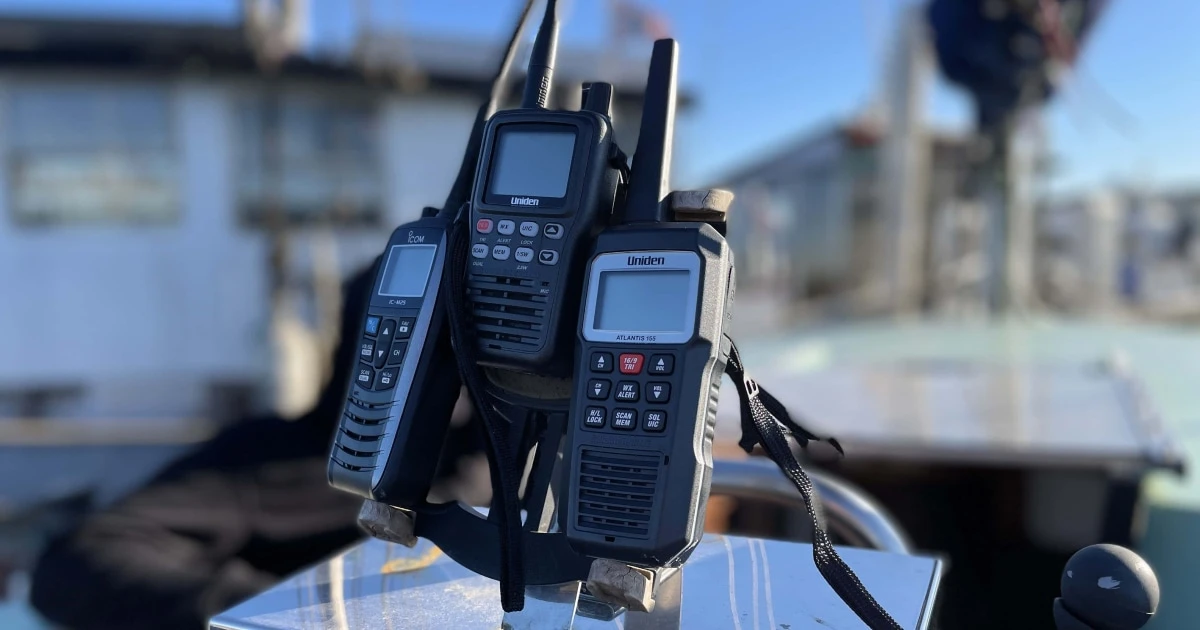
VHF Marine Radio: Channels and Procedures
A marine VHF radio is one of the most important safety tools on board. It lets you communicate with other vessels, contact coast stations, receive safety information and call for assistance when something goes wrong.
But knowing how to switch channels is not enough. You also need to understand which channels to use, how to make a clear call and what to say in an emergency.
This guide covers the essential marine VHF channels and procedures for recreational boaters, whether you sail a yacht or operate a motorboat.
Important: Channel assignments and radio regulations can vary by country and operating area. Use this guide as an introduction, not a substitute for local official guidance, radio training or your equipment manual.
1. What is a marine VHF radio?
VHF stands for Very High Frequency. Marine VHF radios operate on designated maritime radio frequencies and are used for short-range communication at sea and in coastal waters.
Depending on the equipment and local coverage, you can use a VHF radio to:
- Call another vessel or a marina.
- Communicate with harbour authorities and coast stations.
- Contact maritime rescue coordination centres.
- Receive weather and navigational safety broadcasts.
- Send a digital distress alert using Digital Selective Calling (DSC), if your radio supports it.
Unlike a mobile phone call, a conventional VHF voice transmission can be heard by other stations tuned to the same channel and within radio range. This is especially valuable when nearby vessels may be able to assist.
VHF range depends on factors such as antenna height, terrain, obstructions and equipment. A handheld radio with an antenna close to the water generally has less range than a properly installed fixed radio.
2. Marine VHF channels you should know
Marine VHF radios offer many channels, each with an assigned purpose. The following are important examples, but always confirm which channels are designated for your location and type of communication.
| Channel | Main purpose | What to remember |
|---|---|---|
| 06 | Intership safety and search-and-rescue communications in designated operations | Not a general-purpose conversation channel |
| 09 | Calling or port-related communications in some areas | Use only where locally designated |
| 13 | Navigation safety, particularly bridge-to-bridge communications | Follow local procedures and instructions |
| 16 | Distress, urgency, safety and calling by voice | Keep calls brief and maintain the required listening watch |
| 67 | Safety or operational communications in some regions | The exact use depends on local allocation |
| 68, 69, 71, 72, 77 | Various working or intership communications, depending on the area | Check the local channel plan |
| 70 | Digital Selective Calling (DSC) | Digital signalling only; never voice communication |
The table is a practical starting point, not a universal channel plan. Some channels have different assignments or restrictions in different countries. Harbour authorities, vessel traffic services and coast stations may direct you to a specific channel.
Channel 16: the essential voice channel
Channel 16 is the international VHF radiotelephone channel for distress, urgency, safety and calling.
Use it to:
- Make a brief initial call to another station when appropriate.
- Broadcast a MAYDAY distress call.
- Make a PAN-PAN urgency call.
- Transmit or receive relevant safety communications.
Once routine contact has been established, move the conversation to a suitable working channel if instructed or if the local procedure requires it. Do not occupy Channel 16 with unnecessary conversation.
Channel 70: digital calling and distress alerts
Channel 70 is reserved for Digital Selective Calling (DSC), a digital system that can send a structured alert to compatible radios and shore stations.
A DSC distress alert can include your vessel’s Maritime Mobile Service Identity (MMSI) and position, provided the radio has valid position data from an internal GPS or a connected navigation system.
Channel 70 is not a voice channel. If you send a DSC distress alert, follow the radio’s instructions and the applicable procedure for communicating by voice on Channel 16.
Channel 13: navigation safety
Channel 13 is designated internationally for navigation safety communications, particularly between vessels navigating in relation to one another. Its precise operational use may depend on local rules.
Do not assume that every vessel in every location uses Channel 13 for routine contact. Follow the applicable channel plan and instructions from the relevant authority.
3. How to make a routine VHF call
Good radio communication is brief, clear and structured. Before transmitting, listen to the channel to make sure you are not interrupting another conversation or safety message.
Follow these steps:
- Select the appropriate channel. Use the calling channel or working channel designated for your location and purpose.
- Listen before transmitting. Wait for a clear opportunity to speak.
- Identify the station you are calling. State its name or call sign, followed by your own vessel’s name.
- Wait for a reply. Give the other station time to answer before trying again.
- Move to a working channel if appropriate. Keep the calling channel clear for other users.
For example, a routine call might sound like this:
“Marina Port Azure, Marina Port Azure, this is sailing vessel Sea Breeze. Over.”
The marina might respond:
“Sea Breeze, this is Marina Port Azure. Go ahead. Over.”
You would then follow the marina’s instructions, including changing channels if requested.
Use the vessel or station names clearly. Avoid unnecessary repetition, long introductions and unrelated conversation. If the station does not respond, wait a reasonable interval before trying again or use another permitted method.
Radio etiquette checklist
- Listen before transmitting.
- Identify your vessel or station.
- Speak clearly at a steady pace.
- Keep messages concise and relevant.
- Use the minimum appropriate transmit power for routine calls, where permitted.
- Wait for a reply before repeating a call.
- Follow instructions from coast stations and harbour authorities.
- Keep distress and safety traffic clear.
Never conduct a routine radio check on Channel 16 unless the relevant authority’s procedure specifically permits it. Use an approved radio-check service or another locally designated channel.
4. MAYDAY, PAN-PAN and SECURITE: understanding the difference
Three standard expressions communicate different levels of urgency. Using the correct one helps other stations understand the nature of the situation.
MAYDAY: grave and imminent danger
Use MAYDAY when a vessel or person is in grave and imminent danger and immediate assistance is required.
Examples may include a vessel sinking, a serious fire on board or a person facing an immediate life-threatening situation.
A MAYDAY call takes priority over routine communications. Do not use it for minor equipment problems or situations that do not meet the distress threshold.
PAN-PAN: urgent situation
PAN-PAN indicates an urgent situation concerning the safety of a vessel or person when the circumstances do not constitute grave and imminent danger requiring a MAYDAY.
For example, a serious mechanical failure that leaves a vessel in a potentially dangerous position may justify an urgency call, depending on the circumstances.
If the situation deteriorates into grave and imminent danger, escalate to MAYDAY.
SECURITE: safety information
SECURITE is used to introduce important navigational or meteorological safety information, such as a hazard to navigation or a safety warning.
It is not a distress call. Use the procedure and channel designated by the relevant coast station or maritime authority.
5. How to make a MAYDAY distress call
In a genuine distress situation, raise the alarm as soon as possible using the available equipment and the correct procedure. If your radio supports DSC, use its distress-alert procedure as appropriate and follow it with the required voice communication.
For a voice distress call on Channel 16, a standard structure is:
- Say “MAYDAY” three times.
- Say “This is”, followed by your vessel’s name three times.
- Give your call sign and MMSI, if available and relevant to the procedure.
- State your position, preferably latitude and longitude.
- Describe the nature of the distress.
- State what assistance you need.
- Give the number of people on board and any other information that will help rescuers.
For example:
“MAYDAY, MAYDAY, MAYDAY.
This is sailing vessel Sea Breeze, Sea Breeze, Sea Breeze.
Call sign [call sign], MMSI [MMSI].
MAYDAY.
Our position is [latitude and longitude].
We have [nature of emergency].
We require immediate assistance.
There are [number] people on board.
[Other relevant information.]
Over.”
This is a template, not a script to follow mechanically. In a real emergency, transmit the information you can provide clearly and promptly. Do not delay an alert because you are missing a detail.
If the situation is serious but not a distress situation, use the appropriate urgency procedure instead.
If your radio has DSC
DSC allows compatible radios to send a digital alert, potentially including your vessel identity and position. The exact sequence depends on your radio model and the applicable procedures.
Before departure:
- Make sure the radio has been configured correctly.
- Confirm that the correct MMSI is programmed.
- Check that position data is available where the equipment requires it.
- Know how to initiate a distress alert and how to cancel an accidental alert.
- Read the manufacturer’s instructions and understand the relevant local procedure.
If you activate a distress alert accidentally, follow the radio manufacturer’s cancellation procedure immediately and notify the appropriate coast station using the prescribed voice procedure. Do not simply switch the radio off and assume the alert has been cancelled.
6. What to do when you hear a MAYDAY call
Hearing a distress call is not an invitation to join the conversation. The priority is to keep the channel clear and allow the responsible rescue authority to coordinate the response.
If you hear a MAYDAY:
- Stop any transmission that could interfere with the distress traffic.
- Listen carefully on Channel 16 and note the vessel’s identity, position and the nature of the emergency.
- Follow instructions from the coast station or rescue coordination centre.
- If you can assist, remain ready to provide useful information or help when appropriate.
- If no acknowledgement is heard and you are able to assist, follow the applicable procedure for acknowledging or relaying the distress call.
Do not transmit an acknowledgement or take action that could interfere with rescue coordination without understanding the procedure. The coast station or rescue coordination centre normally manages the response.
The same principle applies to other urgent safety traffic: listen, avoid unnecessary transmissions and follow the instructions of the responsible authority.
7. Common VHF radio mistakes
Even experienced boaters can make communication errors. These are some of the most important to avoid.
Using Channel 16 for a long conversation. Channel 16 must remain available for distress, urgency, safety and calling. Move routine conversations to a suitable working channel.
Speaking without identifying your vessel. Other stations need to know who is calling. State your vessel’s name or call sign clearly.
Using the wrong working channel. Channel assignments vary by location and purpose. Consult the official local channel plan instead of relying on a list remembered from another country.
Treating every problem as a MAYDAY. Distress, urgency and safety calls have distinct meanings. Select the correct procedure based on the actual situation.
Ignoring the DSC setup. An incorrectly programmed MMSI or unavailable position data can reduce the usefulness of a digital alert. Check your equipment before leaving.
Assuming a handheld VHF has the same range as a fixed radio. Antenna height and power matter. Understand the limitations of your equipment and carry the appropriate communications equipment for your planned navigation.
Assuming a mobile phone is an equivalent substitute. A phone may be useful, but it does not provide the same ship-to-ship broadcast capability as VHF. In an emergency, use the appropriate maritime distress procedure and other available means of alerting rescuers.
8. VHF radio checklist before departure
Before setting off, take a moment to confirm that your radio is ready for use.
- The radio powers on and operates correctly.
- The antenna and connections appear secure and undamaged.
- The microphone, speaker and controls work.
- The correct MMSI is programmed, if applicable.
- GPS position data is available to the radio where required.
- You know how to select Channel 16 and the appropriate working channels.
- You know the distress-alert procedure for your equipment.
- You know how to cancel an accidental DSC alert.
- You have checked local channel allocations and relevant coast-station procedures.
- Crew members know how to raise the alarm if the skipper becomes incapacitated.
For longer trips, also make sure that the crew understands basic radio etiquette and where to find the vessel’s call sign, MMSI and current position.
9. Record important radio communications in your boat logbook
Radio communications can be relevant to understanding what happened during a trip, particularly when a vessel receives a safety warning, contacts a harbour authority or experiences an incident.
When useful, record the following in your boat logbook:
- Date and time of the communication.
- Vessel position.
- Station contacted or heard.
- Channel used.
- Reason for the call.
- Instructions or information received.
- Any action taken by the crew.
For a significant incident, record the sequence of events as accurately as possible, including the times of important calls and any assistance requested or received. Keep factual observations separate from later interpretations.
A digital logbook makes it easier to keep trip details, GPS tracks, locations, notes and photos together for later review. With Skipper, you can record your boating trips and keep the relevant details organised in one place.
Conclusion
A marine VHF radio is most useful when you already know how to use it before an emergency occurs. Learn the channels, practise clear and concise calls, understand the difference between MAYDAY and PAN-PAN, and make sure your DSC equipment is correctly configured.
Most importantly, check the official channel plan and radio requirements for your navigation area. Correct procedures and a calm, clear message can make a significant difference when safety is at stake.
Frequently asked questions
What is Channel 16 used for on a marine VHF radio?
Channel 16 is the international voice channel for distress, urgency, safety and calling. Routine conversations should move to an appropriate working channel once contact is established.
What is the difference between VHF Channels 16 and 70?
Channel 16 carries voice communications. Channel 70 is reserved for Digital Selective Calling (DSC), which sends digital alerts and calls. Channel 70 must not be used for voice transmissions.
What is the difference between MAYDAY and PAN-PAN?
MAYDAY indicates grave and imminent danger requiring immediate assistance. PAN-PAN indicates an urgent situation concerning the safety of a vessel or person that does not meet the distress threshold.
Can I use a marine VHF radio without a licence?
Requirements depend on the country, the radio equipment, the vessel and the type of navigation. Check the rules of the relevant maritime and radio authorities before operating your radio.
Should I use a mobile phone instead of VHF in an emergency at sea?
A marine VHF is generally preferable for emergencies at sea because nearby vessels and coast stations may hear the call. In French waters, Channel 16 connects you with the relevant CROSS. A mobile phone can provide an additional means of contact, but it does not replace VHF’s broadcast capability.
Remember your days at sea
Skipper is a ship’s log app for sailboats and powerboats, available on iPhone and iPad. It records every trip with GPS and keeps your whole sailing history in one searchable logbook. Free for your first three trips.

Keep reading
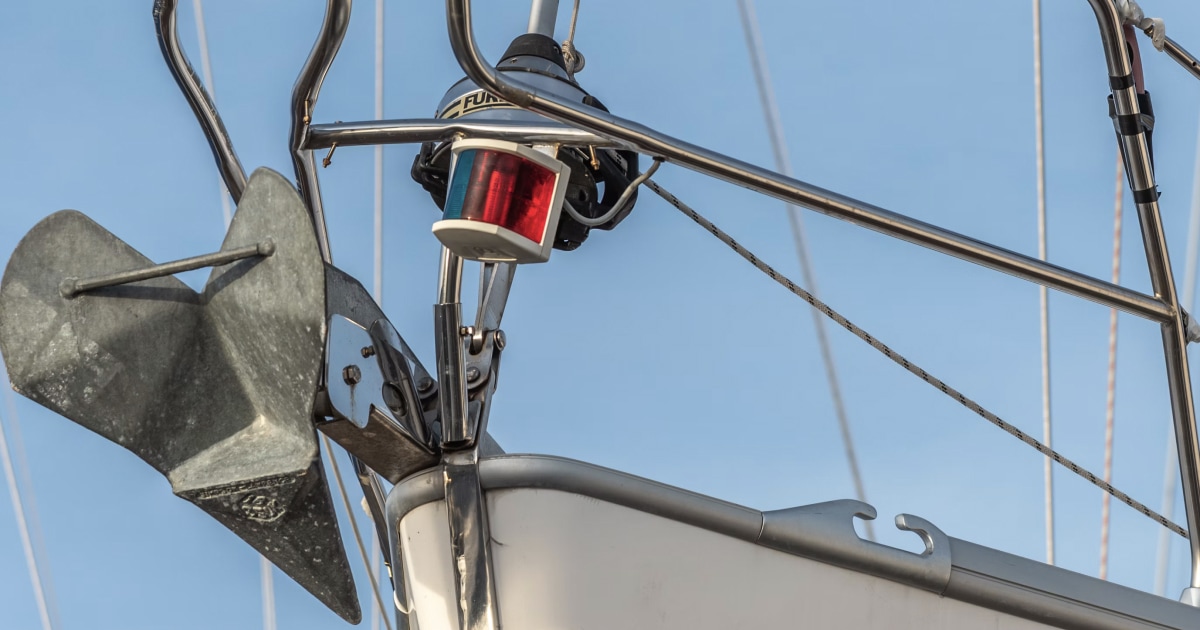
Boat Navigation Lights Explained
Learn how to identify boat navigation lights, understand what they reveal about a vessel, and recognise the lights required at night and in restricted visibility.
All boaters
COLREGs: International Collision Regulations Explained
Understand the COLREGs, the international rules for preventing collisions at sea, including right of way, lookout, safe speed, navigation lights and sound signals.
All boaters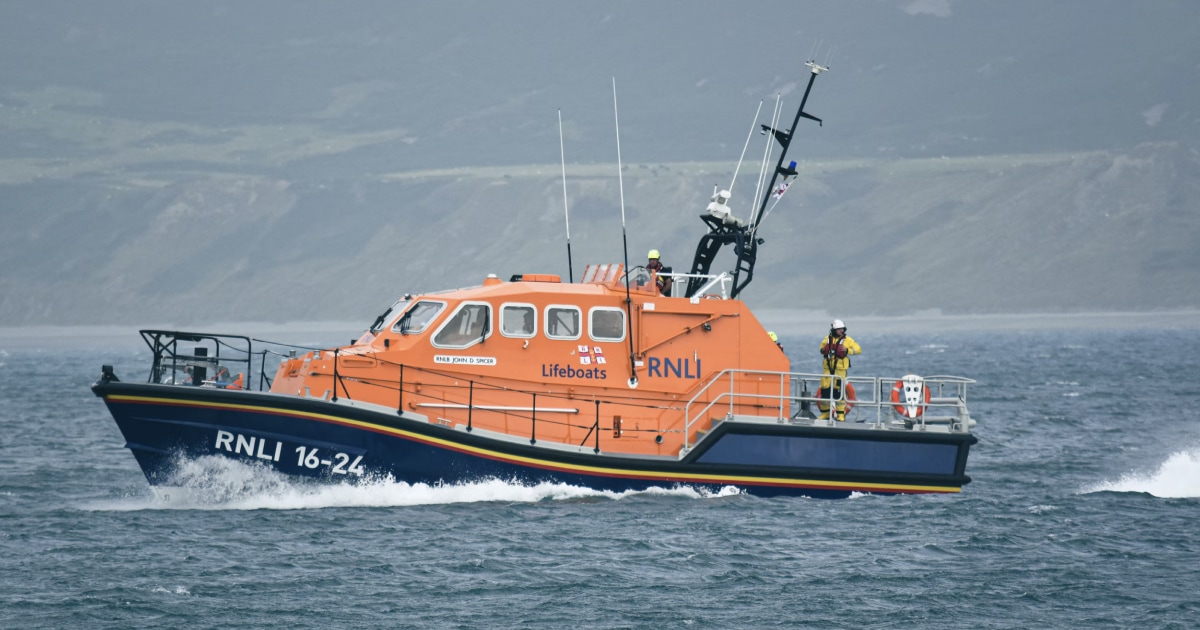
Man Overboard: What to Do
Learn what to do when someone falls overboard, from raising the alarm and keeping visual contact to returning to the casualty and recovering them safely.
All boaters