 Skipper
Improve
•All boatersHow Much Does It Cost to Own a Boat?
Discover the real cost of owning a boat, from purchase price and marina fees to insurance, maintenance, fuel and unexpected repairs. Build a realistic annual budget.
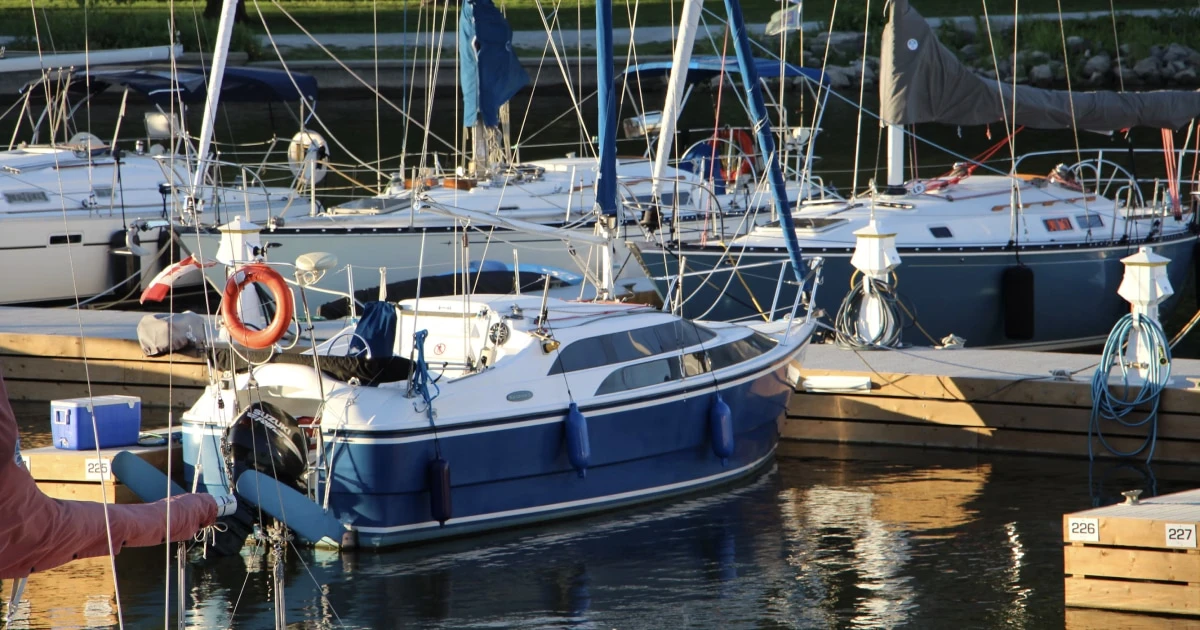
How Much Does It Cost to Own a Boat?
Buying a boat is only the beginning. The real cost of boat ownership includes everything required to keep it insured, maintained, stored and ready to use.
A small boat kept on a trailer can have a very different budget from a sailing yacht in a Mediterranean marina or a motor cruiser used every weekend. Even two boats of similar size can have very different running costs because of their age, condition, location and equipment.
The best way to estimate the cost of owning a boat is to separate the initial purchase from recurring expenses, usage-dependent costs and unexpected repairs.
This guide breaks down each category and explains how to build a realistic annual boat budget before you buy—or to understand what your current boat really costs.
What Is the Total Cost of Boat Ownership?
The total cost of ownership is broader than the purchase price or the amount you spend on fuel each year.
A useful budget separates four categories:
- Initial costs: purchase price, survey, inspections, registration and equipment needed to get started.
- Fixed or recurring costs: insurance, mooring, storage and other charges that continue even when the boat is not used.
- Usage-dependent costs: fuel, engine servicing, consumables and expenses that increase with use.
- Irregular and long-term costs: unexpected repairs, major replacements, upgrades and depreciation.
If you finance the purchase, loan interest and other financing costs also belong in the budget.
You should distinguish cash expenses from depreciation. Cash expenses affect your bank account, while depreciation represents a potential reduction in the boat’s resale value. Both matter when assessing the economics of ownership, but they should not be added together without understanding what each figure represents.
1. The Initial Cost of Buying a Boat
Before estimating annual running costs, calculate the full amount required to acquire and prepare the boat.
Purchase price
The purchase price depends on the type, size, age, brand, equipment and condition of the boat.
A new boat may offer a warranty and predictable early maintenance, but optional equipment and delivery costs can increase the final price.
A used boat may cost considerably less upfront, but its condition is critical. Deferred maintenance, corrosion, engine problems or damaged rigging can create substantial expenses soon after purchase.
Survey and inspection
For a used boat, a professional survey can help identify defects and provide information about the vessel’s condition.
Depending on the boat and proposed transaction, you may also need a specialist engine inspection, rigging inspection or haul-out to assess underwater components.
These costs should be included before purchase, not treated as part of the normal annual maintenance budget.
Initial equipment and upgrades
The boat may not include everything you need for your intended use.
Possible additional costs include:
- Safety equipment and personal flotation devices
- Navigation and communication equipment
- Anchoring and mooring equipment
- Tools and spare parts
- Batteries, chargers and electrical accessories
- Trailer, towing equipment or transport
- Initial repairs and upgrades
Create a separate list of items that are essential before your first trip and items that can wait.
Registration, taxes and acquisition fees
Depending on your jurisdiction and the type of transaction, you may have registration charges, taxes, documentation fees or other acquisition costs.
Check the rules applicable to the boat’s flag, location and ownership structure rather than assuming the same charges apply everywhere.
2. Annual Boat Ownership Costs at a Glance
The following table is a starting framework for building your budget. It deliberately avoids a universal annual price because location, vessel size and condition can change the result substantially.
| Expense | Typical frequency | Main cost drivers |
|---|---|---|
| Mooring or berth | Monthly or annually | Boat length, marina, region and berth type |
| Dry storage or yard fees | Seasonal or annually | Storage method, location and duration |
| Insurance | Usually annually | Value, type, use, location and coverage |
| Routine maintenance | Periodic | Engine, systems, hull and equipment |
| Fuel | Per trip or as used | Engine, consumption, operating hours and fuel price |
| Haul-out and launching | Seasonal or as needed | Boat size, yard rates and work required |
| Antifouling and hull care | Periodic | Hull, coating, use and local conditions |
| Replacement parts and consumables | As needed | Equipment, age, condition and usage |
| Safety equipment servicing | As required | Equipment type and service requirements |
| Taxes, registration and local charges | Varies | Jurisdiction and vessel |
| Repairs and contingency reserve | Irregular | Age, condition and unexpected failures |
| Depreciation | Long term | Market value, age, condition and demand |
Some costs overlap depending on how a marina or boatyard structures its services. For example, a winter storage package might already include haul-out, launching or certain maintenance work. Avoid counting the same service twice.
3. Mooring, Marina and Storage Fees
For many boat owners, where the boat is kept is one of the biggest budget decisions.
Keeping your boat in a marina
A permanent berth offers convenience and access to services, but fees depend on the marina and the boat’s dimensions.
Prices can vary with:
- Length and beam
- Location and local demand
- Annual versus seasonal contracts
- Water, electricity and other services
- Security and facilities
- Availability of permanent berths
Popular coastal destinations can be significantly more expensive than less-demanded marinas or inland locations.
When comparing offers, check what is included. Electricity, water, waste services, parking, winter storage and maintenance may be billed separately.
Mooring alternatives
Depending on the boat and local availability, alternatives may include:
- A swinging mooring
- A river or canal mooring
- A private pontoon or permitted private berth
- A dry-stack facility
- A trailer at home or in dedicated storage
- Seasonal rental rather than a permanent berth
Each option involves trade-offs between price, convenience, security, maintenance access and how quickly the boat can be used.
A cheaper mooring is not automatically the best value if it requires frequent transport, additional equipment or more work to launch the boat.
Winter storage and haul-out
Some boats remain afloat year-round. Others are hauled out for winter or maintenance.
Potential expenses include lifting, yard storage, blocking or supports, protective covers, winterization, launching and any work carried out while the boat is ashore.
Ask for a quote that separates storage from services. This makes it easier to compare yards and identify costs that may already be included in a package.
4. Boat Insurance Costs
Insurance is another recurring expense, but premiums cannot be estimated accurately from purchase price alone.
Insurers may consider:
- Boat type, age and value
- Engine type and power
- Navigation area
- Mooring and storage arrangements
- Intended use, including racing or chartering
- Claims history and other underwriting factors
- Coverage limits and deductibles
Policies can cover different risks, such as third-party liability, accidental damage, fire, theft and certain transport or salvage-related expenses. Coverage varies by policy and exclusions.
When comparing quotes, check more than the premium. Confirm the insured value, deductibles, geographical limits, permitted use, lay-up conditions and any obligations relating to maintenance or security.
Do not assume that a standard policy covers every activity or destination. Confirm the coverage required for your intended use and any insurance requirements imposed by a marina, lender or local authority.
5. Boat Maintenance and Repairs
Maintenance protects the boat’s condition and helps identify problems before they become more serious.
However, there is no single maintenance percentage that accurately predicts costs for every vessel. A newer boat with documented service history may have different needs from an older boat with deferred work or extensive equipment.
Routine maintenance
Depending on the boat, routine work may include:
- Engine servicing according to the manufacturer’s schedule
- Oil and filter changes
- Fuel-system inspections
- Cooling-system checks
- Battery and electrical-system checks
- Plumbing and bilge-system inspections
- Hull, deck and through-hull inspections
- Steering and control-system checks
- Rigging and sail inspections on sailing boats
- Cleaning and corrosion prevention
The cost depends on whether you perform suitable tasks yourself or hire professionals, as well as the availability and price of parts.
For a structured approach, see the Boat Maintenance Schedule.
Haul-out, antifouling and underwater maintenance
Boats kept in the water may require periodic underwater inspections, hull cleaning, antifouling and attention to anodes or other components.
The work required depends on the hull, coatings, location, water conditions and the boat’s use. Haul-out and launching may add significant labour and yard charges.
Unexpected repairs
A realistic budget must account for failures that cannot be scheduled precisely.
Examples include a failed pump, damaged sail, electrical fault, engine issue, leaking fitting or defective navigation instrument.
The financial impact can range from a relatively inexpensive replacement to a major repair. Older boats and vessels with poorly documented maintenance may require a larger contingency reserve.
Keep a record of maintenance and repairs so you can distinguish routine spending from one-off work. The guide on How to Keep a Boat Maintenance Log explains how to record work, parts and follow-up actions.
6. Fuel and Engine Operating Costs
Fuel is particularly important for motorboats, but it also matters for sailing yachts that use an auxiliary engine.
Your fuel bill depends on the number of hours under power, engine consumption, operating conditions and local fuel prices.
A simple estimate is:
Annual fuel cost = annual engine hours × average fuel consumption per hour × fuel price per unit
For example, if an engine uses an average of 8 litres per hour, runs for 60 hours per year and fuel costs €1.80 per litre, the estimated annual fuel expense is:
8 × 60 × €1.80 = €864 per year.
This is an illustrative calculation, not a benchmark for a particular boat. Actual consumption may change significantly with engine load, speed, hull condition, weather and operating technique.
Also remember that fuel is not the only engine-related cost. Engine servicing, filters, lubricants, belts, cooling-system parts and repairs should be budgeted separately.
For a more accurate record, read Boat Fuel Log: Track Consumption and How to Track Engine Hours on a Boat.
7. Sailing Yacht vs. Motorboat: How Do Costs Differ?
Neither type is automatically cheaper to own. The cost structure is different.
| Expense | Sailing yacht | Motorboat |
|---|---|---|
| Fuel | Often lower when sailing, but depends on engine use | Can be a major operating expense |
| Engine maintenance | Required for auxiliary engines | Depends on propulsion type and usage |
| Sails and rigging | Replacement and inspection can be significant | Usually not applicable |
| Hull and underwater maintenance | Required as appropriate to the hull and storage | Required as appropriate to the hull and storage |
| Mooring and storage | Driven largely by dimensions and location | Driven largely by dimensions and location |
| Electronics and systems | Depends on installed equipment | Depends on installed equipment |
| Repairs | Hull, rigging, sails and onboard systems | Hull, engine, drive system and onboard systems |
A sailing yacht may have relatively low fuel use while still incurring substantial costs for sails, standing rigging, deck hardware or haul-out work.
A motorboat’s fuel expense can be higher, especially when it has powerful engines and is used frequently. Smaller trailerable motorboats may have a much lower fixed mooring bill than a large marina-kept sailing yacht.
Compare boats using their expected annual use, actual equipment and storage arrangements—not just their purchase prices or propulsion type.
8. The Hidden Costs of Owning a Boat
Some expenses are easy to overlook when preparing a first budget.
Equipment replacement
Safety equipment, batteries, electronics, sails, ropes and other components may eventually need servicing or replacement.
Include these expenses in your longer-term planning even if they do not occur every year.
Cleaning and consumables
Cleaning products, lubricants, sealants, filters, protective materials and small replacement parts can add up over a season.
Tracking these purchases helps you understand where the budget goes and which supplies need replenishment.
See Boat Maintenance Consumables for a practical breakdown.
Transport and access
Depending on how the boat is stored, you may need a trailer, towing vehicle, transport service, parking or travel to and from the marina.
These expenses can be meaningful if the boat is far from home or requires regular road transport.
Upgrades and optional equipment
New electronics, comfort equipment, sails, tenders and other accessories are not always necessary, but they can quickly increase spending.
Separate essential repairs from optional improvements. This makes it easier to protect your maintenance budget when an upgrade is tempting.
Depreciation and resale value
The boat’s resale value may decline over time, although the market, condition and demand all matter.
Depreciation is not a yearly invoice, but it affects the total economic cost of ownership. When comparing ownership with renting, consider both cash expenses and the likely difference between purchase and resale values.
Your own time
DIY maintenance may reduce labour bills, but it still takes time and requires suitable skills, tools and access to parts.
For safety-critical systems or work beyond your competence, professional assistance may be the more appropriate choice.
9. How to Calculate Your Annual Boat Budget
The most useful estimate is based on your own boat and intended use.
Start with the following categories.
| Budget category | Annual estimate |
|---|---|
| Mooring or storage | €_____ |
| Insurance | €_____ |
| Routine maintenance | €_____ |
| Fuel | €_____ |
| Haul-out and seasonal work | €_____ |
| Safety equipment and servicing | €_____ |
| Consumables and replacement parts | €_____ |
| Registration, taxes and local charges | €_____ |
| Other recurring costs | €_____ |
| Repair contingency reserve | €_____ |
| Total annual cash budget | €_____ |
Use local quotes and actual records wherever possible. If you have not owned the boat for a full year, mark uncertain estimates clearly instead of treating them as confirmed expenses.
Example: estimating fuel cost
Suppose you expect 60 engine hours per year, average consumption of 8 litres per hour and fuel at €1.80 per litre.
- Engine hours: 60
- Average consumption: 8 L/hour
- Fuel price: €1.80/L
- Estimated fuel budget: €864
Now add your quoted berth fee, insurance premium, maintenance estimates and seasonal costs. The result will be more useful than applying a percentage to the boat’s purchase price.
Include a contingency reserve
Your normal annual budget should not assume that nothing will break.
Choose a reserve based on the boat’s condition, age, equipment, known defects and the financial consequences of an unexpected repair. A boat with uncertain maintenance history may need a larger reserve than a newer vessel with well-documented servicing.
Keep this reserve distinct from routine maintenance spending so you can see whether normal running costs are increasing or an unusual repair has distorted the year’s total.
10. How to Reduce the Cost of Boat Ownership
Reducing costs is most effective when you target large expenses without compromising safety or reliability.
Compare storage options
Obtain quotes for marina berths, alternative moorings, dry storage and trailer storage where appropriate.
Consider the full cost of each option, including transport, launching, security, maintenance access and convenience.
Maintain the boat consistently
Follow the relevant manuals and maintenance schedule. Addressing a developing defect early can help avoid secondary damage, although no maintenance plan eliminates all unexpected repairs.
Track fuel consumption
Record fuel purchases and engine hours rather than relying on memory. Comparing consumption over time can help you understand your actual operating costs and identify changes that warrant investigation.
Buy parts carefully
Check model compatibility and specifications before purchasing replacement components. Carrying the right spare can prevent unnecessary delays, while buying incompatible parts wastes money and storage space.
Separate essential spending from upgrades
Prioritize safety, essential repairs and manufacturer-recommended maintenance. Plan optional improvements separately so they do not consume money needed to keep the boat reliable.
Review the budget every season
Compare estimates with actual expenses. Update your assumptions when marina fees, insurance premiums, usage patterns or maintenance requirements change.
A budget becomes more useful every year that you maintain accurate records.
11. Track Your Boat Expenses Over Time
An annual estimate helps you decide whether you can afford a boat. Actual records help you understand what ownership costs in practice.
Record expenses consistently and include:
- Date of purchase or service
- Expense category
- Amount and currency
- Boat or component concerned
- Supplier or service provider
- Whether the expense was planned or unexpected
- Relevant receipt or invoice
- Notes about the work completed
Keep maintenance records distinct from general expenses where possible. An invoice tells you what you paid; a maintenance log explains what was done, which parts were replaced and whether follow-up work is needed.
Skipper is a digital boating logbook for recording GPS tracks, routes, trip details, notes and photos. It can help you document your time on the water alongside your separate expense and maintenance records.
For a more detailed budgeting process, see Boat Expenses: A Complete Budget Guide.
Frequently Asked Questions
How much does it cost to own a boat per year?
There is no universal annual cost. Expenses depend on the boat’s size, age, condition, propulsion, location, storage, usage and maintenance needs. Estimate each major cost separately rather than relying on a single percentage of the purchase price.
What is the most expensive part of owning a boat?
Mooring or storage, maintenance and repairs, and fuel can be major expenses, depending on the boat and how it is used. For a marina-kept boat, berth fees can be a substantial fixed cost even in years with little use.
Is owning a sailboat cheaper than owning a motorboat?
It depends on size, equipment, use and maintenance. A sailing yacht may use less fuel while sailing but still incur costs for sails, rigging, haul-out and marina berthing. A motorboat’s fuel costs can be significant, particularly with frequent or high-power use.
How much should I budget for boat maintenance?
Maintenance costs vary widely with age, condition, size, equipment and use. Build a budget from the manufacturer’s service requirements, known upcoming work, storage and haul-out needs, and a separate reserve for unexpected repairs.
Does the purchase price include the real cost of owning a boat?
No. The purchase price is only the initial outlay. You should also account for acquisition fees, insurance, mooring, fuel, maintenance, storage, equipment, taxes or registration where applicable, repairs and depreciation.
How can I reduce the cost of owning a boat?
Compare storage options, maintain the boat according to its manuals, address defects early, track fuel and other expenses, buy compatible parts carefully and choose equipment based on actual needs. Never cut costs by neglecting safety-critical maintenance.
Remember your days at sea
Skipper is a ship’s log app for sailboats and powerboats, available on iPhone and iPad. It records every trip with GPS and keeps your whole sailing history in one searchable logbook. Free for your first three trips.

Keep reading
Boat Expenses: A Complete Budget Guide
Learn how to track boat expenses, organize maintenance and fuel costs, build an annual boating budget, and calculate the true cost of owning a boat.
All boaters
Boat Fuel Log: How to Track Fuel Consumption
Learn how to keep a boat fuel log, calculate fuel consumption and cost per hour, compare trips, and plan fuel reserves with a practical tracking template.
All boaters
Boat Inventory Checklist: Everything to Keep Track of on Board
Use this boat inventory checklist to organize safety equipment, tools, spare parts, documents and supplies, and keep your onboard inventory up to date.
All boaters